About
The rocker stopper tips with a single finger, pouring one-handed while the other holds a mug steady. It's a small gesture that separates a vacuum jug from every other insulated vessel on the shelf.
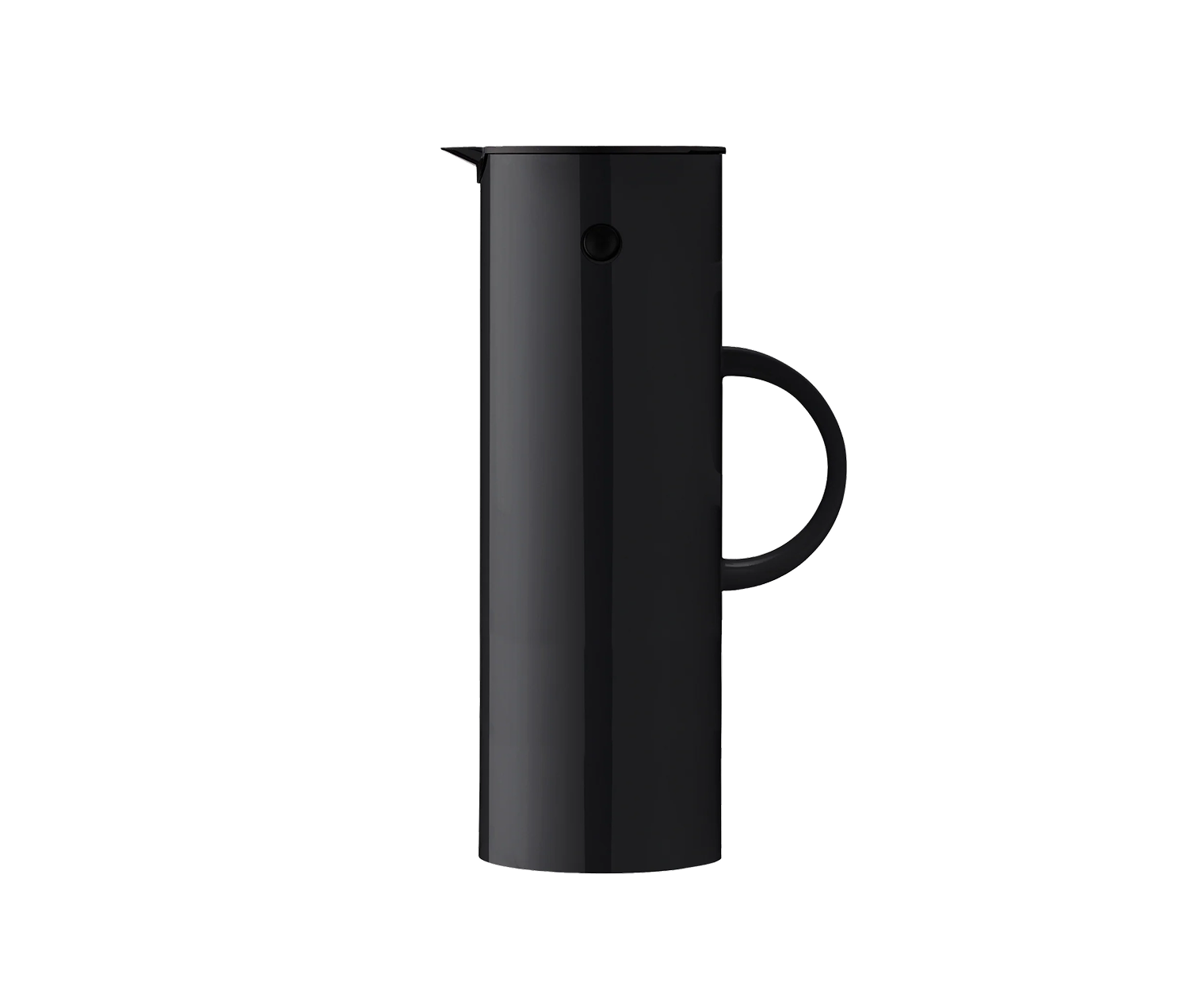
Stelton's vacuum jug, originally designed in 1977, carries that same economy of motion through its entire form. The 1-liter glass-lined carafe sits in a stainless steel and ABS frame, a spare silhouette that hasn't aged into period piece territory because nothing about it was ever ornamental. The insulating glass insert keeps coffee hot or tea cold for hours, a technical choice that stays invisible until you pour from one of these and realize how long the temperature actually holds. There's no plastic taste, no condensation pooling on the counter. The screw cap threads on for transport, practical enough for a cabin porch or a car trip without pretending to be something it isn't.
What matters most is the lifetime durability claim, backed by replaceable components. The glass insert wears out before the frame does; Stelton sells them separately. The stopper, the cap, the seal, all available as spares. This approach to longevity feels almost defiant now, when most thermal carafes are designed as sealed units destined for recycling. Here, the jug improves with intention rather than accumulating small failures.
The EM77 doesn't announce itself or ask for attention. It pours, it holds temperature, and it works the same way at year one as it does at year twenty. That consistency, that refusal to trend, is what makes it sit comfortably in both minimalist kitchens and working cabins. It's the kind of object that disappears into routine because it simply does what it promises.