Wooden Monkey
About
Wooden toys occupy a peculiar space in design history, existing somewhere between childhood object and adult collectible. Most fade into boxes and attics. Some, however, become fixtures that move through decades of hands and homes, gathering meaning as they accumulate wear.
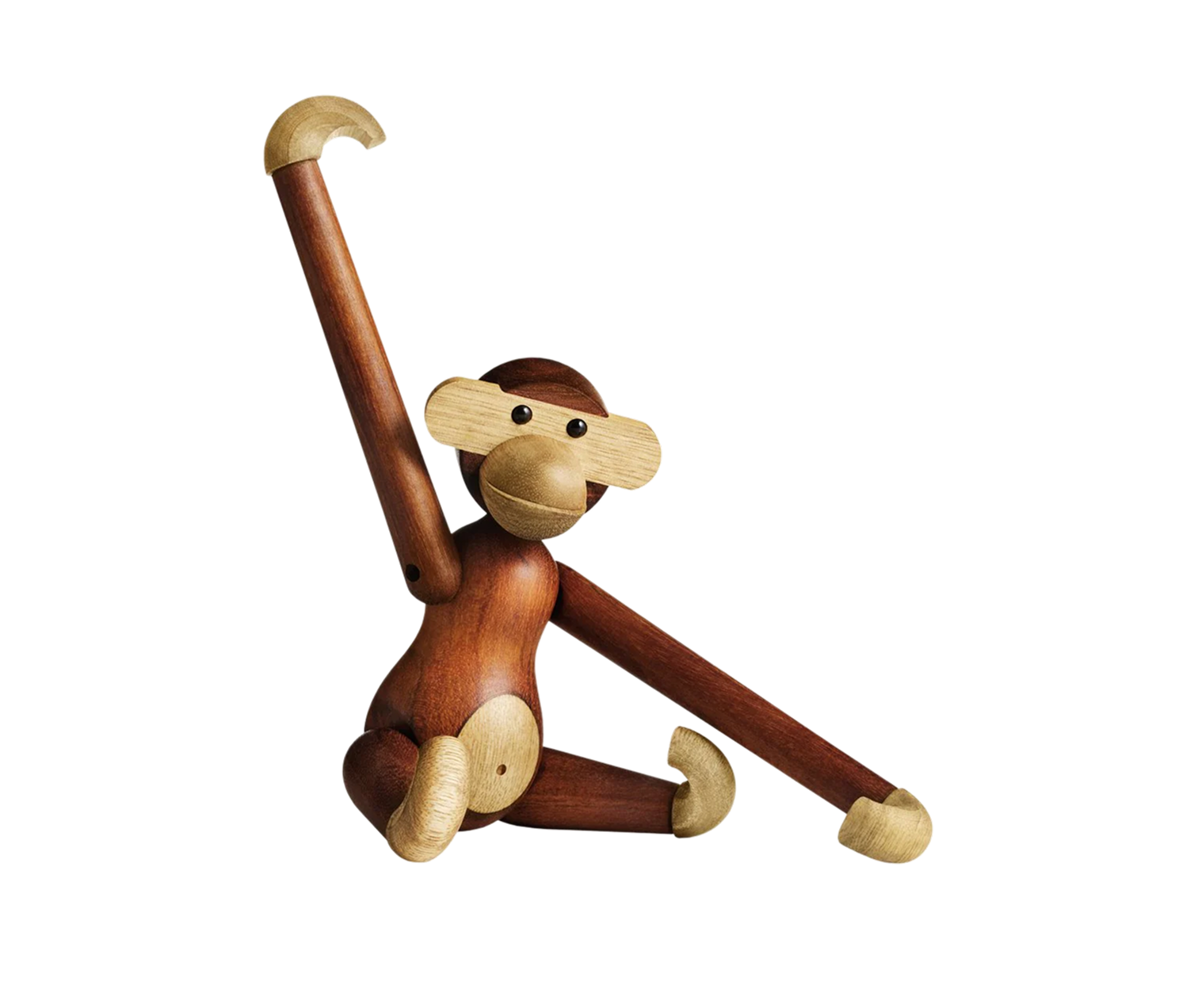
Kay Bojesen's Wooden Monkey emerged in 1951 and has remained largely unchanged since, a testament to restraint in design. Kaybojesen's articulated wooden toy comprises 31 individual wooden parts joined by moving joints, allowing the figure to shift between poses and positions. The construction is straightforward: FSC-certified teak or limba wood, oiled to a warm finish that deepens with time. The Small size stands just under eight inches tall, proportioned to sit comfortably on a shelf or in a palm.
What distinguishes this wooden toy from novelty pieces is its refusal to perform. There's no mechanism to wind, no sound to trigger, no narrative arc imposed by the maker. Instead, the Wooden Monkey invites interaction through its jointed limbs and compact form. The material itself speaks clearly: solid wood that will age visibly, developing a patina that marks its years in a home. Available across four sizes from 3.5 inches to 18 inches, it scales from pocket-sized to sculptural without losing proportion or presence.
This is an object for those who understand the difference between a toy and a design icon, who recognize that the most enduring playthings often outlast their original purpose. Whether it arrives in a nursery or takes residence on a desk, the Wooden Monkey settles into its role without fanfare, becoming a quiet companion that asks nothing but offers everything a simple, considered wooden figure can provide.