Original 1227 Desk Lamp
$340
About
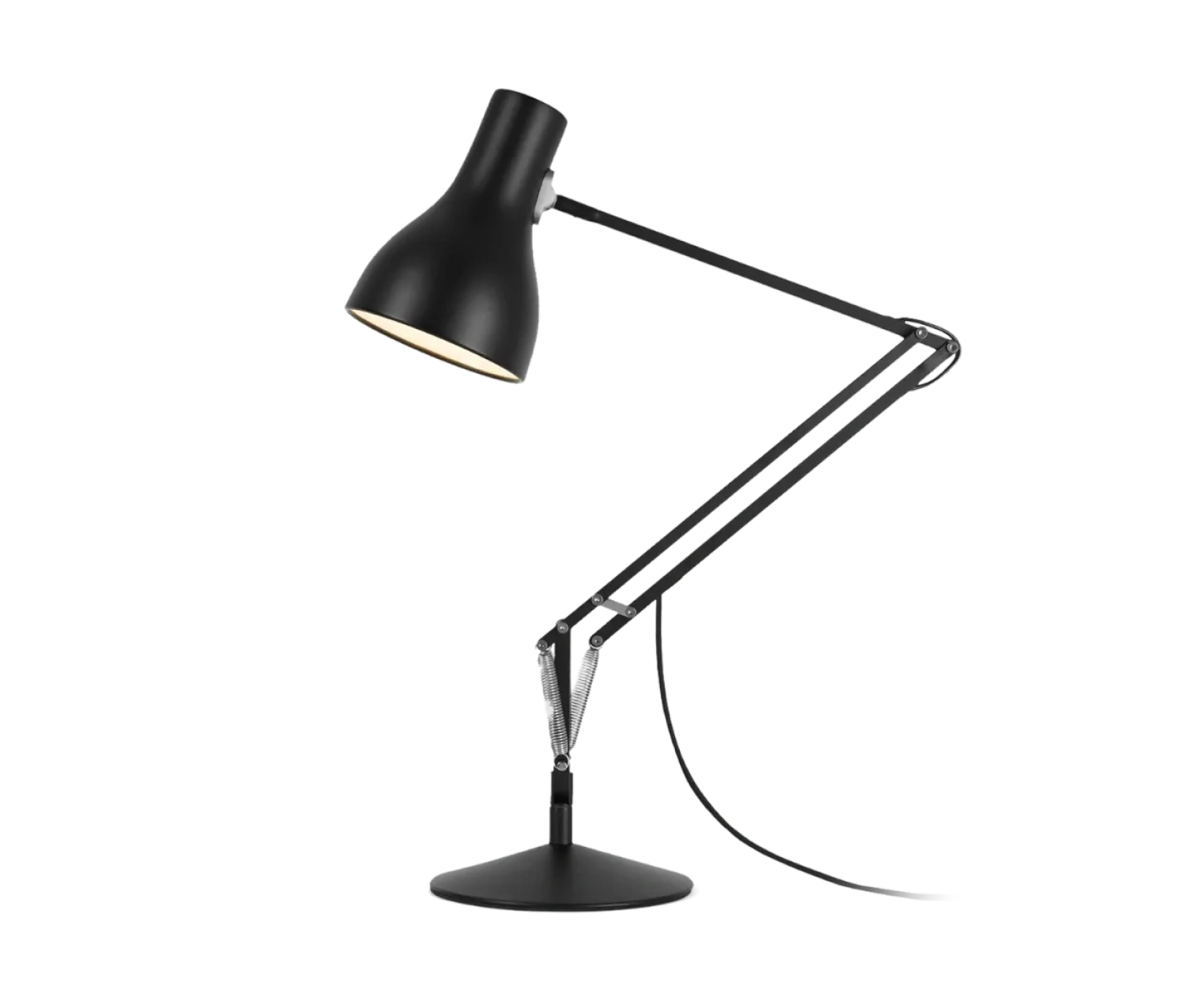
Most adjustable lamps ask you to fight them. Loosen a knob, move the arm, tighten the knob, watch it sag anyway. The Original 1227 has no knob to tighten and no weight to shift.
Anglepoise's Original 1227 holds any position on constant-tension springs rather than a counterweight, which is why the arm stays exactly where your hand leaves it. George Carwardine was an automotive engineer, and his own company's account is that he chanced on a formula for a new kind of spring, which gave him the blueprint for an articulated task lamp two years before the 1227 arrived in 1935. What he wanted was a lamp that moved like a human arm: flexible through its whole range, stable at every point in it. Anglepoise's dating guide, written for people identifying old lamps, separates the three-spring 1227 from the four-spring Model 82 that followed in the seventies.
The materials do the rest of the work. The shade and arms are aluminium and the fittings are chrome plated, but the base is cast iron under a steel cover, and that mass is most of the reason the lamp stays put when the arm is extended to its full 90 centimetres. The cord is fabric covered and two metres long, enough to reach a socket without coiling on the desk.
It launched in 1935 and Anglepoise, working out of Denmead in England, still sells it, which is a rarer thing in lighting than the design's familiarity suggests.
- Designed in
- United Kingdom

- designer
- George Carwardine
- Material
- Dimensions
- Shade 14 cm across and 16 cm tall, base 15 x 15 cm
- Range
- 90 cm maximum reach, base to shade
Figures as published by the manufacturer. Source