·
·

Justin Farrugia
The instruments most people own are compromises. Too large for an apartment, too ugly for a living room, too complicated for a Tuesday evening when you have forty minutes and an idea worth capturing. The home musician today faces a specific problem: the tools built for serious music-making were designed for studios, not for rooms that also need to function as offices, living spaces, and places where other people live.
Minimalist musical instruments solve a different equation. They ask what a serious instrument looks like when size, aesthetics, and expressive depth all matter equally. This is not a list for beginners looking for their first toy keyboard, nor for producers buried in rack gear. It's for people who care about design-focused instruments the same way they care about the chair they sit in or the desk they work at.
The best minimalist home studio setup ideas tend to start with one well-chosen piece. Here are five worth choosing.
Roli Seaboard – $349
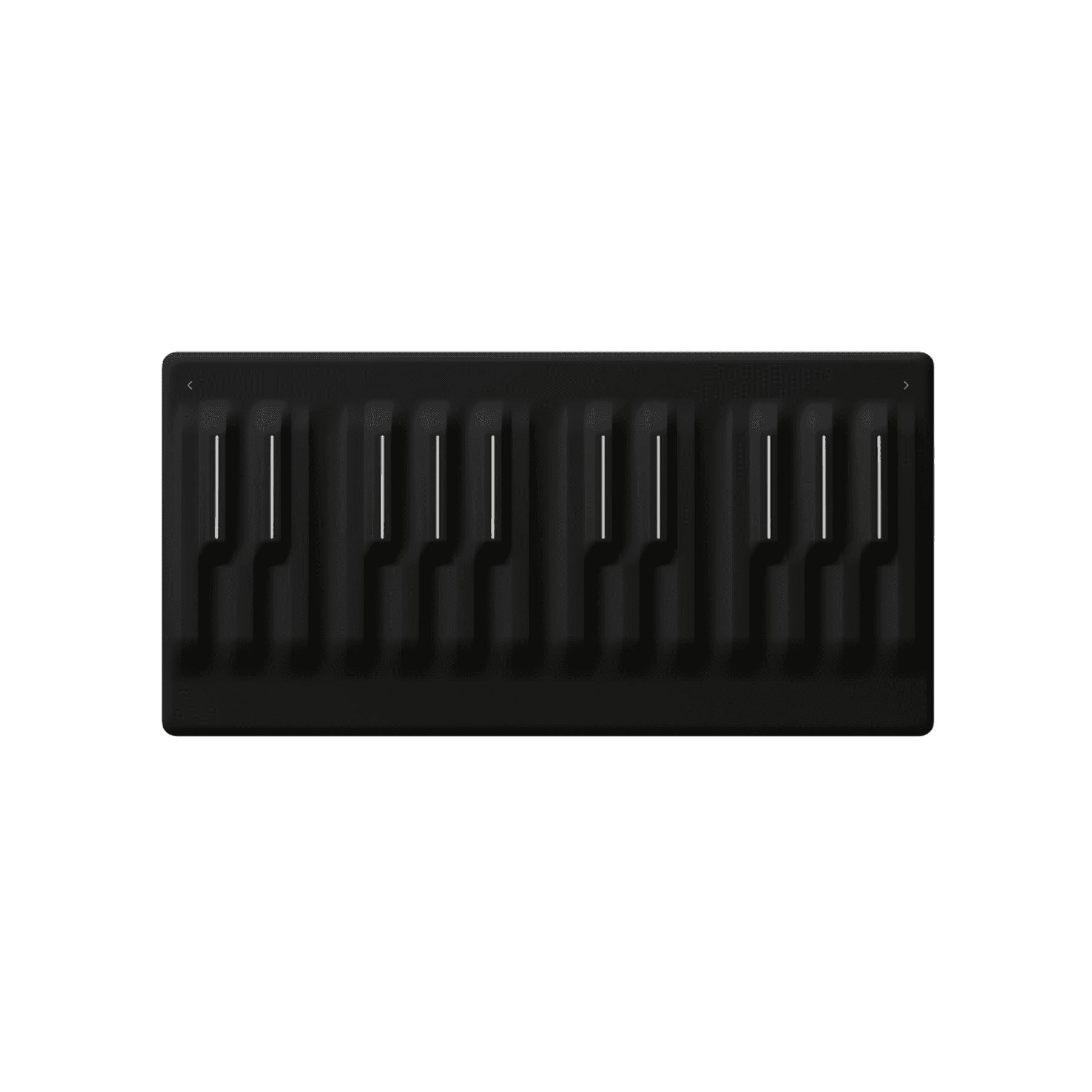
Picture a late evening, laptop open on the kitchen table, headphones on, a half-formed chord progression sitting in your DAW. You want to add movement, something that breathes. A standard MIDI keyboard gives you velocity and nothing else. The Seaboard gives you five dimensions of touch per note: strike, press, glide, slide, and lift. That distinction matters more than any spec sheet conveys.
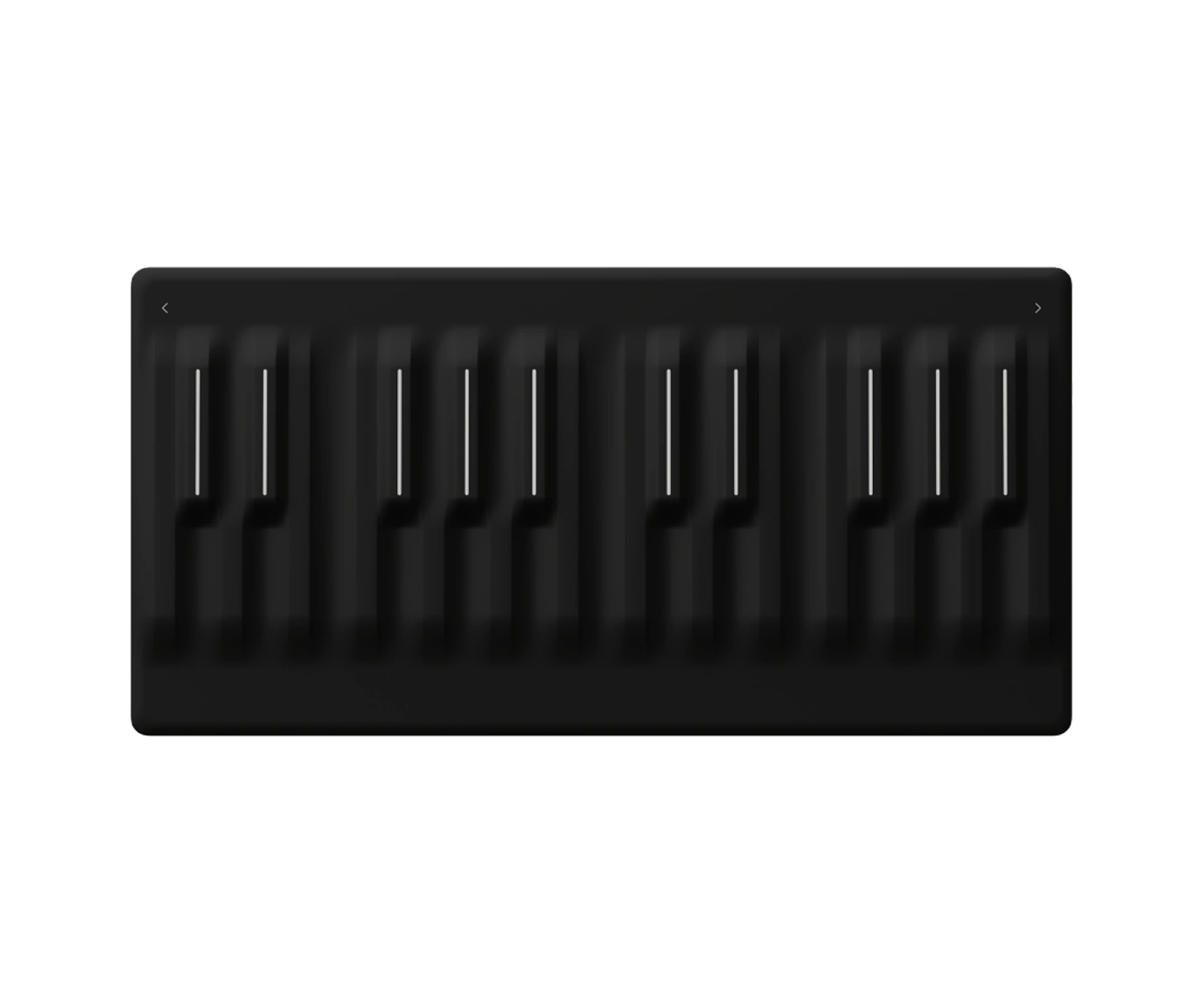
Roli built the Seaboard around 24 Keywaves, a continuous silicone surface that replaces the rigid plastic keys found on every other controller in this category. The material is smooth and slightly yielding underhand. Vibrato comes from rocking a finger side to side. Pitch slides emerge from moving horizontally across a note. Pressure adds dynamics mid-note without lifting and restrike. These are gestures that acoustic instruments take for granted. The Seaboard brings them to electronic music production in a form factor that fits in a backpack.
The matte black finish resists fingerprints and glare. The low profile sits cleanly on any desk without dominating it. Bluetooth and USB-C keep the cable situation minimal. At ten hours of battery life, it survives a full day of sketching without reaching for a wall. It ships with ROLI Studio and a suite of MPE-enabled plug-ins, so the expressive potential is accessible from the first session. This belongs in our tech collection for the same reason good tools always do: it removes friction between an idea and its execution.
Telepathic Instruments Orchid Orc 1 – $649
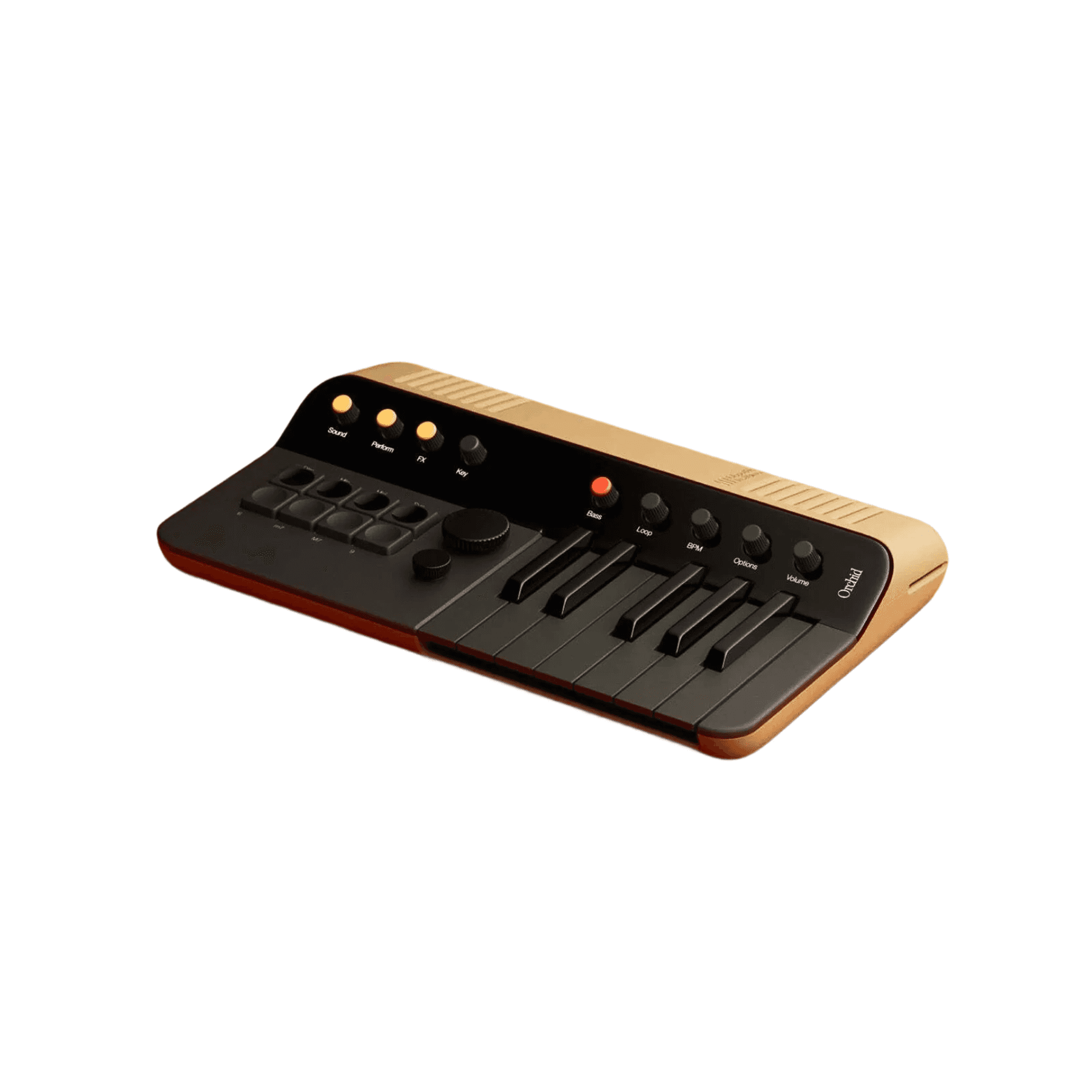
Most people assume that playing sophisticated harmony requires years of music theory or a full-size keyboard and the patience to learn voicings by hand. The Orchid Orc 1 challenges that assumption directly. It doesn't simplify music. It reorganizes how you access it.
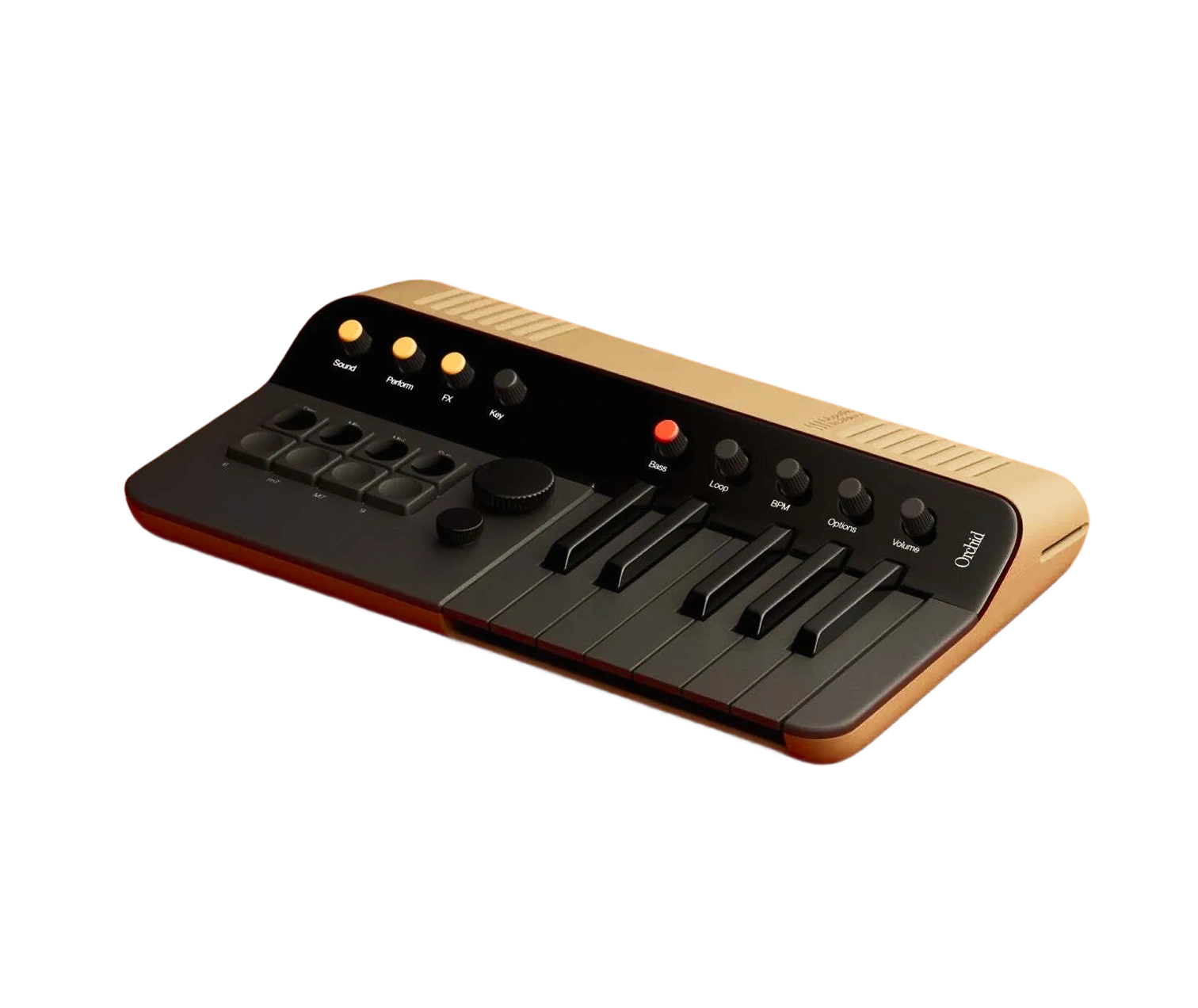
Telepathic Instruments built the Orchid Orc 1 around a chord logic engine that handles voice-leading automatically, so the instrument always resolves in a way that sounds considered rather than accidental. A single-octave velocity-sensitive keyboard sets the root note. Above it, dedicated buttons select chord types: Major, Minor, Suspended, Diminished, with extensions including 6th, minor 7th, Major 7th, and 9. The patent-pending Voicing Dials are the detail that separates this from anything else in the category. Twist one and the chord shifts through its inversions one note at a time, reshaping the texture without disrupting the flow of a performance. It's the kind of interaction that feels obvious once you've tried it and inexplicable until you have.
The aesthetic is purposeful and restrained. Nine rotary encoders handle sound design and effects. Built-in stereo speakers mean it functions without any additional gear. Twenty pre-programmed drum beats and real-time phrase recording make it a complete compositional tool in a form that sits on a desk without demanding attention. For home musicians who care about arrangement and feel as much as raw sound, the Orchid Orc 1 rewards the kind of considered exploration that most instruments discourage. It sits comfortably alongside our retro tech picks in its commitment to tactile, physical interaction over screen-mediated menus.
Roli Piano M – $249
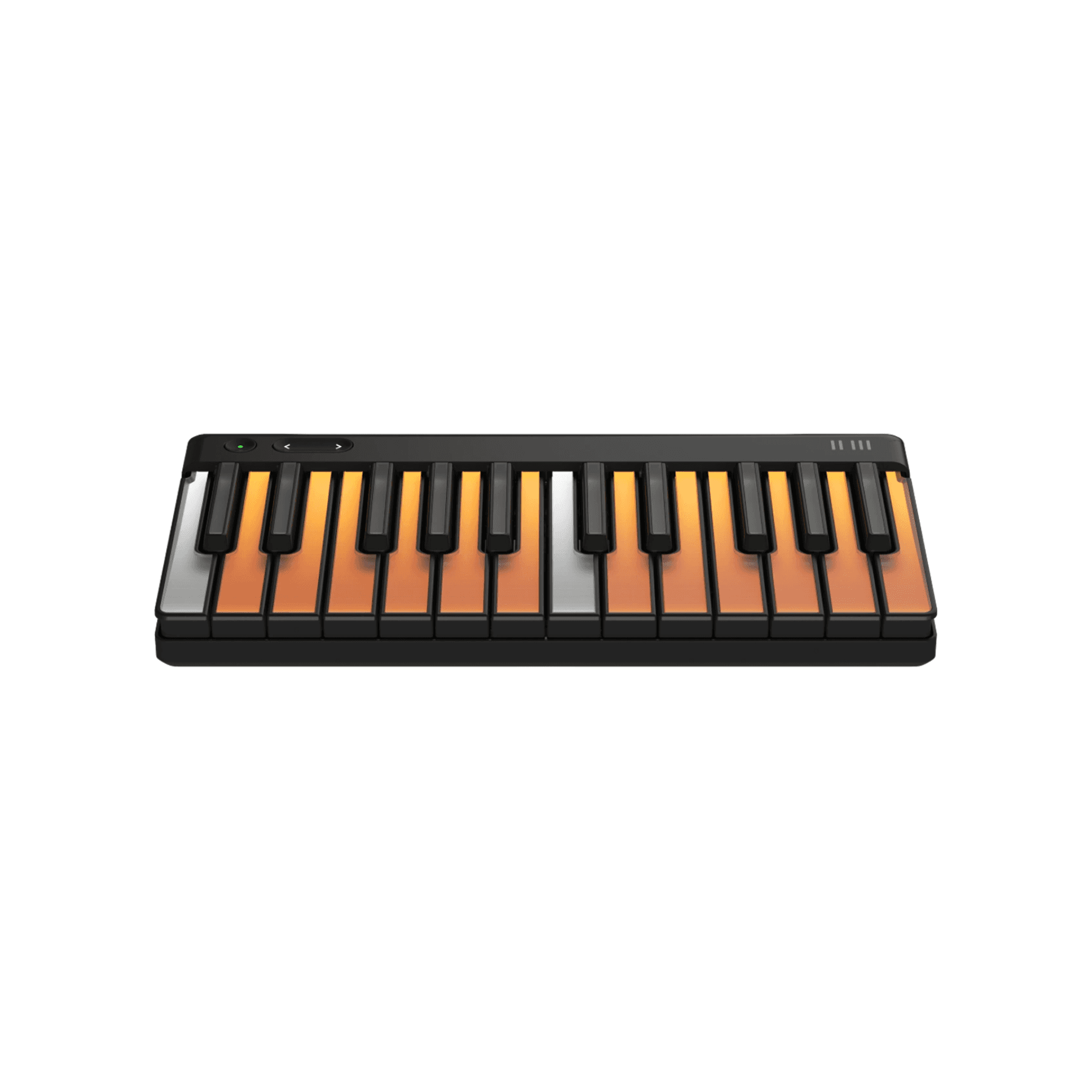
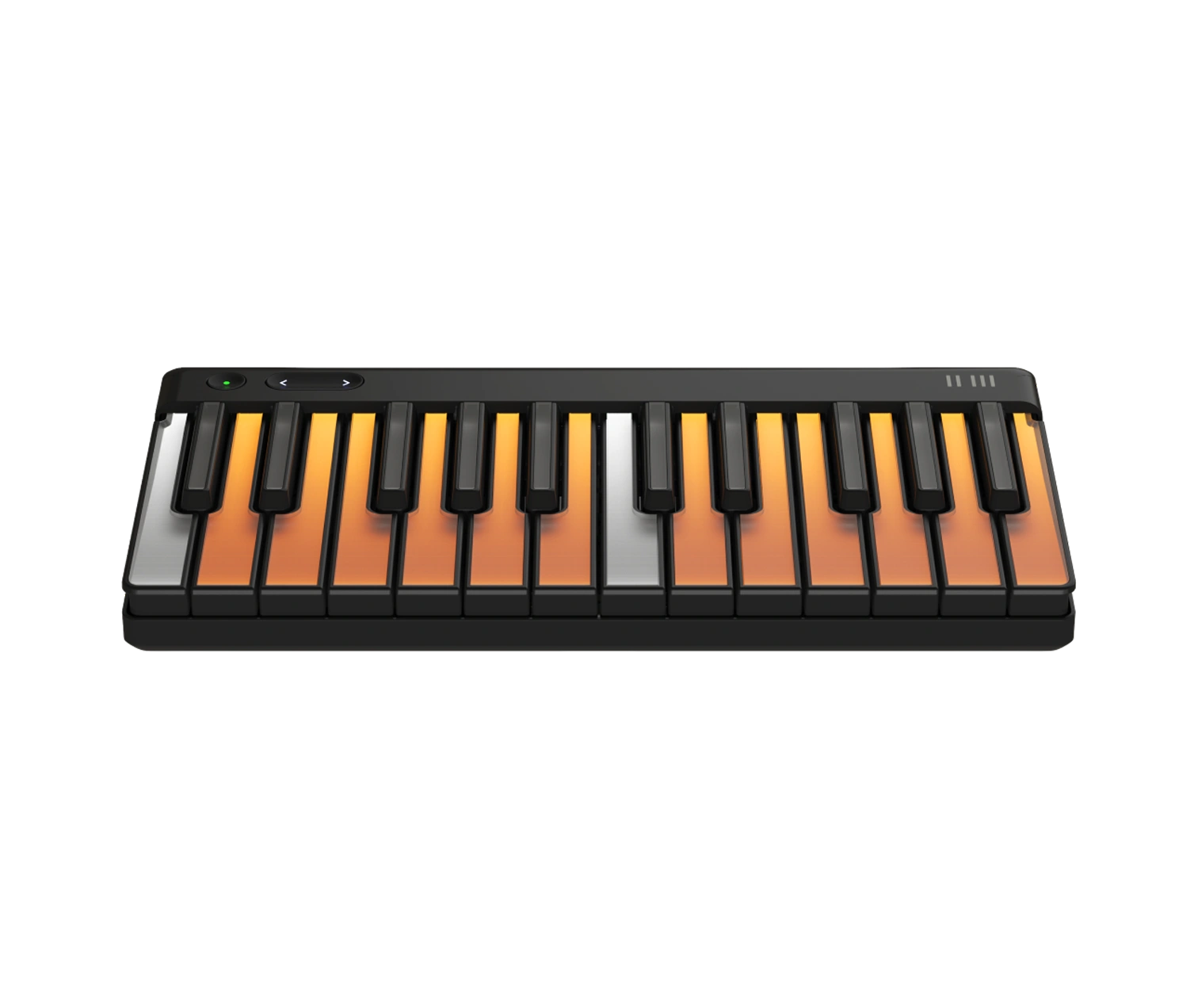
The keybeds on most compact MIDI controllers are an afterthought. Thin plastic, uniform resistance, zero expressiveness per note. Roli approached the Piano M differently, starting with the surface itself. Twenty-four RGB keys with polyphonic pitch bend and aftertouch mean each note responds independently to pressure and lateral movement. The result is a controller that plays closer to a physical instrument than anything else at this size and price.
The Piano M is the most accessible entry point into MPE performance, and Roli designed it to feel that way without condescending. Light-guided scales and chords help sketch ideas quickly. Bluetooth MIDI and USB keep latency negligible. The six-hour battery handles couch sessions and commutes. The build is slim, the lines are clean, and the glowing keys add useful visual feedback without looking garish. It doesn't generate sound independently, which makes it a controller rather than a standalone instrument, but paired with a laptop or tablet running Ableton, Logic, or FL Studio, it becomes the most expressive portable input device in this price range.
Where the Seaboard prioritizes a fluid, continuous playing surface for performers, the Piano M offers a more familiar key layout with added expressiveness layered on top. It ships with ROLI Studio and over 400 presets, so the depth is there from the start. For home musicians building a minimalist home studio setup around a single expressive controller, the Piano M is the most considered option at this size. Pair it with a well-organized desk, and it disappears into the workspace until you need it.
Lava Genie – $399
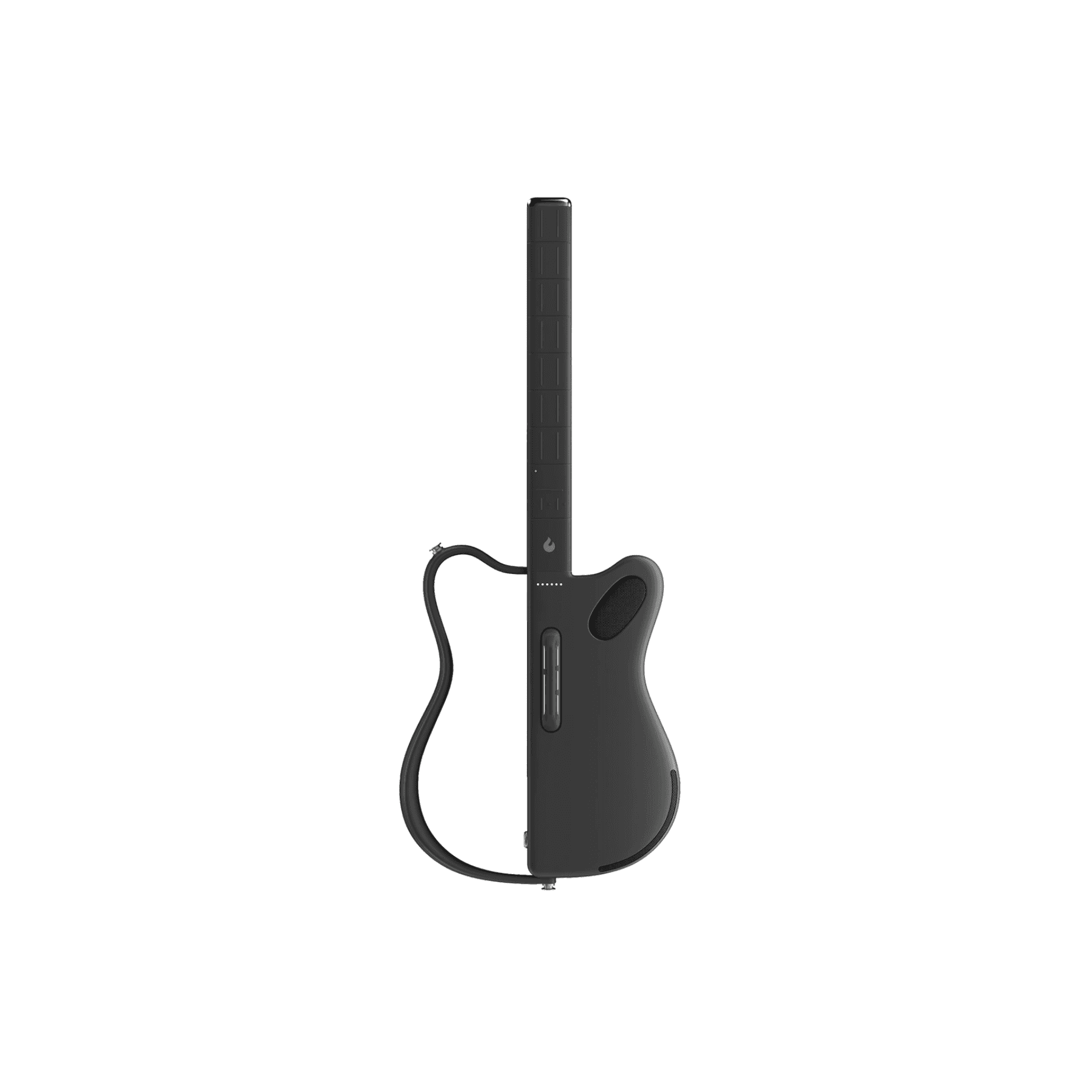
Lava Music built its reputation on the LAVA ME series, carbon fiber acoustic guitars with onboard effects that looked unlike anything else in a guitar shop. The Lava Genie takes that philosophy further. It removes the strings entirely.
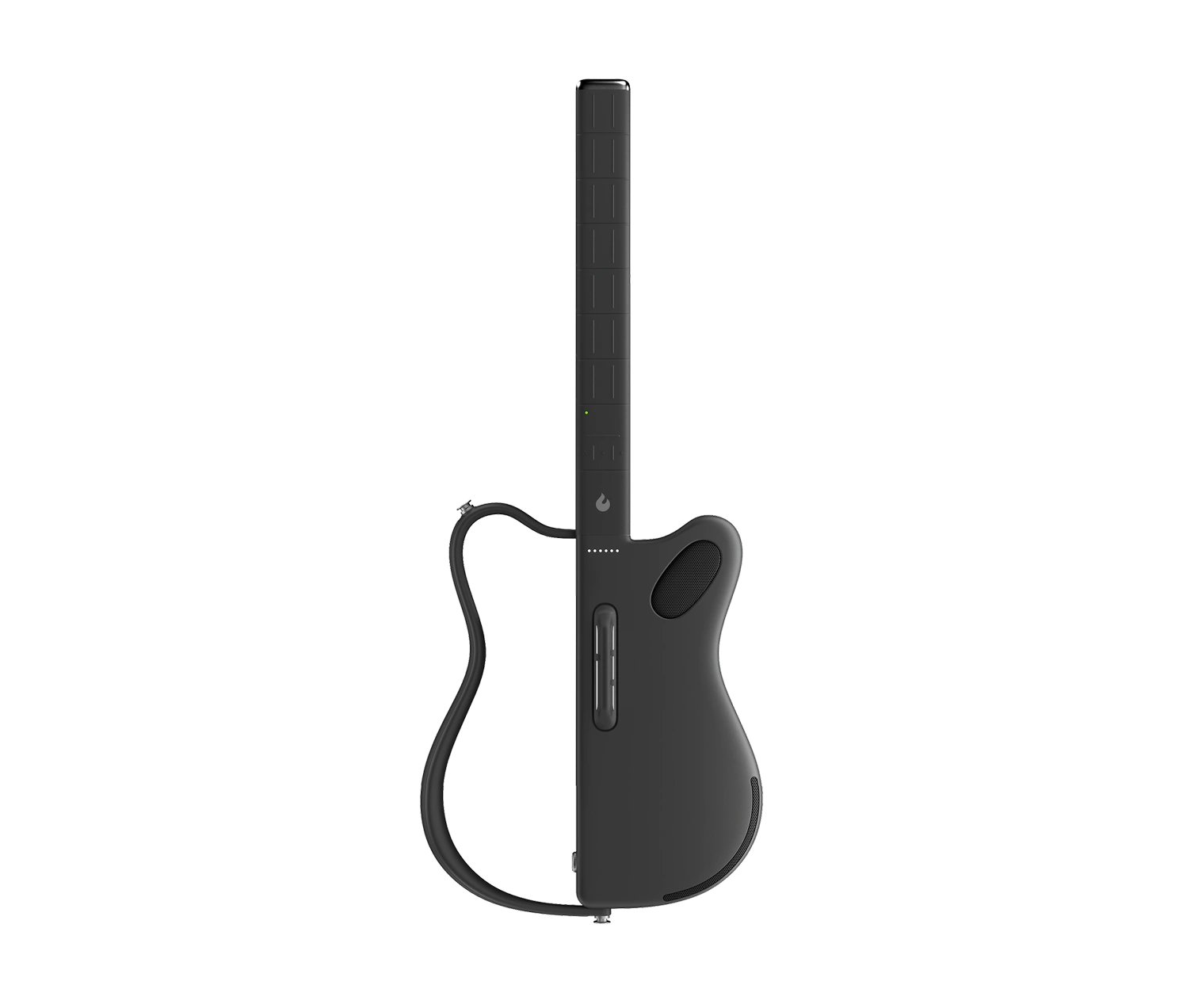
What remains is a fingerboard-style interface on the face of the instrument, a TapPad for rhythm and bass triggering, and a hardware design that folds flat for travel. The Lava Genie is not trying to replace a guitar. It's trying to replace a guitar, a drum machine, a bass, and an effects unit simultaneously, in a package light enough to carry anywhere. Touch the fingerboard to select chords, change keys, and add extended voicings. Press the TapPad with varying pressure to trigger drums, bass lines, and arpeggios. The LAVA+ app adds song learning with guiding lights and lavaAI-generated chord charts. Over 500 instrument presets, studio-grade sampling, and built-in effects including reverb, delay, and cabinet simulations give the Lava Genie a tonal range that covers modern worship, pop, hip-hop, and ambient textures.
The tradeoff is that the Lava Genie rewards players who think in terms of arrangement and texture rather than technique. It's a performance tool built for immediacy. The audio output handles recording and live use, and the lightweight case makes it genuinely portable in a way that acoustic guitars are not. As a space-saving minimalist instrument for apartment living, it's one of the most complete single-device solutions available. It fits squarely in our minimalist items collection for exactly that reason.
Ableton Move – $499
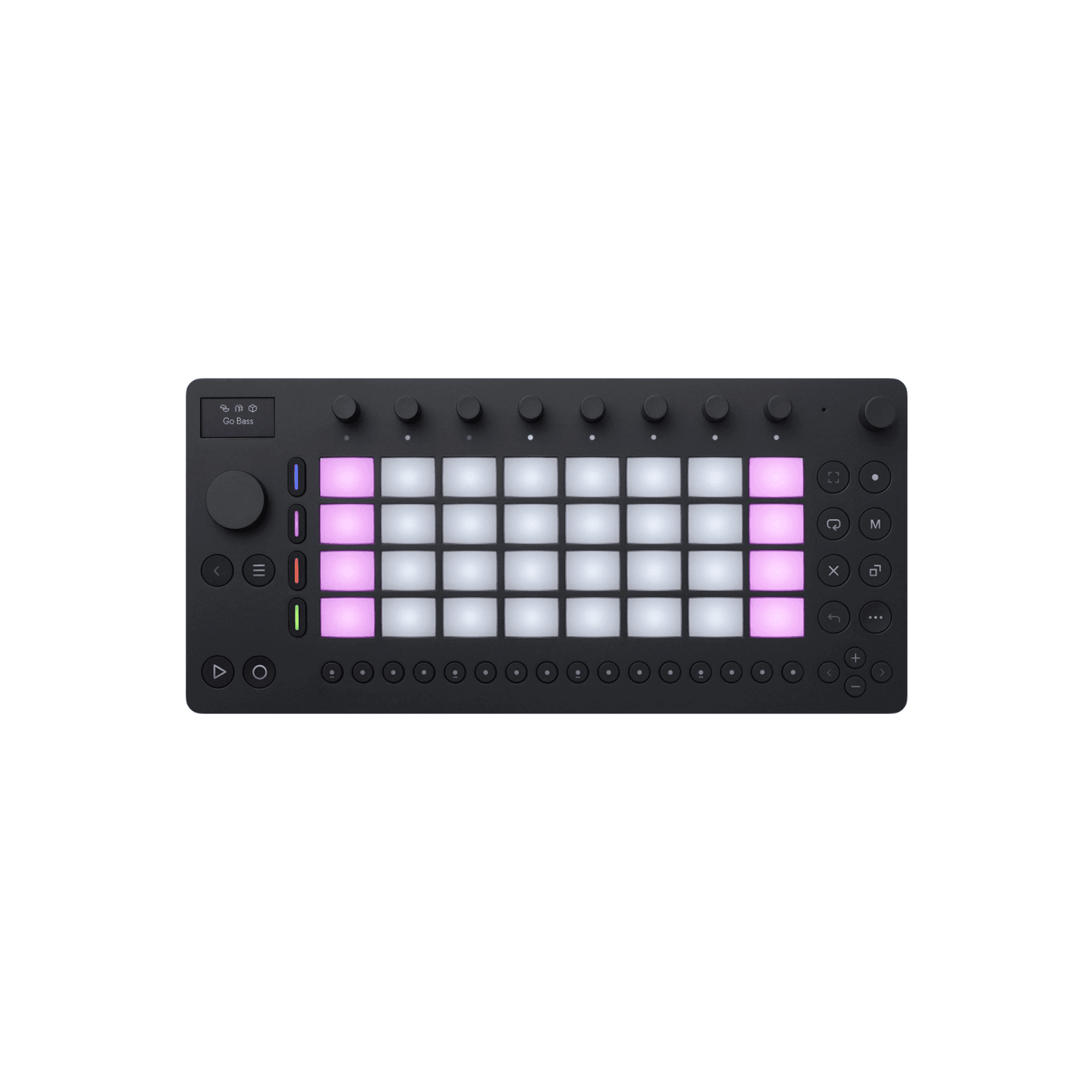
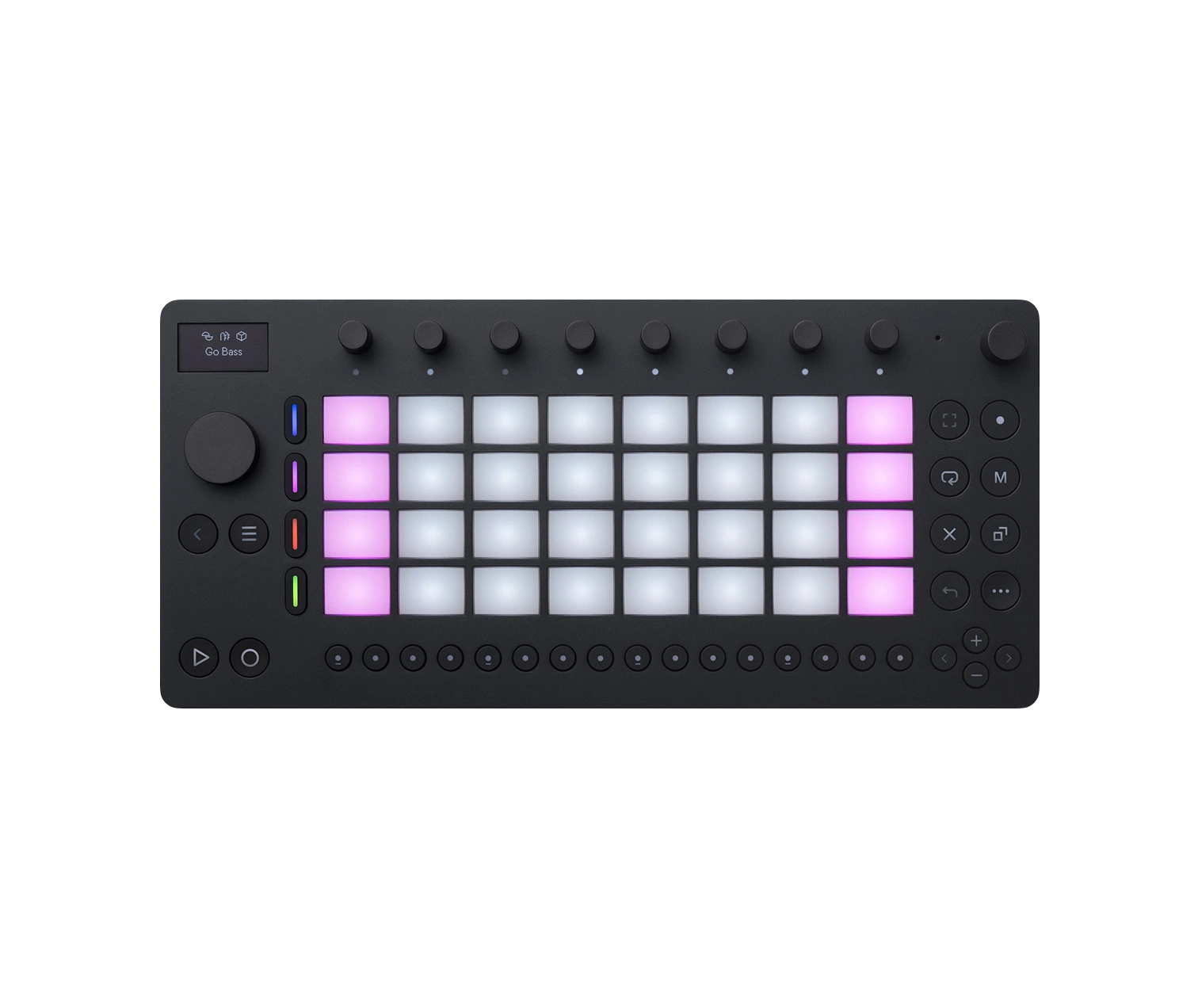
The thing you notice after a week with the Move is not the pads or the display. It's the workflow. Ableton built a standalone instrument that thinks the way producers think, not the way hardware manufacturers assume producers think. Session Mode keeps clip-based creation fluid and immediate. The clickable wheel navigates without hunting through menus. Four flexible tracks switch between drum kit, sampler, and synth without breaking concentration. The whole surface is organized around the assumption that ideas arrive quickly and need to be captured without friction.
The Move carries 32 poly-aftertouch pads, nine touch-sensitive encoders, an OLED display, a built-in microphone, and 64 GB of onboard storage. Wi-Fi support means it syncs with Live 12 Standard without a cable. The onboard speaker handles playback anywhere. Resampling the main output for immediate idea-flipping is the kind of feature that sounds minor until you're using it at midnight with headphones on and the session is moving fast.
The build quality is compact and premium without being precious. The pads are well-spaced and responsive. The 16 Pitches mode turns any drum one-shot into a melodic instrument across the grid, a detail that changes how you approach rhythm entirely. This is the instrument on this list most likely to replace a full desktop setup for the right person.
What these instruments share
None of these instruments look like the gear in a traditional music store. That's not a coincidence. Each one was designed with the assumption that the person playing it cares about the object itself, not just what it produces. The Seaboard and Piano M from Roli share a commitment to expressive touch that standard MIDI controllers ignore entirely. The Orchid Orc 1 reframes harmony as something physical and immediate. The Lava Genie removes the traditional instrument form factor altogether. The Move brings a professional production workflow into a device small enough to carry daily.
The best minimalist musical instruments for home musicians are not the ones with the fewest features. They're the ones where every feature earns its presence. These five share that quality. They sit well in a room, they travel without complaint, and they reward the kind of sustained attention that good design always invites.
If you're building a home environment that takes music as seriously as it takes everything else, the instrument is one piece of a larger picture. Consider also checking out our guide to the best ergonomic home office chairs or desk mats that will improve any home office setup to make sure the space you're creating in, leads to better work (or music in this case).
Products mentioned
About the author
Justin Farrugia
Founder & Editor of Curated Supply
Justin Farrugia is the founder and editor of Curated Supply, a design-led directory to things worth owning. He has personally curated over 1,000 products across workspace, carry, coffee, audio, and the home, each judged against one standard: design intent, material quality, and the restraint that lets a thing last.