Best ergonomic home office chairs for posture and long hours
Five ergonomic chairs built for long work hours, covering spinal support, adjustability and design, from Herman Miller, Steelcase, HÅG and Humanscale.
Updated
The Aeron comes in three sizes and almost every other office chair comes in one, which is the single most useful fact in this category and the one most likely to decide whether a chair works for you. A chair sized wrong is uncomfortable whatever it costs, and no amount of adjustment fixes a seat pan too deep for your thigh.
The second fact is the warranty. Steelcase covers the Gesture for twelve years of multi-shift use including parts and labour, which is a manufacturer stating in writing how long it expects its own chair to last. That figure is worth more than any adjective in a product description.
1.Herman Miller Aeron
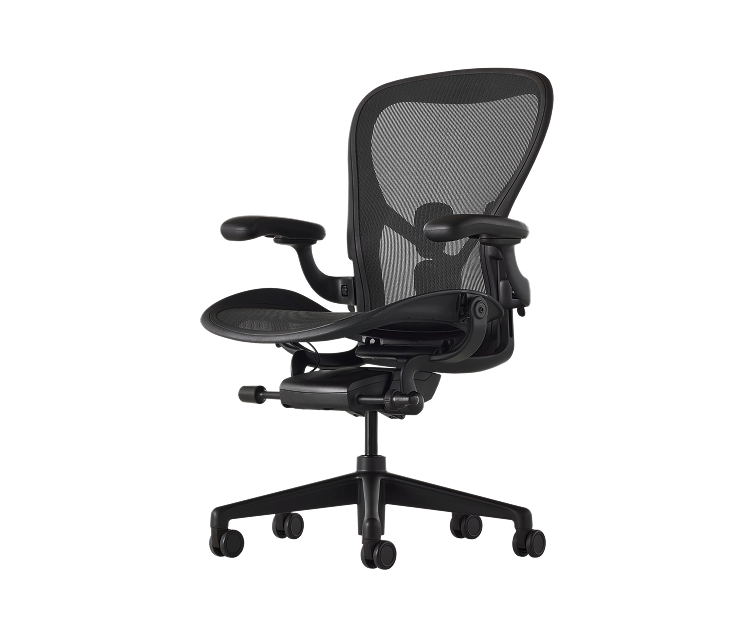
Sizes A, B and C, which makes it the only chair here that admits people are different shapes.
Most makers build one frame and expect adjustment to cover the rest. The Aeron changes the frame itself, so seat depth, back height and width all shift with the size instead of settling for one compromise. Getting the size right matters more than any other decision you will make about this chair.
The 8Z Pellicle is the mesh, and it is zoned into eight tension areas instead of one density, so the areas under the sit bones and behind the shoulder blades support differently. Mesh also breathes, which over a long day is a comfort variable as real as support.
PostureFit SL adjusts support to the sacrum and the lumbar independently, and Harmonic 2 Tilt is the recline mechanism. Herman Miller builds the chair from more than 50 per cent recycled material, including ocean-bound plastic since 2021.
- Sizes
- A, B and C frames
- Suspension
- 8Z Pellicle, eight tension zones
- Support
- Adjustable PostureFit SL, sacral and lumbar
- Recline
- Harmonic 2 Tilt
- Materials
- More than 50% recycled, including ocean-bound plastic
Specifications as published by the manufacturer. Source
2.Steelcase Gesture
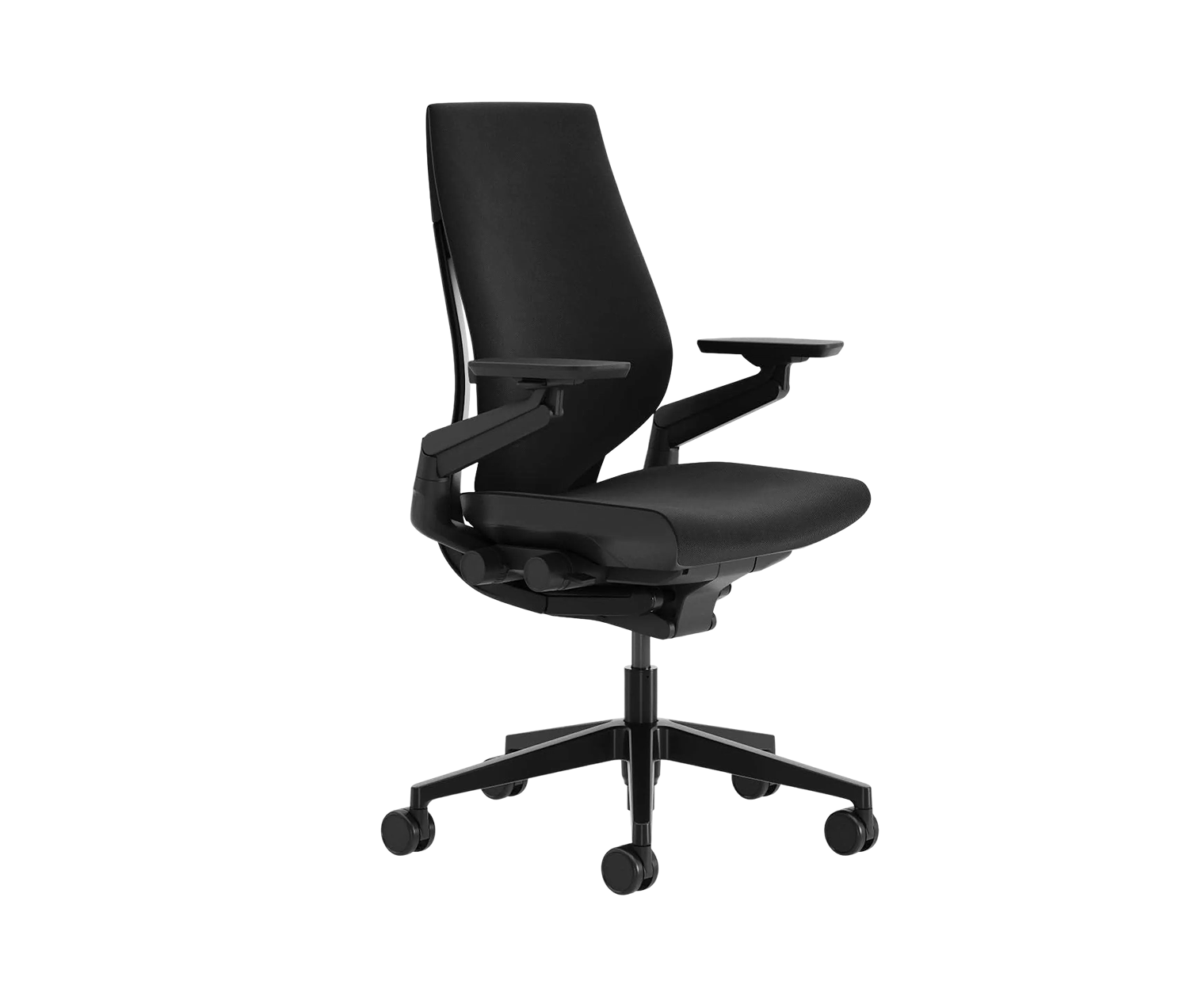
The arms move through a full 360 degrees, and a twelve-year warranty says how long Steelcase expects that mechanism to keep doing it.
Arms are where most chairs give up. They go up and down and perhaps in and out, and then a phone appears in one hand and a tablet in the other and the arm is in the wrong place for both. Steelcase designed the Gesture's arms around the postures people adopt with devices, which is why they rotate as well as translate.
Twelve years of multi-shift 24/7 cover, parts and labour included, is the most concrete durability claim on this page. Multi-shift means rated for a chair in use around the clock and not eight hours a day, which is a considerably harder test than a home office applies.
Rated to 400 lb. Full recline with three stop settings and an upright lock, so the chair locks at a working angle instead of floating.
- Warranty
- 12 years, multi-shift, 24/7, parts and labour
- Weight capacity
- Up to 400 lb
- Arms
- Full 360 degree range of motion
- Recline
- Three angle stops and an upright back lock
- Upholstery
- Fabric, leather, vinyl, COM or COL
Specifications as published by the manufacturer. Source
3.Herman Miller Embody
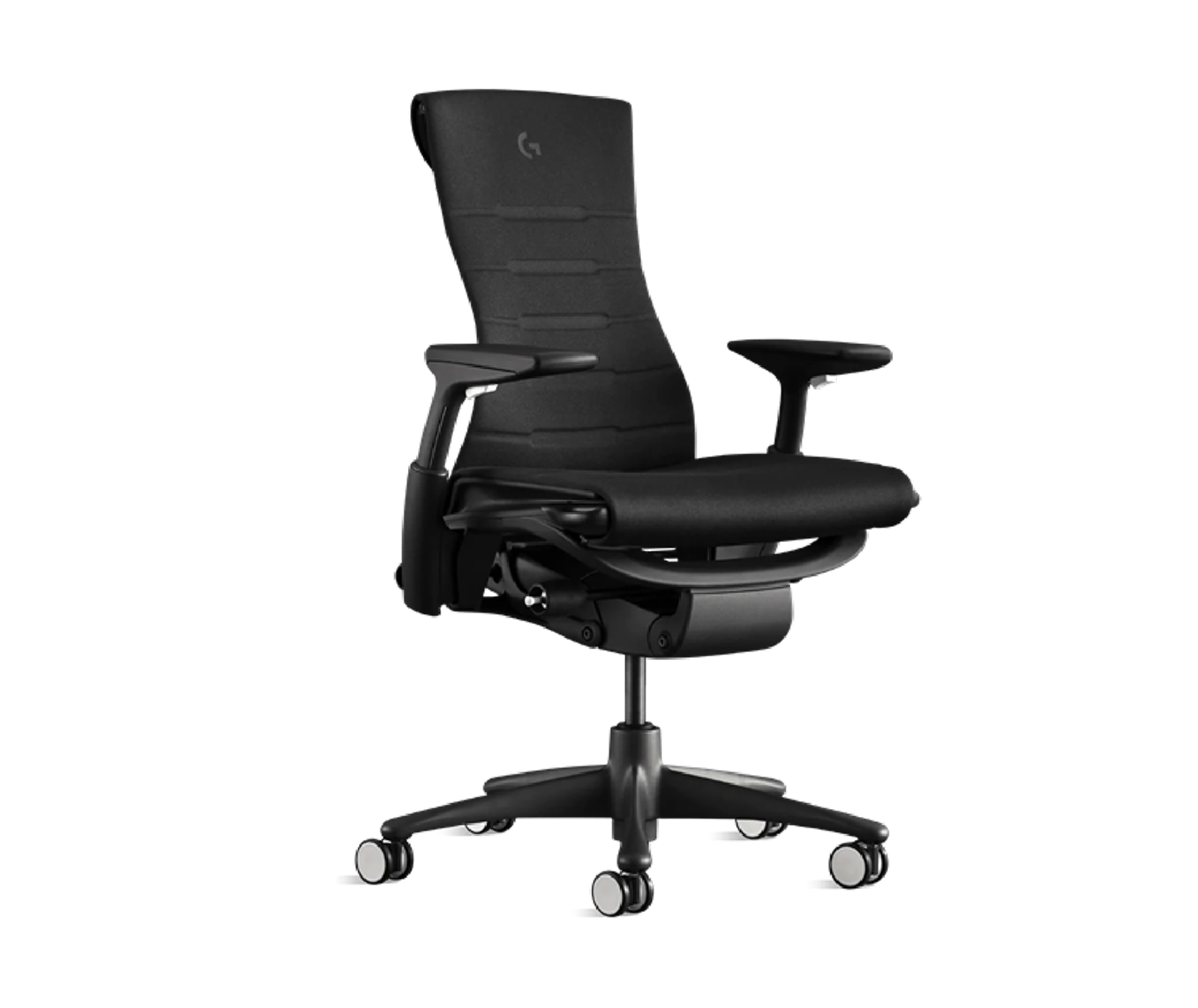
It encourages micro-movement instead of holding you still, which is the opposite of what most ergonomic chairs claim to do.
Sitting still is the problem. Bad posture, by itself, is not. Static loading compresses spinal discs and restricts blood flow, and the fix is not a better fixed position but continuous small shifts. The Embody's back is a matrix of pixels on a flexible spine that moves with you as you change position instead of resisting.
The seat distributes pressure across a wider area than a foam pad, which keeps circulation going through a long uninterrupted session. That is the specific case for this chair over the Aeron: not calls and typing, but three hours without standing up.
Its sculptural back is the most distinctive shape on this page, which is either an argument for it or against it depending on the room.
4.HÅG Capisco 8106
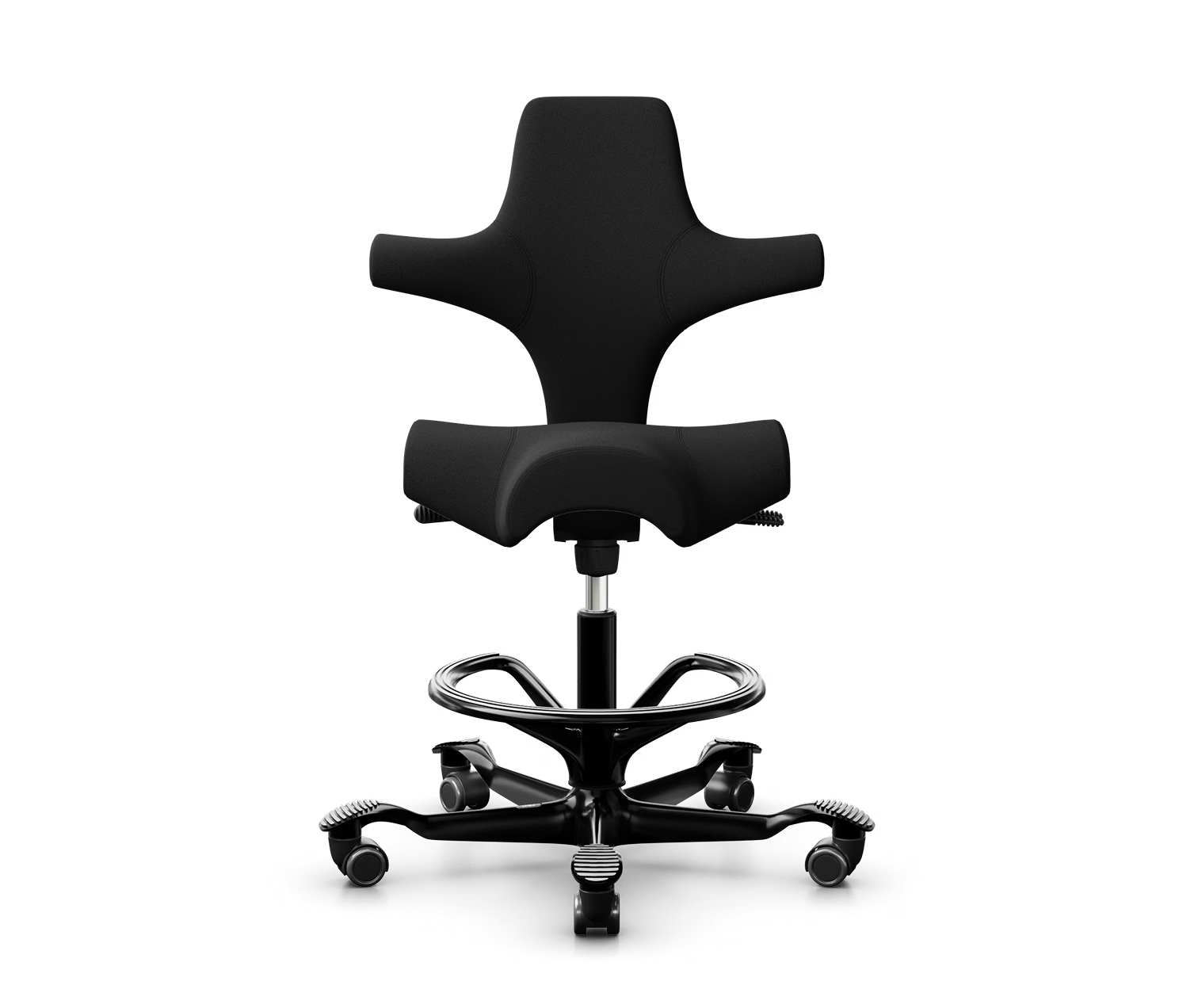
A saddle seat, which means you sit on it in about four different ways and none of them is the way you sit on a normal chair.
The Capisco came out of a Norwegian study of how horse riders sit, and the point of the saddle shape is an open hip angle: thighs angled down instead of horizontal, which keeps the pelvis rotated forward and the lumbar curve intact without a backrest doing the work.
You can also sit on it backwards, straddle it, perch on the front edge at standing-desk height, or use it conventionally. That range is the product, and it is why it suits a desk that moves between sitting and standing.
Flokk makes it, the footprint is the smallest here, and the Scandinavian form is genuinely unusual in a room. Buy it to keep moving. Do not buy it to settle.
5.Humanscale Freedom Headrest
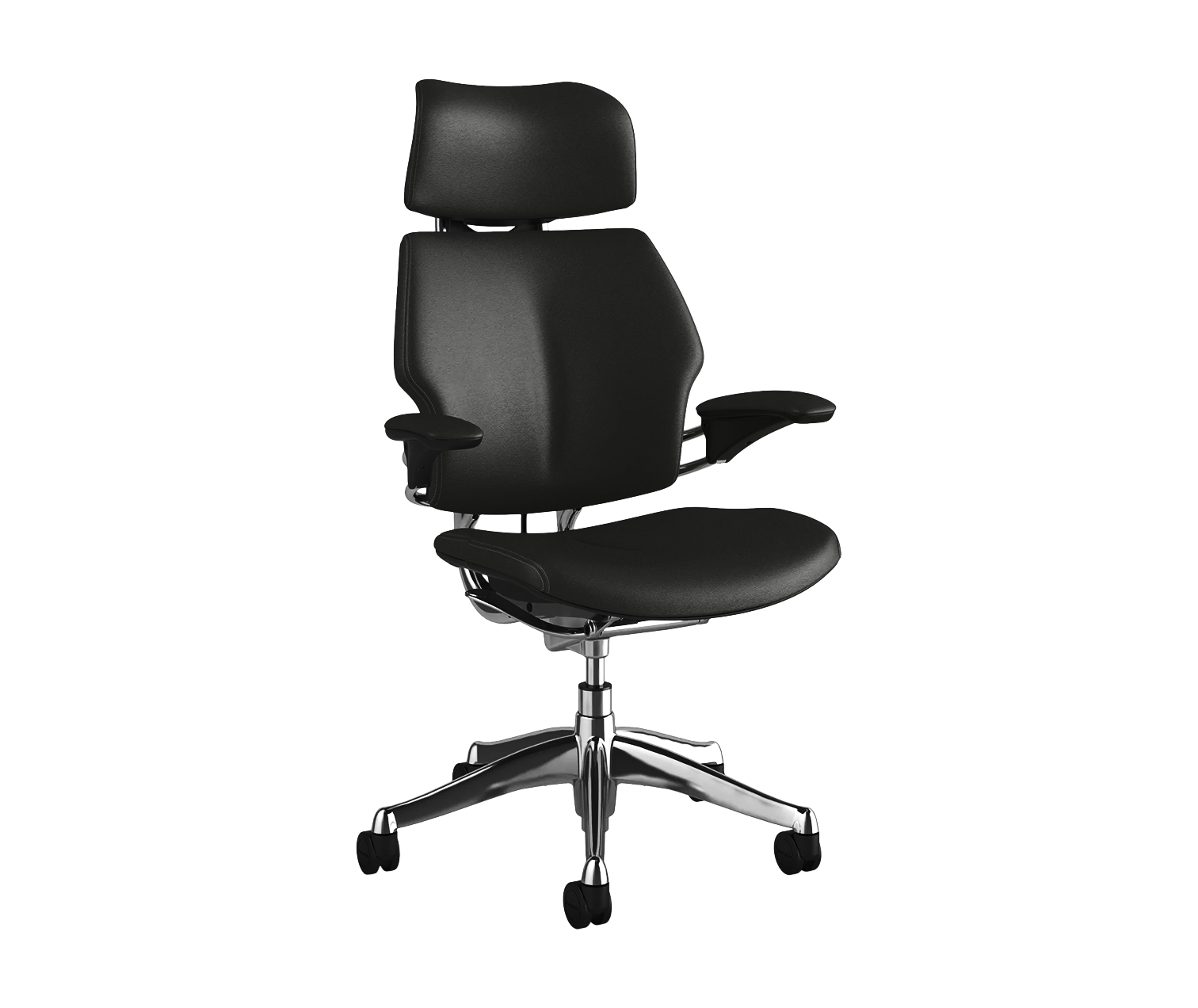
The recline has no tension dial, because it uses your own weight to set the resistance.
That is the Humanscale argument and it is a real one. Every other chair here asks you to find the right recline tension for your body with a knob, and most people never touch it after the first week and sit at the wrong setting for years. The Freedom Headrest uses a weight-sensitive mechanism, so leaning back meets resistance proportional to you.
The headrest follows the same idea, moving as you recline instead of needing its own adjustment. Fewer controls is the design position, and for anybody who will never read a manual it is the correct one.
Contoured seat and back, and the cleanest silhouette here after the Capisco. It is the chair that asks least of its owner.
What to look for in an office chair
Size before features
Almost every chair is one frame with adjustment on top, and the Aeron's A, B and C sizes are the exception. Seat depth is the measurement that matters: sitting fully back, you want two to three fingers of gap between the seat edge and the back of your knee. Too deep and the edge presses into the leg and restricts circulation, and no adjustment on a fixed frame fixes it.
Read the warranty as a durability specification
Steelcase covers the Gesture for twelve years of multi-shift 24/7 use, parts and labour. That is a manufacturer stating in a contract how long it expects its own mechanism to survive constant use, and it is the most honest number in the category. A three-year warranty on a chair costing half as much is telling you something too.
Mesh or foam is a temperature decision
Mesh breathes and does not compress, so it holds its support for years and feels cooler through an afternoon. Foam is warmer, softer at first contact, and eventually takes a permanent impression of you. Neither is more ergonomic. In a warm room mesh wins on comfort alone, and that is most of what people are actually choosing between.
Movement beats posture
The evidence points at static loading, not bad posture, as the thing that hurts backs. Sitting perfectly still in an ideal position for three hours is worse than shifting regularly in a decent one. That is the argument behind the Embody's flexing back and the Capisco's saddle: chairs that let you keep changing position instead of holding one.
Which of the five
So: the right size, first and always, the Aeron. Arms that follow your hands, the Gesture. Three hours without standing up, the Embody. A desk that goes up and down, the Capisco. And the Freedom if you will never adjust anything.
A chair is the largest single decision in a home office. What sits in front of it is in items to consider for your next desk setup.
How we chose
We chose these five on fit and on what each maker will put in writing about durability, because at this price every one of them is comfortable in a showroom and the differences show up in year three. Herman Miller and Steelcase publish enough for a panel each. Flokk and Humanscale publish nothing our fetcher can read for these models, so three picks carry no panel and there is no comparison table.
Common questions
Seat depth is the measurement that decides it. Sit fully back against the backrest: you want two to three fingers of gap between the front edge of the seat and the back of your knee. Less and the edge presses into your leg and restricts circulation over a long day. Most chairs come in one frame and expect adjustment to cover everyone; the Herman Miller Aeron is the notable exception, with three sizes.
It is mostly a temperature decision rather than an ergonomic one. Mesh breathes, does not compress, and holds its support for years. Foam is warmer, softer on first contact, and eventually takes a permanent impression of you. In a warm room mesh is more comfortable across an afternoon, which is what most people are really choosing between.
It is the most concrete durability claim a manufacturer makes, because it is contractual. Steelcase's twelve years on the Gesture covers multi-shift 24/7 use with parts and labour, which is a chair rated for round-the-clock office use rather than a working day. Read a short warranty on an expensive chair as information too.
It helps with the mechanism most likely to be causing it, which is static loading rather than posture. Sitting completely still compresses spinal discs and restricts blood flow regardless of how good the position is, so the chairs that help most are the ones that let you keep shifting: a flexing back like the Embody's, or a saddle seat like the Capisco's. Standing up every half hour does more than any chair.
A seat shaped like a riding saddle, which angles your thighs downward instead of horizontally and keeps the pelvis rotated forward, so the lumbar curve holds itself without a backrest doing the work. It suits desks that move between sitting and standing, because you can perch on the front edge at standing height. It does not suit anyone who wants to settle back and stay there.
About the author

Justin Farrugia
Founder & Editor of Curated Supply
Justin Farrugia is the founder and editor of Curated Supply, a design-led directory to things worth owning. He has personally curated over 1,000 products across workspace, carry, coffee, audio, and the home, each judged against one standard: design intent, material quality, and the restraint that lets a thing last.