Staff Pick

About
Sofas are usually sold on how they look and bought on how they feel three years later. Most seats are a block of foam over elastic webbing, and after a few years they sit like it: a shallow dip where somebody always sits, and a firmer edge where nobody does.
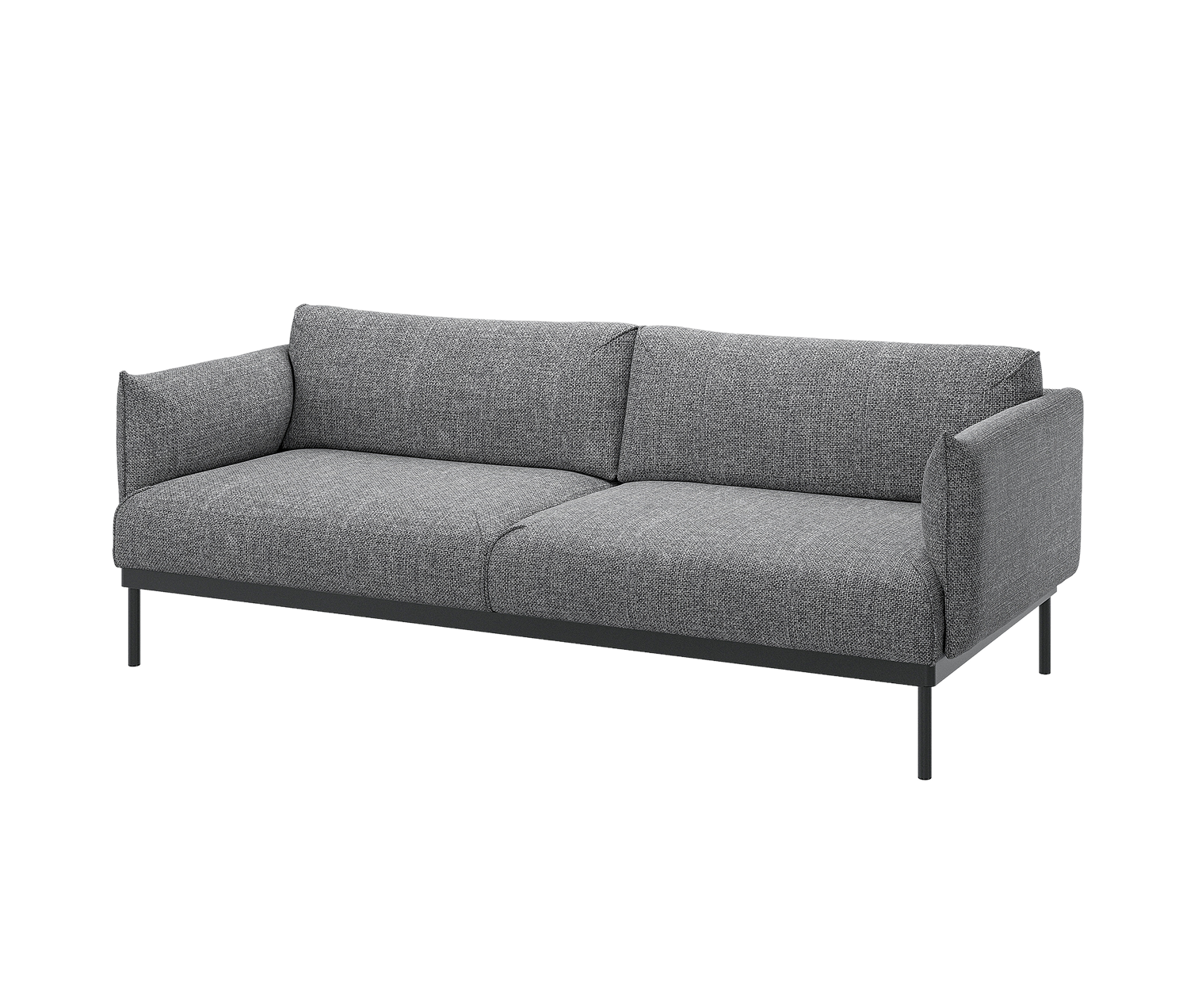
BoConcept's Amsterdam, designed by Henrik Pedersen, layers three suspension systems under the seat: pocket springs over zig-zag springs over rubberised belts. It is built closer to the way a mattress is than the way a sofa usually is. High-resilience foam at 35 kilograms per cubic metre and a layer of wadding rest on the pocket springs, each one flexing on its own rather than as part of a sheet, and the load then passes down through the zig-zag springs and the rubberised belts into the frame. The back cushions are a foam and feather mix, and the loose cushions arrive with a bolster that can be moved around to change how deep the seat feels from one end to the other.
Pedersen kept all that volume from reading as heavy. The legs are slim, 6¾ inches, powder-coated in matte dark grey, and the surfaces are drawn tight with piped seams and tufted seats. The seat sits low, 16¼ inches off the floor. In the pictured fabric, the upholstery is a weave of 70 per cent cotton with acrylic, polyester, wool and polyamide.
The modules move freely, so Amsterdam can stand on its own or join BoConcept's other units in whatever shape a room turns out to want. Each one is made to order in Ølgod, Denmark, on a 10 to 12 week lead time, which is the part worth knowing before you measure the wall.
- Designed in
- Denmark

- designer
- Henrik Pedersen
- Dimensions
- 98½ x 42¼ x 24¾ in (W x D x H)
- Weight
- 152 lb
- Materials
- Fabric
- 70% cotton with acrylic, polyester, wool, polyamide
- Finish
- Matte dark grey powder-coated legs
Figures as published by the manufacturer. Source