Range Rover
$120,000
About
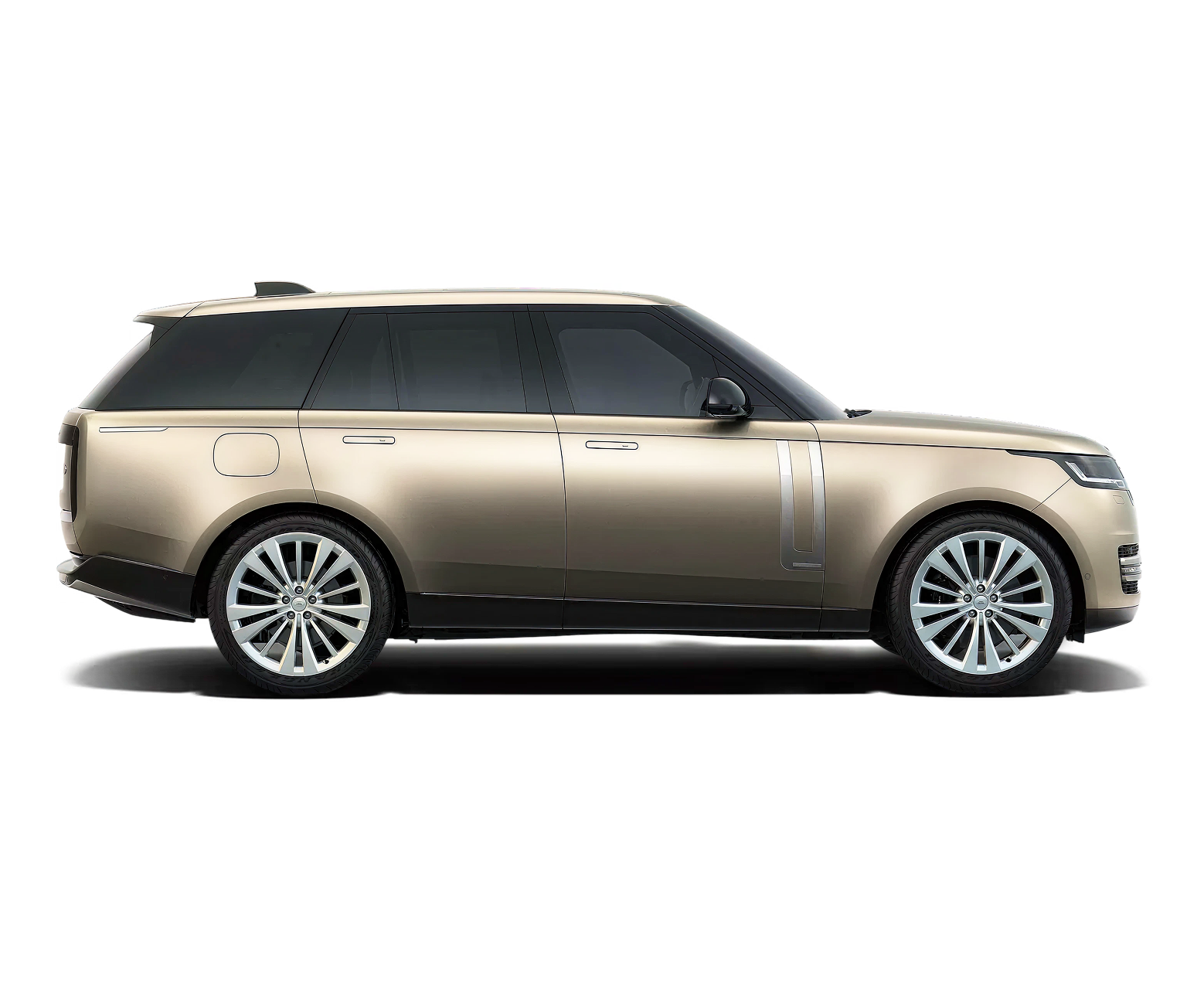
The Range Rover has spent five decades as the car people bought to avoid choosing between a limousine and a Land Rover. The 2026 version takes the same body and offers it four different ways, one of which no longer has an engine in it at all.
Range Rover now sells the original luxury SUV as a battery electric car, rated at up to 600 km on the WLTP cycle and 535 km by the company's own real-world estimate. The electric EV550 reaches 100 km/h in 4.5 seconds and puts roughly 220 km of range back in the first ten minutes on a 350 kW charger. Alongside it sits a plug-in hybrid, pairing a 3.0-litre six-cylinder Ingenium petrol engine with a 160 kW motor, good for 116 km before the engine has to join in. The SV keeps a 4.4-litre V8 making 537 PS and 750 Nm. At the other end, a 350 PS diesel mild hybrid harvests the energy normally thrown away under braking and spends it on the next pull away.
The MLA-Flex chassis is built to absorb vibration before it reaches the cabin, air springs load up for corners, and Adaptive Dynamics samples body and steering movement up to 500 times a second to reset the dampers as it goes. All-Wheel Steering turns the rear wheels as well as the front, which is how something this long manages a 10.95 metre turning circle on the standard wheelbase and 11.54 metres on the long one.
Two details tell you who the car is for. ClearSight Ground View stitches the camera feeds into a picture of the ground hidden under the bonnet, so you can see what the front wheels are about to climb, and the long wheelbase seven-seat runs semi-aniline heated leather across all three rows, back row included.
- Designed in
- United Kingdom

- Range
- Up to 600 km (372 miles) on a charge, electric model
- Charging
- 10 to 80 percent in 22 minutes on a 350 kW DC charger
- Size
- Standard or long wheelbase, seating up to seven
- Leather
- Semi-aniline, heated across all three rows
Figures as published by the manufacturer. Source