About
A crank on the side of a games console looks like a joke about winding up a toy, or at best a charging handle for when the battery dies. It is neither. It charges nothing, and Panic says so first, before anyone can be disappointed.
The Playdate's crank is a fold-out analogue controller that reports a continuous angle, which is the whole point of it: winding speed can drive something a button cannot express. Not every game asks for it. When Panic wants to make the argument, it points at Crankin's Time Travel Adventure, where the rate you turn the handle is the rate time moves. The rest of the inputs are deliberately ordinary, a D-pad, A and B, and a three-axis accelerometer, so the crank is the only thing a designer has to think about differently.
The hardware under it is modest on purpose. A 168 MHz Cortex-M7 runs the system with 16 megabytes of RAM and an 8 kilobyte cache, the free SDK takes Lua or C, and Wi-Fi is 2.4 GHz 802.11bgn. Panic's help pages are blunt that there is no Bluetooth at all. Put the console down and the screen never goes dark; it carries on as a low-power clock.
Games arrive from three directions. Catalog is a small shop living on the console itself, stocked with what Panic picks from developers around the world. Pulp, a simpler game maker, runs in a web browser with no special hardware. Sideloading a finished game is a supported route rather than a hack, and Playdate Mirror streams the screen to a macOS, Windows or Linux desktop for recording a playthrough or playing with another controller.
- Designed in
- United States

- Made in
- Sungai Petani, Malaysia

- Battery
- 14 days standby clock; 8 hours active
- Movement
- 168 MHz Cortex M7
- Storage
- 16 MB RAM; 8 KB L1 Cache; 4 GB Flash
- Dimensions
- 76 × 74 × 9 mm
- Display
- 400 × 240 1-bit
Figures as published by the manufacturer. Source
Alternatives

You might also like


More in Lifestyle
See all
Staff Pick
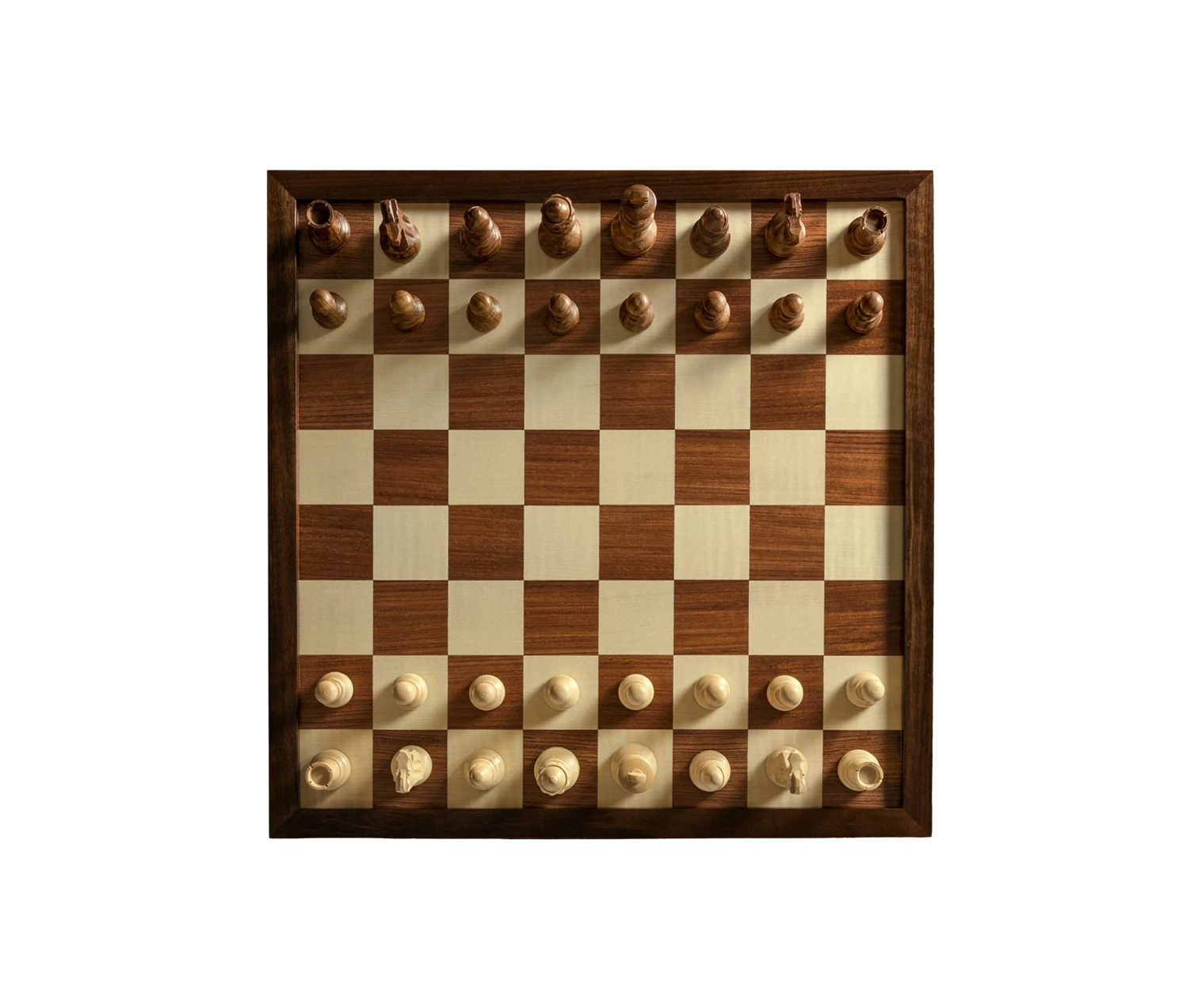
Chess 7-in-1 Heirloom Edition
$230