Best watches under $500 worth wearing
Five watches under $500, from the 21-gram Casio F-91W to Brew's espresso-timing Retrograph, chosen for what you are willing to scratch, not for movement grade.
Above a thousand dollars the argument is about movements, finishing and whether a watchmaker will still have parts in twenty years. Under five hundred that argument mostly disappears, and a better one takes its place: what are you willing to scratch, soak or lose.
The five here run from $22 to $375, which is a seventeen-fold spread and wider than most lists in this band manage. Three of them share the same battery. The cheapest keeps time to the same tolerance as the dearest. Where they genuinely differ is what happens when you knock one against a doorframe. The tier above is in watches under $1,000.
1.Casio F-91W

Pros
- 21 grams, light enough to wear asleep and forget
- Seven years on one CR2016 cell, the longest here by a factor of three
- Keeps time to the same tolerance as everything else on this page
- Cheap enough that losing it costs nothing worth counting
Cons
- A resin crystal that scratches in ordinary wear
- The strap is the first thing to fail, and it is not designed to be swapped
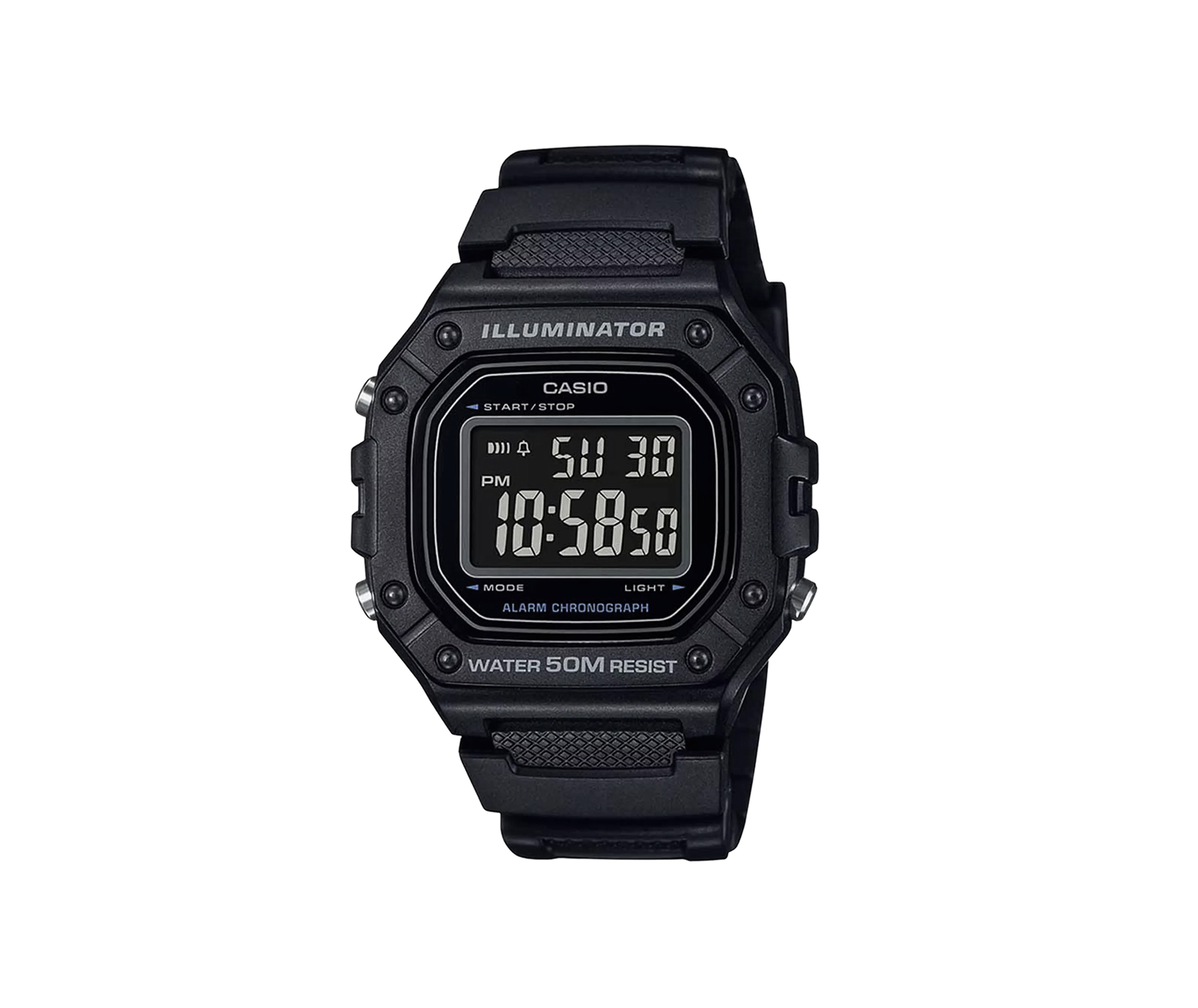
21 grams and a seven-year battery, which together mean you stop noticing you are wearing it.
The F-91W has been in production since 1989 and at its peak Casio made around three million a year, which is the sort of number that makes it the best-selling watch in the world, not merely a popular one. Nothing about it has changed: same resin case, same resin crystal, same 30 metres of water resistance.
The case is 38.2 by 35.2 millimetres and 8.5 thick, and the whole watch weighs 21 grams. The G-Shock below is 54 grams. A steel watch of the same diameter runs past 60. You can wear this one asleep and never know.
Casio quotes accuracy at plus or minus 30 seconds a month. That is the same tolerance Casio quotes for watches costing forty times more, because a quartz crystal is a quartz crystal. The CR2016 cell inside should last seven years. Owners routinely report ten.
What you give up is any pretence. The crystal is resin. It scratches if you look at it wrong, the strap gives out first, and the light is dim. None of that matters much at twenty-two dollars, which is the real argument: this is the only watch on the page you could lose on holiday and genuinely not mind.
- Case
- 38.2 x 35.2 x 8.5 mm resin, stainless steel caseback
- Crystal
- Resin
- Movement
- Quartz digital, plus or minus 30 sec per month
- Weight
- 21 g
- Battery
- CR2016, approx. 7 years
- Water resistance
- 30 m (3 ATM)
Specifications as published by the manufacturer. Source
2.Timex Weekender

Pros
- The strap threads out in seconds with no spring bar tool
- INDIGLO lights the whole dial rather than a few painted markers
- 38.5 mm and 8.75 mm thick, small enough to suit most wrists
- Replacement straps cost a few dollars, so the watch is genuinely modular
Cons
- A brass case will show wear at the edges in a way steel does not
- 30 m of water resistance, so rain and hands rather than swimming
The strap slips out in about four seconds without a spring bar tool, which makes the watch a base for straps rather than a finished object.
Slip-thru is the design. One piece of fabric threads behind the case, so a change needs no tools and no fiddling with spring bars. A replacement costs less than a sandwich. Timex has sold the Weekender on that idea for years, and it works: people who own one own six straps.
The case is 38.5 millimetres across and 8.75 thick, in low-lead brass where most watches use steel, with mineral glass over the top and 20 millimetre lugs. Brass keeps the cost down and the weight low, and it will show wear at the edges over years in a way steel does not.
INDIGLO is the other reason this watch persists. The whole dial glows. Most watches light a few painted markers and hope, and nothing at this money does it as well. Water resistance is 30 metres, so rain and hands, not swimming.
At forty dollars the correct way to think about it is as a movement and a case that let you spend the next hundred dollars on straps. Nothing else here invites you to modify it. This one does almost nothing else.
- Case
- 38.5 x 8.75 mm, low-lead brass
- Crystal
- Mineral glass
- Movement
- Quartz analogue
- Strap
- 20 mm single-piece slip-thru, no tools
- Light
- INDIGLO, whole-dial
- Water resistance
- 30 m
Specifications as published by the manufacturer. Source
3.Casio G-Shock DW-5600E

Pros
- 200 m of water resistance, four times anything else on this page
- Shock resistant construction on the cheapest case Casio builds it into
- Electroluminescent backlight with afterglow, and an auto calendar to 2099
- 54 grams, light for its bulk because the case is resin rather than steel
Cons
- 13.4 mm thick, which no shirt cuff will accommodate
- Two years of battery against the F-91W's seven, on the identical cell
200 metres of water resistance and a case that survives a drop onto concrete, for a hundred dollars.
The DW-5600E is the original square, and the specification explains why it survived. 200 metres of water resistance is four times the Brew below, and more than six times the rating on either of the two above it, on the cheapest shock-resistant case Casio makes. The module is the 3229. A 1/100 second stopwatch, a multi-function alarm, and a calendar programmed out to 2099, and Casio quotes it at plus or minus 15 seconds a month.
It measures 48.9 by 42.8 by 13.4 millimetres and weighs 54 grams, so it is more than twice the F-91W and still light for its bulk, because resin does the work steel usually would.
Here is the part worth noticing. It runs the same CR2016 cell as the F-91W, and gets about two years against the F-91W's seven. The difference is what the cell has to feed: an electroluminescent panel that lights the whole face, and a module sealed well enough for 200 metres. Same battery, three and a half times the drain, and both figures come from Casio.
If you already read about the GA-2100 in the tier above, this is its ancestor and its opposite: thicker, squarer, less elegant and considerably harder to kill.
- Case
- 48.9 x 42.8 x 13.4 mm resin, shock resistant
- Crystal
- Mineral glass
- Movement
- Quartz digital, module 3229
- Weight
- 54 g
- Battery
- CR2016, approx. 2 years
- Water resistance
- 200 m
Specifications as published by the manufacturer. Source
4.Braun BN0021

Pros
- 38 mm across and 8.5 mm deep, the slimmest case here and the only one that suits a cuff
- A dial drawn in the Braun design office, with one yellow hand doing all the decorative work
- Stainless steel rather than resin or brass
- Sold on leather or steel mesh, so it reads formal or casual
Cons
- Mineral glass, so it will pick up marks the Brew's sapphire would not
- 50 m and a snap caseback mean it is not a watch to swim in regularly
The dial has nothing on it except what the time needs, which is a much harder thing to draw than it looks.
Braun's watches came out of the same design office as its calculators and clocks, and Dietrich Lubs drew the first of them under Dieter Rams. The BN0021 is the plainest survivor of that line: batons, two hands that matter, and one yellow second hand doing the only decorative work on the watch.
That yellow hand is the detail to understand. On a dial with no colour anywhere else, a single moving element in a strong colour tells you at a glance that the watch is running, which is information a plain black hand does not carry. It is a functional decision that happens to be the thing everybody remembers.
The case is 38 millimetres across and 8.5 deep in stainless steel, with mineral glass and a snap caseback. Quartz movement, 5 ATM, leather or steel mesh. 38 by 8.5 is genuinely slim. It slides under a cuff, which the G-Shock will never do.
A scratch on this one would annoy you, and none of the three above it would. Steel case, snap back, a dial where a mark shows. That is what the second hundred dollars buys: a better looking watch, and the beginning of caution.
- Case
- 38 x 8.5 mm, stainless steel, snap caseback
- Crystal
- Mineral glass
- Movement
- Quartz analogue
- Dial
- Batons with a single yellow seconds hand
- Water resistance
- 50 m (5 ATM)
Specifications as published by the manufacturer. Source
5.Brew Retrograph Cobalt

Pros
- The only sapphire crystal on this page, and the reason it will still look new
- Meca-quartz gives a mechanical chronograph's snap reset at quartz prices
- A sub-dial marked for something its owner actually times
- 316L steel and 22 mm quick-release straps
Cons
- 50 m of water resistance for nearly four times the price of the 200 m G-Shock
- The espresso graduations are useless to anyone who does not pull shots
The dial marks the 25 to 35 second window an espresso shot should pull in. A chronograph built for one job.
Most chronographs carry a tachymeter nobody has ever used to calculate an average speed. Brew put graduations on the Retrograph marking the extraction window instead, so the sub-dial answers a question its owner actually asks several times a week.
The movement is meca-quartz, which is the sensible answer at this price. A quartz crystal keeps the time and a mechanical module drives the chronograph, so the hand snaps back to zero with a real click instead of sweeping lazily home. A mechanical chronograph starts several times higher up the market and would not be more accurate.
The case is 38 by 41.5 millimetres and 10.4 thick, in 316L stainless steel with a sapphire crystal, on 22 millimetre quick-release straps. Sapphire is the meaningful upgrade here: it is the only scratch-resistant crystal on this page, and the reason this watch will still look new when the Braun has picked up a few marks.
Water resistance is 5 ATM, the same as the Braun and a quarter of the G-Shock. At $375 you are paying for the case material, the crystal and an idea, and the idea is the part you cannot get anywhere else.
- Case
- 38 x 41.5 x 10.4 mm, 316L stainless steel
- Crystal
- Sapphire
- Movement
- Meca-quartz chronograph, mechanical reset
- Dial
- Graduated for the 25 to 35 second espresso window
- Strap
- 22 mm quick release
- Water resistance
- 50 m (5 ATM)
Specifications as published by the manufacturer. Source
What to consider when buying a watch under $500
Accuracy is not what separates them
Every watch on this page is quartz, and every one of them keeps time to within about 30 seconds a month. The $22 Casio and the $375 Brew are equivalent on the one specification most people assume they are paying for. Once that is off the table, what is left is the case, the crystal, the strap and how much you would mind losing it, which is why this list runs on those things instead.
The crystal decides how it ages, not the case
Four of these five run resin or mineral glass, which scratches. Only the Brew has sapphire. A jeweller can polish a steel case. A scratched crystal sits in your line of sight every time you check the time. If a watch has to still look new in five years, that single line on the specification sheet matters more than the case material above it.
Water resistance does not track price here
The ratings run 30 metres, 30, 200, 50 and 50. The $100 G-Shock beats everything else on the page by four times, including watches nearly four times its price. 30 metres means rain and handwashing. 50 means a shower, and a swim if you are relaxed about it. 200 means you stop thinking about water at all, and only one watch here earns that.
The same battery, very different lives
Three of the five run a CR2016 cell: the F-91W, the Weekender and the DW-5600E. Casio quotes seven years for the first and two for the third on identical hardware, because the G-Shock feeds a full electroluminescent panel and a case sealed to 200 metres. Battery life at this end is a statement about how much watch there is to run, not about the quality of the cell.
Which of the five suits you
The Casio, if you want a watch you can forget you own and would not mourn. The Timex, if the straps are the point and the watch is a mount for them. The G-Shock, if it needs to survive whatever you do next. The Braun, if the dial matters more than the durability and you wear cuffs. The Brew, if you want the only sapphire crystal here and a chronograph that answers a real question.
Spending more in this band does not buy better timekeeping and it does not always buy better sealing. It buys materials that age well and a design somebody thought about, and those are worth paying for only once you have decided how carefully you intend to live.
All 5 compared
Casio F91WLightest, and disposable- Case
- 38.2 mm resin
- Crystal
- Resin
- Water
- 30 m
Timex Weekender WatchA mount for straps- Case
- 38.5 mm brass
- Crystal
- Mineral
- Water
- 30 m
Casio G-SHOCK DW5600Hardest to kill- Case
- 48.9 mm resin
- Crystal
- Mineral
- Water
- 200 m
Braun BN0021Slimmest, and the dial- Case
- 38 mm steel
- Crystal
- Mineral
- Water
- 50 m
Brew Watches Retrograph CobaltOnly sapphire here- Case
- 38 mm 316L
- Crystal
- Sapphire
- Water
- 50 m
Water resistance is the rating, not a recommendation: 30 m is rain and handwashing, 50 m is a shower, 200 m is the only figure here that lets you stop thinking about it. The crystal is the line that decides how a watch ages, because a scratch there sits in your eyeline every time you check the time.
How we chose
We ordered these five by what you would be willing to damage rather than by movement grade, because every watch here is quartz and every one keeps time to about the same tolerance. Casio, Timex, Braun and Brew all publish specifications on the pages that sell these references, and each panel is quoted from them. Where a maker publishes a figure and a retailer contradicts it, the maker wins. Strap and dial variants change nothing in these panels except the strap material, so the case, crystal and sealing figures hold across the colours.
Common questions
For practical purposes yes, and that is the most useful thing to know about this price band. Every watch here runs a quartz crystal, and quartz movements at almost any price keep time to within about 30 seconds a month. Casio quotes plus or minus 30 for the F-91W and for watches costing forty times more. Once accuracy is off the table, what you are actually buying above $100 is the case material, the crystal, the strap and the design.
30 metres covers rain, handwashing and being caught out, which is what the Casio F-91W and the Timex Weekender offer. 50 metres, as on the Braun and the Brew, covers a shower and a swim if you are relaxed about it. 200 metres, which only the G-Shock reaches here, means you stop thinking about water. Note that the ratings do not track price on this page: the $100 G-Shock beats the $375 Brew by four times.
It is the single specification that decides how the watch looks in five years. Four of these five use resin or mineral glass, both of which scratch in normal wear, and only the Brew Retrograph has sapphire. A steel case can be polished; a scratched crystal sits directly in your line of sight every time you check the time. If the watch has to still look new later, that line matters more than the case material above it.
Because of what it has to power. The Casio F-91W, the Timex Weekender and the Casio DW-5600E all run a CR2016 cell. Casio quotes about seven years for the F-91W and about two for the DW-5600E on identical hardware, because the G-Shock feeds an electroluminescent panel that lights the whole face and a module sealed to 200 metres. Battery life here describes how much watch there is to run, not the quality of the cell.
About the author

Justin Farrugia
Founder & Editor of Curated Supply
Justin Farrugia is the founder and editor of Curated Supply, a design-led directory to things worth owning. He has personally curated over 1,000 products across workspace, carry, coffee, audio, and the home, each judged against one standard: design intent, material quality, and the restraint that lets a thing last.