About
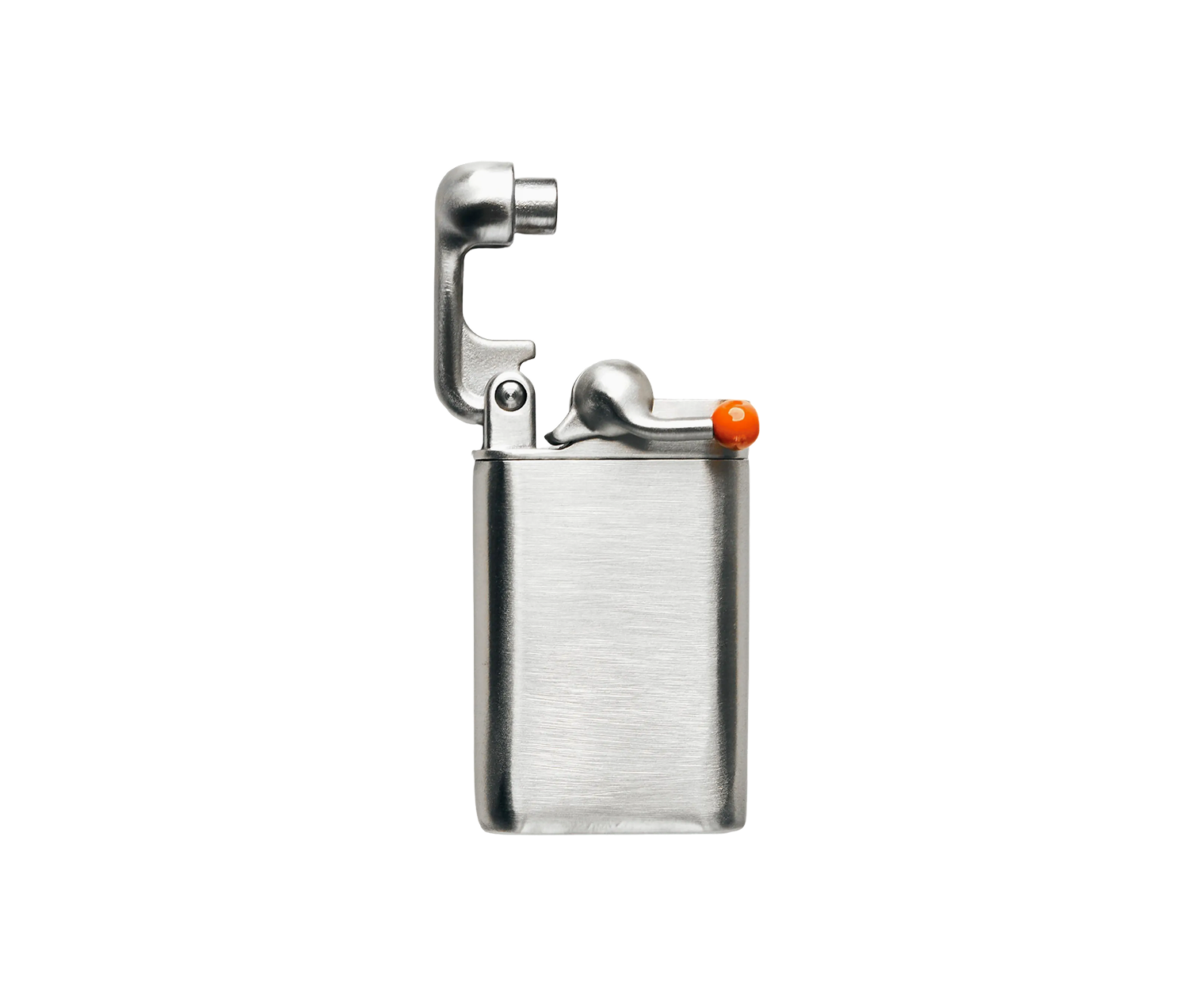
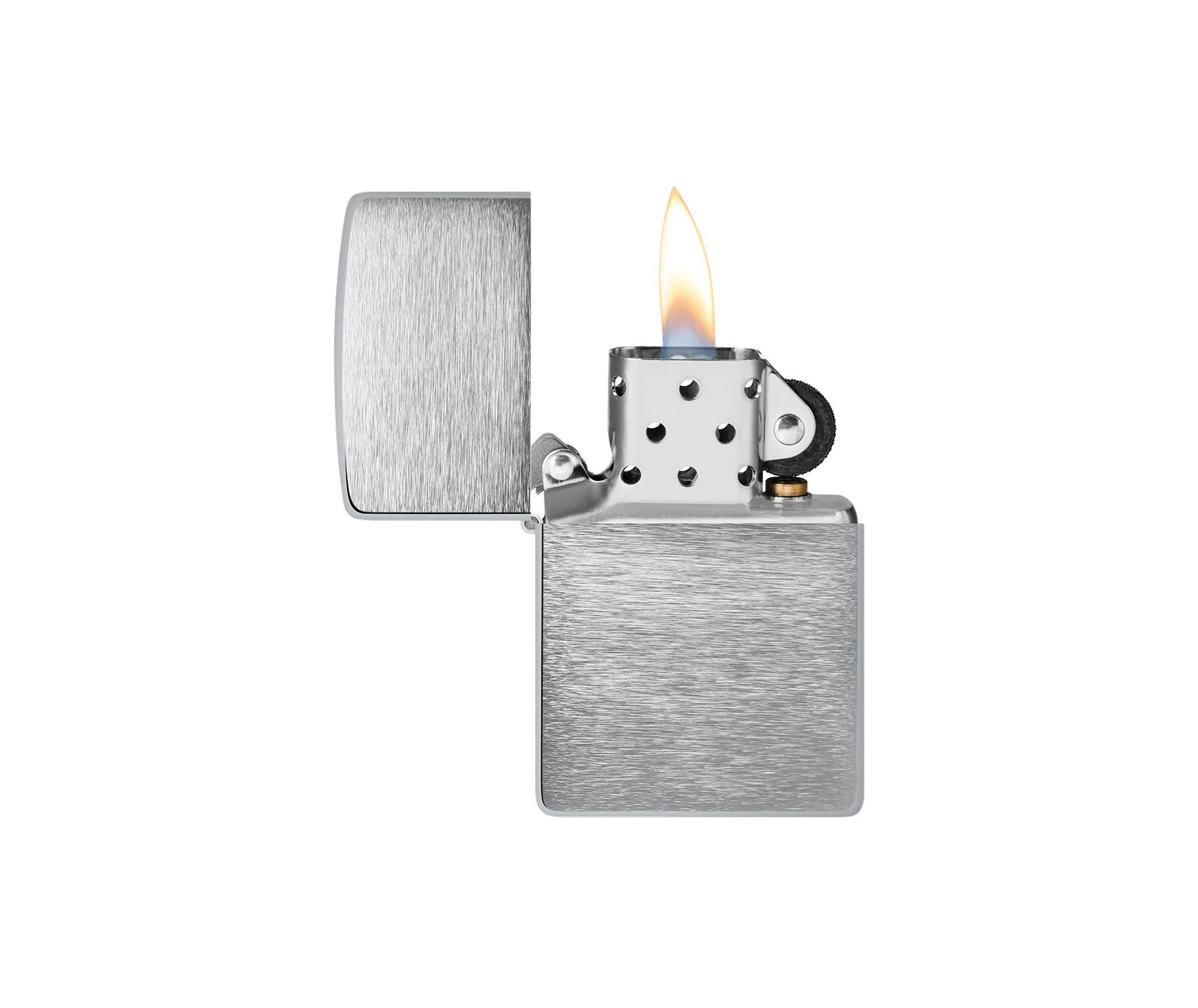
The finish is the part most people recognise, and it is the younger half of the object. Zippo introduced brushed chrome in 1933, one year after the lighter itself, and it has been the company's best selling finish ever since: a horizontal brushing worked across the front and back faces, with the sides buffed to a high polish so the two surfaces catch light differently.
The Zippo windproof lighter works because of a chimney, a perforated wall that shields the flame rather than fighting the wind. George Blaisdell arrived at it in late 1932 in Bradford, Pennsylvania, after rebuilding an Austrian lighter he had watched a friend struggle with. He kept the chimney. He set it in a small rectangular case and hinged the lid, so the whole thing could be opened and struck with one hand. The patent application went in on 17 May 1934 and came back as number 2032695 in March 1936. A second patent followed on 1 August 1950, and Zippo says the design has changed only in small ways since.
The case is all metal and the lighter is refillable, on Zippo's own fuel, flints and wicks, so nothing about it is consumed except the parts meant to be. The guarantee Blaisdell wrote still runs, phrased as it works or we fix it free. The company says that in more than 90 years nobody has paid a cent for the mechanical repair of a Zippo pocket lighter. That work is done at the Repair Clinic inside the Zippo/Case Museum in Bradford, where visitors can stand and watch their own lighter being taken apart. The base carries a date code, as every Zippo has since the mid-1950s, so any one of them can be dated to the month it was made.
- Designed & made in
- United States

- Material
- Finish
- Horizontal brushing, polished sides
- Refill
- Zippo fuel, flints and wicks
Figures as published by the manufacturer. Source