About
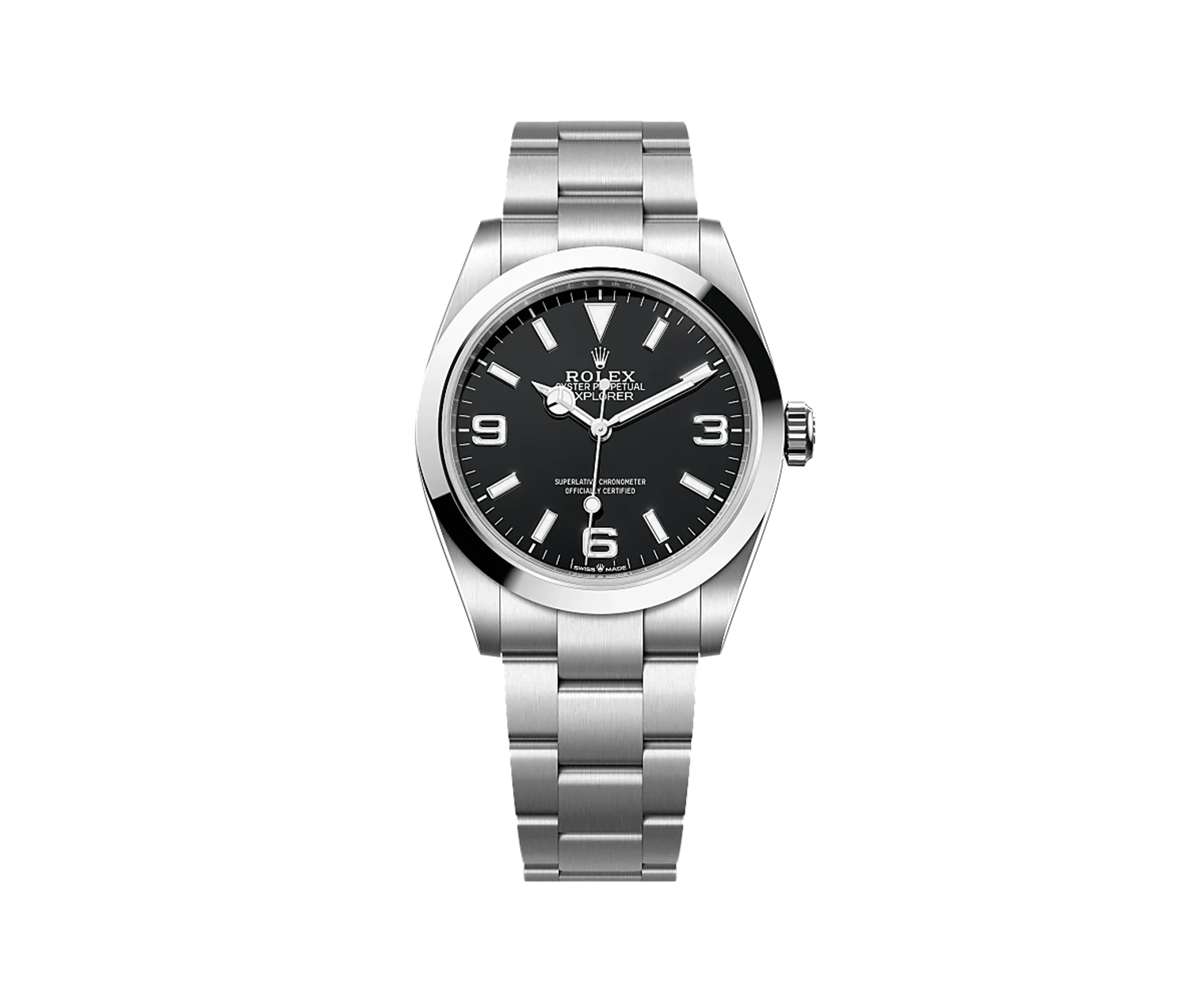
A dial is usually where a watch brand shows off. The Explorer's is mostly empty, and that emptiness is the design.
The Rolex Explorer came out of the 1953 Everest expedition, and its black dial still carries the oversized 3, 6 and 9 numerals that made it readable in bad light. Those numerals are filled with Chromalight, a luminescent material that emits a long blue glow, and so are the hands and the hour markers. Nothing else is. The bezel is smooth and unmarked, which leaves the eye no competing detail to resolve in the dark. Around it Rolex uses its own Oystersteel, a 904L-family alloy of the kind normally specified for aerospace and chemical plant, chosen because it resists corrosion and holds a polish in rough conditions. The middle case is cut from a single piece of metal, the back screws down and the Twinlock crown screws into the case, and together those three things take the watch to 100 metres.
Inside is the calibre 3230, self-winding, with a Chronergy escapement, a paramagnetic blue Parachrom hairspring and Paraflex shock absorbers. Rolex guarantees it to within minus two or plus two seconds a day once cased, and rates the power reserve at roughly 70 hours, so a watch taken off on Friday night is still running on Monday morning.
The Oyster bracelet closes with an Oysterlock folding clasp and hides an Easylink link, which adds about 5 mm of length by hand when a wrist swells in heat. Rolex recommends servicing only every ten years. The reference point for all of it remains 29 May 1953, when Hillary and Tenzing reached the 8,848 metre summit wearing Oyster Perpetual watches.
- Designed & made in
- Switzerland

- Materials
- Sizes
- 36 mm and 40 mm
- Case
- Oystersteel
- Water resistance
- 100 metres
- Power reserve
- Approximately 70 hours
- Movement
- Self-winding calibre 3230
Figures as published by the manufacturer. Source
You might also like

Staff Pick
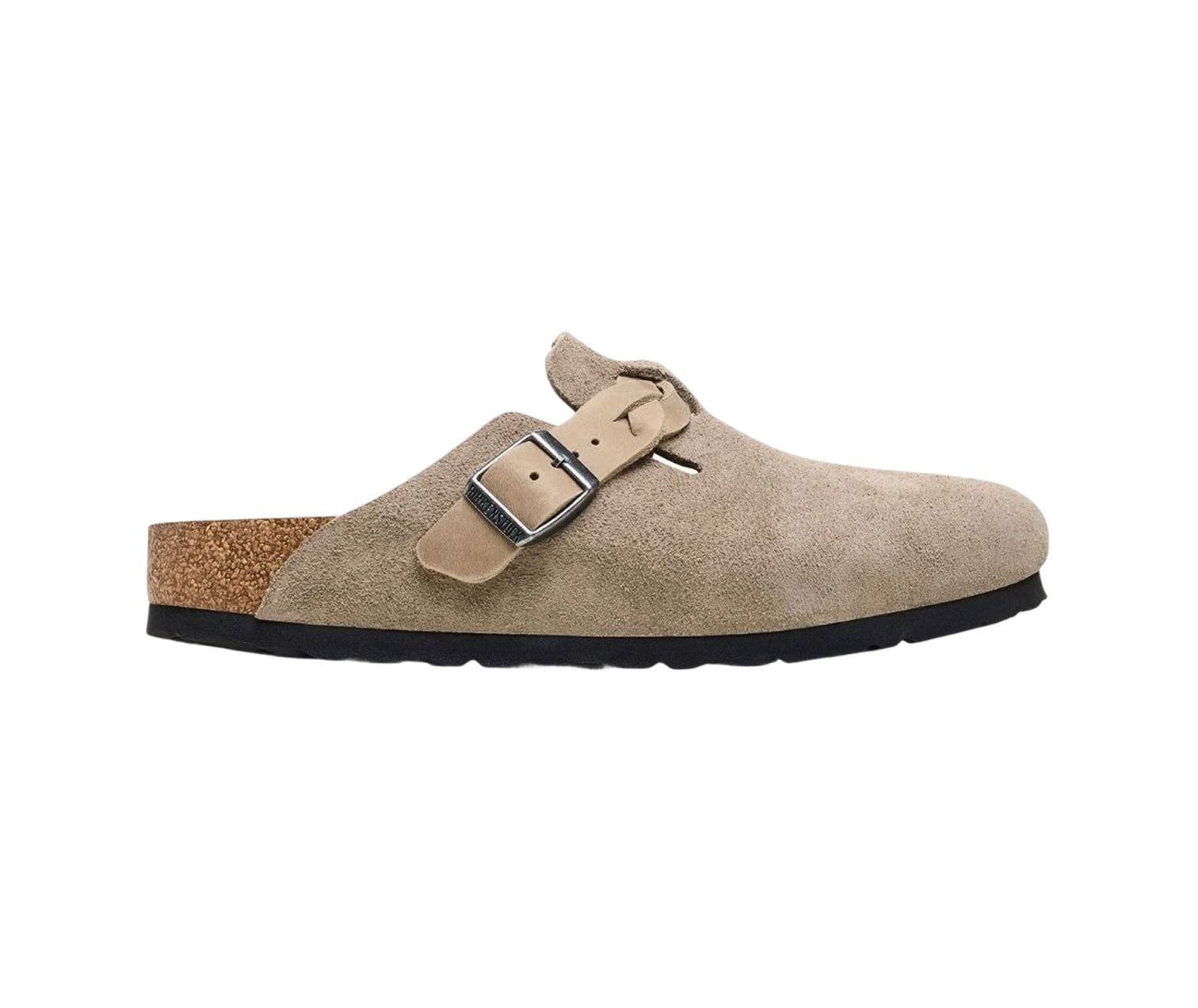
Boston Clog
$155