About
A notebook that costs almost nothing usually announces it on the first page, where the ink from a highlighter comes through and sits on the back of the sheet like a bruise. Thin paper is thin because thin is cheap. MUJI's argument with this stock is that thin can also be a decision.
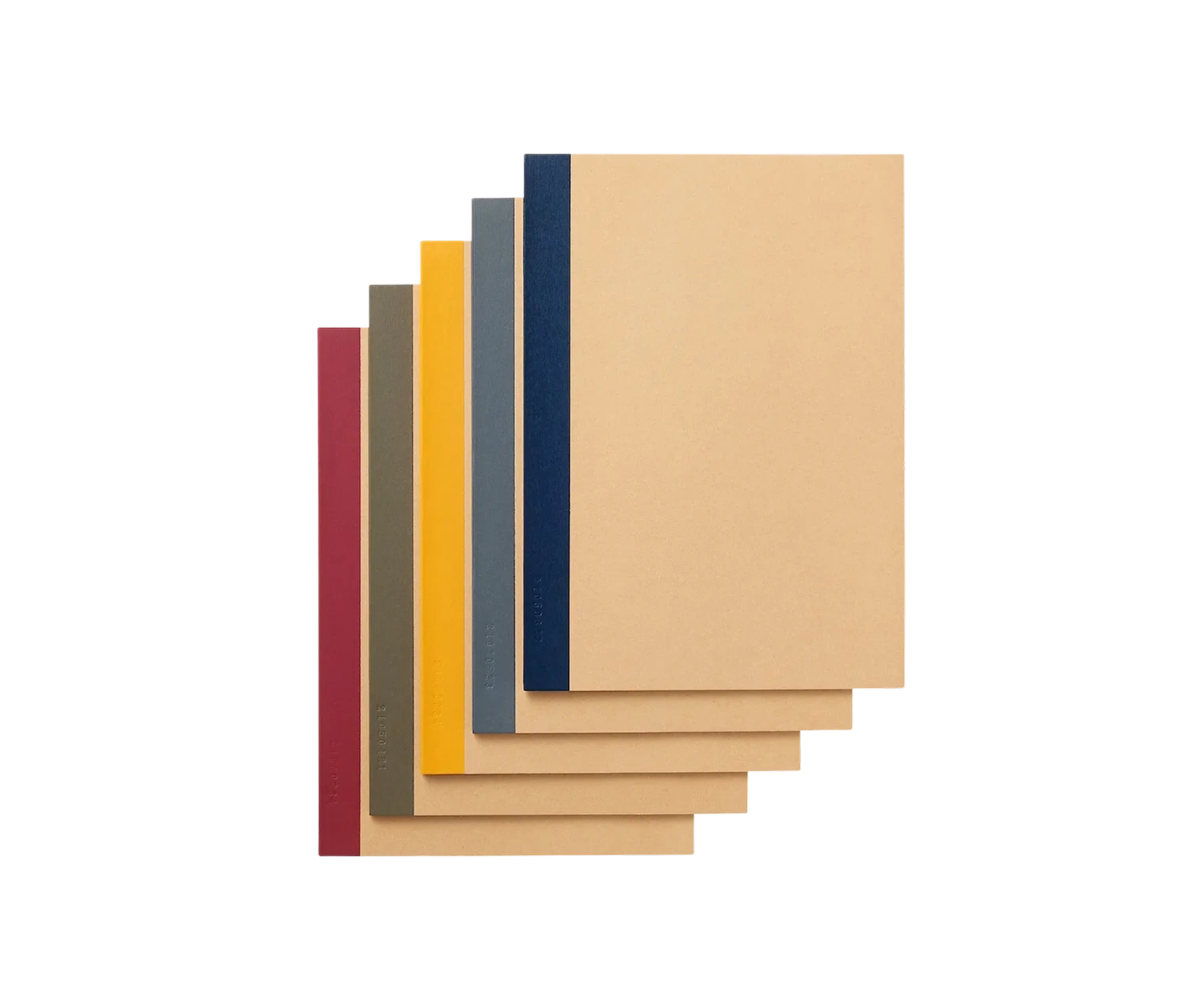
MUJI's Planted Tree Paper notebooks come five to a pack in B5, each book carrying 36 sheets ruled at 6 millimetres, and MUJI rates the paper to take highlighters and pens without showing through on the reverse. The paper itself comes off MUJI's own afforestation programme, where the communities growing the trees do the picking and take the benefit directly. The coloured spines are the filing system: one pack covers five subjects and not one of them needs a label written on it. The same paper is also sold as B5 loose leaf, and as a 7 millimetre ruled pack with coloured covers as well as spines.
The thinking is older than the notebook. MUJI began in Japan in 1980 under the line "lower priced for a reason", and the reason was three decisions taken in the same order every time: choose the material, strip the process, simplify the package. Products the criteria of the day would have called substandard went on sale anyway, because the fault was only cosmetic. The range has since passed 7,000 items held to that same rule, and a pack of ruled notebooks with no labels on it is about as literal a reading of that rule as the company ever makes.
- Designed in
- Japan
- Materials
- Size
- B5, five notebooks per pack
- Capacity
- 36 sheets per notebook, ruled at 6 mm
- Colours
- Five colour-coded spines
Figures as published by the manufacturer. Source