About
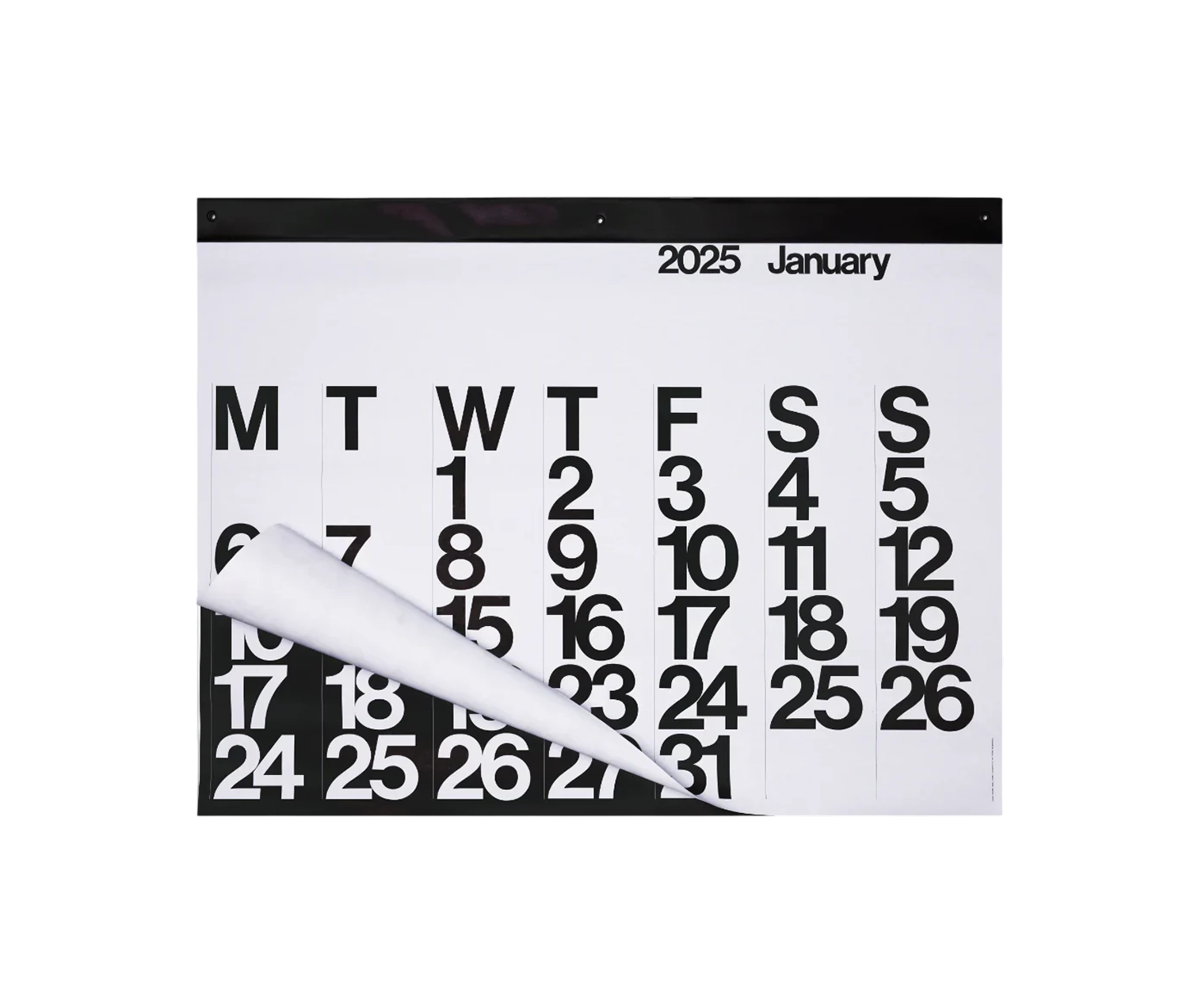
Most calendars are designed to be looked at. This one is designed to be seen from the other side of the room, which is a different problem, and the reason its numerals are three feet tall.
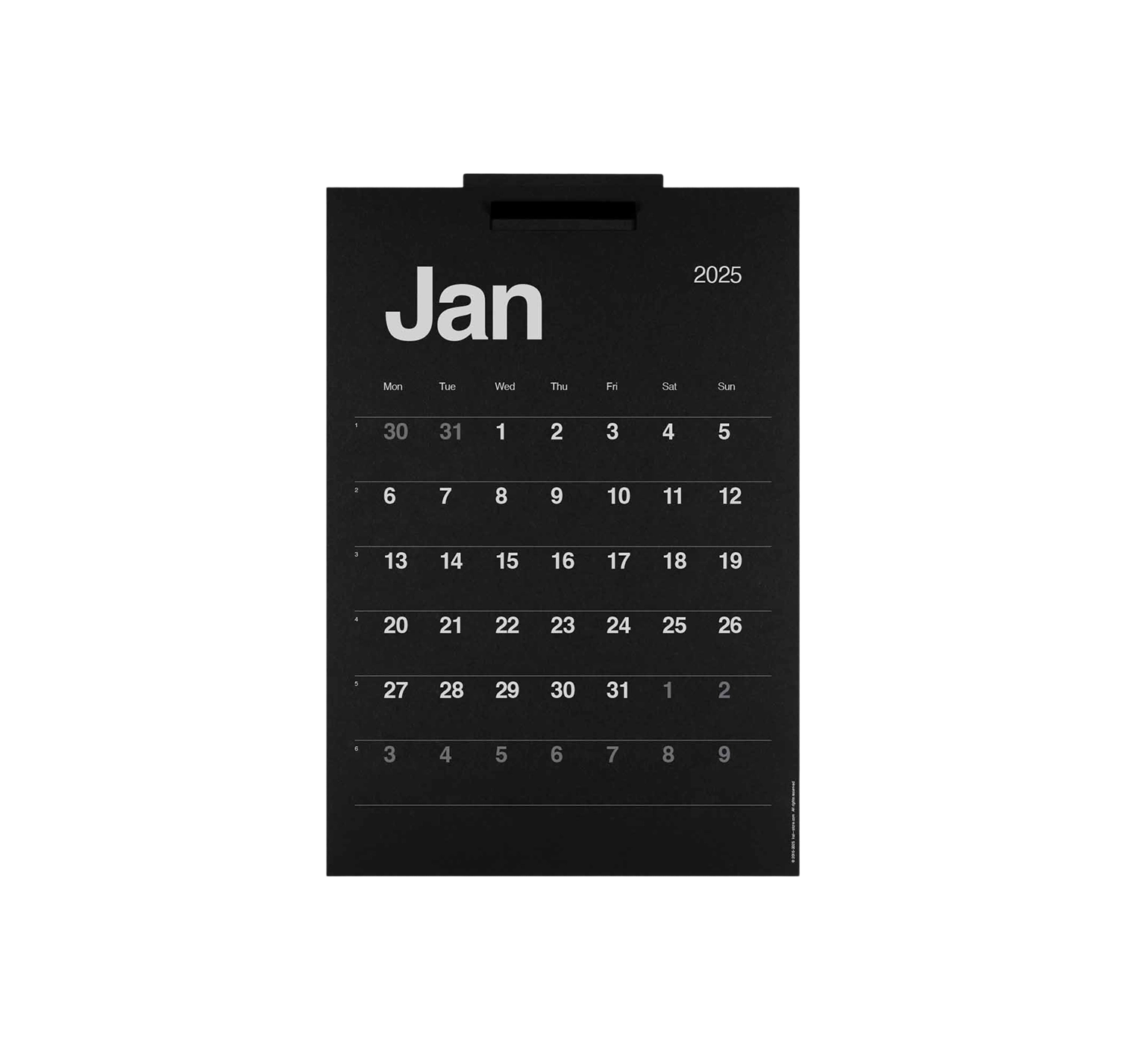
The Stendig Calendar has been printed the same way every year since 1966: twelve sheets of 122 by 92 centimetre paper, one Helvetica numeral set per month, black and white alternating through the year. It began as a promotional gift. Charles Stendig imported European furniture into American living rooms from an office at 375 Park Avenue, the same building that housed the New York arm of Unimark International, the design firm Massimo Vignelli ran. Stendig wanted something for clients that would not end up in a drawer, and Vignelli, who had wanted to design a large calendar for years, gave him one three feet by four. The double-digit numerals are kerned tightly enough to kiss, in Vignelli's phrase, and the white space around them was set with as much care as the figures. Within months of the first printing the Museum of Modern Art had taken it into its permanent design collection, where it still sits.
The sheet is offset-litho printed on uncoated stock and bound at the top with three metal eyelets, which is also how it hangs: two nails through the holes. A perforation of 40 teeth per inch runs parallel to the top edge, two inches down, a tooth count Stendig says balances easy tearing against a sheet that will not drop off the wall.
Removing one cleanly is counter-intuitive. Start a tear of about a centimetre, then pull straight down rather than sideways, keeping the paper taut. Used months make good wrapping paper, and they keep better rolled than folded. 2026 is the sixtieth edition, printed to the same specification as the first.
- Designed & made in
- United States

- designer
- Massimo Vignelli
- Dimensions
- 122 x 92 cm (48 x 36 in)
- Material
- Colours
- Black and white, alternating each month
Figures as published by the manufacturer. Source