Film and instant cameras you can still buy new
Five film and instant cameras still in production, from the $50 Kodak Ektar H35 to the Pentax 17, the first new Pentax 35mm camera in almost two decades.
Most film and instant camera guides are lists of things nobody manufactures. Every one of them names the Canon AE-1 and the Olympus MJU, and nobody has built either in decades, so the advice ends at a used listing of unknown history. Every camera below is in production and carries a warranty.
They divide by what pressing the shutter costs you. Two of them commit a frame you will not see for a week. Two commit a print you cannot take back. One lets you look at the picture first and then decide whether to spend the film. The related retro tech sits one shelf over.
1.Kodak Ektar H35
Pros
- 72 pictures from a 36-exposure roll, which halves the cost per frame
- 100 g and 39 mm deep, so it goes in a jacket pocket and stays there
- Nothing to set, so nothing to set wrong
- One AAA battery runs the flash, with no charging to remember
Cons
- The acrylic lens is the H35, not the sharper glass-element H35N, and the two are sold side by side at similar prices
- No meter and one shutter speed, so exposure depends entirely on the film and the weather
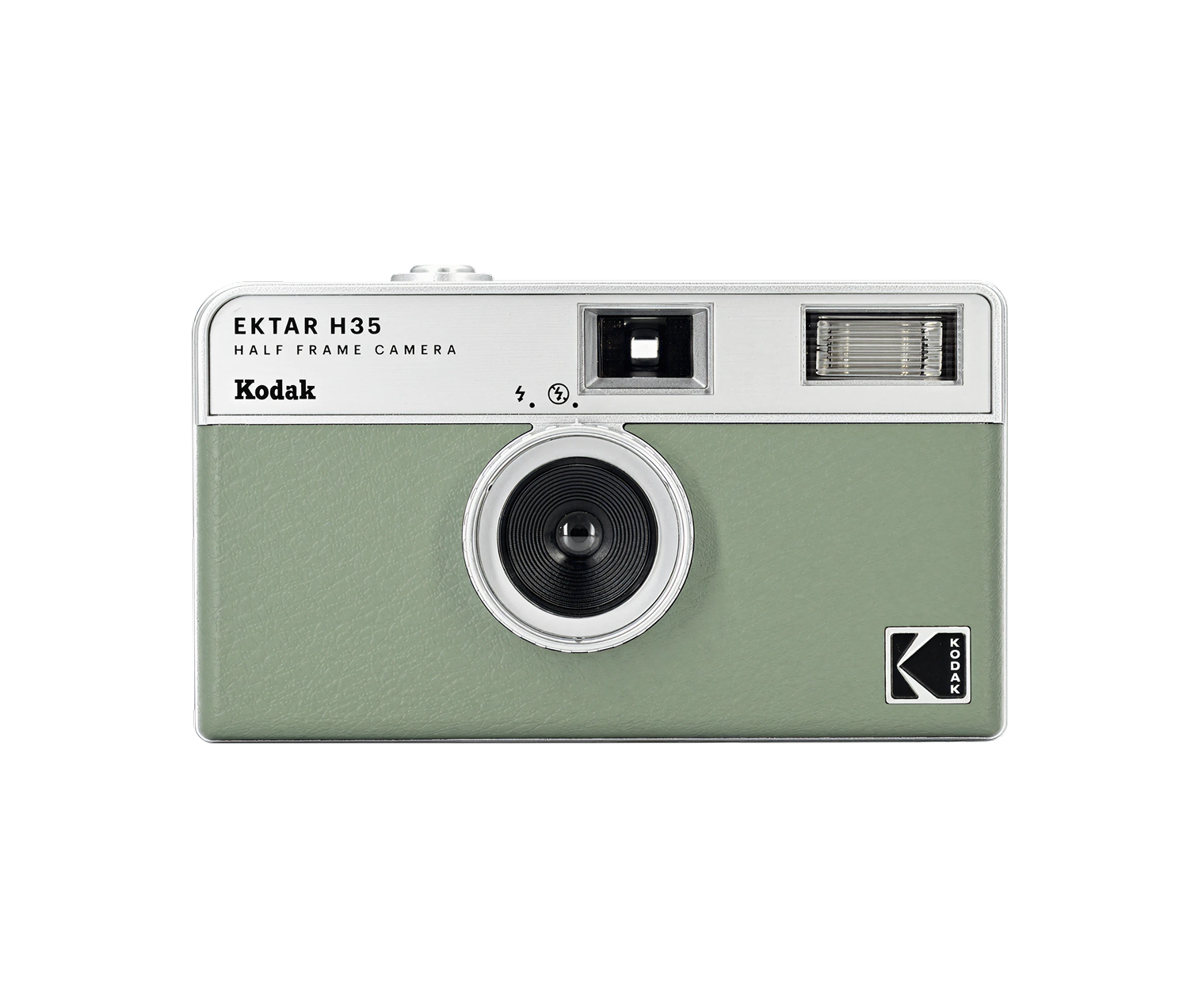
One shutter speed, one aperture, no meter and no focus ring, which leaves nothing to get wrong.
The H35 shoots half-frame, splitting each 35mm exposure down the middle. A 36-exposure roll returns 72 pictures. That single fact changes the economics of film more than any other on this page: the cost of a roll and its development is unchanged, and it is spread across twice as many frames.
The specification is four lines long. A 22mm lens at f/9.5, two elements in optical-grade acrylic. A fixed shutter at 1/100 second. Fixed focus. A built-in flash on a ring around the lens, and one AAA battery to fire it. There is no meter. The film you load and the weather you walk out into decide the exposure between them.
Check which one you are buying. Kodak sells this and an H35N alongside each other at similar prices, and the N is a different camera: f/8 instead of f/9.5, a glass element in place of one of the acrylic ones, a star filter and a bulb mode. Reviewers consistently find the N sharper. The listings rarely make the distinction obvious.
The body is ABS and weighs 100 grams, which is a third of the Fujifilm and a fifth of the Polaroid. It goes in a jacket pocket and stays there, and that is the argument for it. A camera you are carrying takes more photographs than a better camera you left at home.
- Film
- 35mm, half-frame
- Lens
- 22mm f/9.5, two elements in optical-grade acrylic
- Shutter
- 1/100 sec, single fixed speed
- Focus
- Fixed, no meter
- Weight
- 100 g
- Size
- 110 x 62 x 39 mm
- Power
- 1 x AAA alkaline
Specifications as published by the manufacturer. Source
2.Polaroid Now+
Pros
- Thirty-second exposures and a bulb mode through the app, the only long exposures here
- The largest prints of the five by a wide margin
- Five push-on filters included, which colour the film rather than an edit
- Takes both i-Type and 600 film
Cons
- 451 g and 150 mm wide, the largest and heaviest camera here
- Eight photographs per pack, the fewest of any format on this page
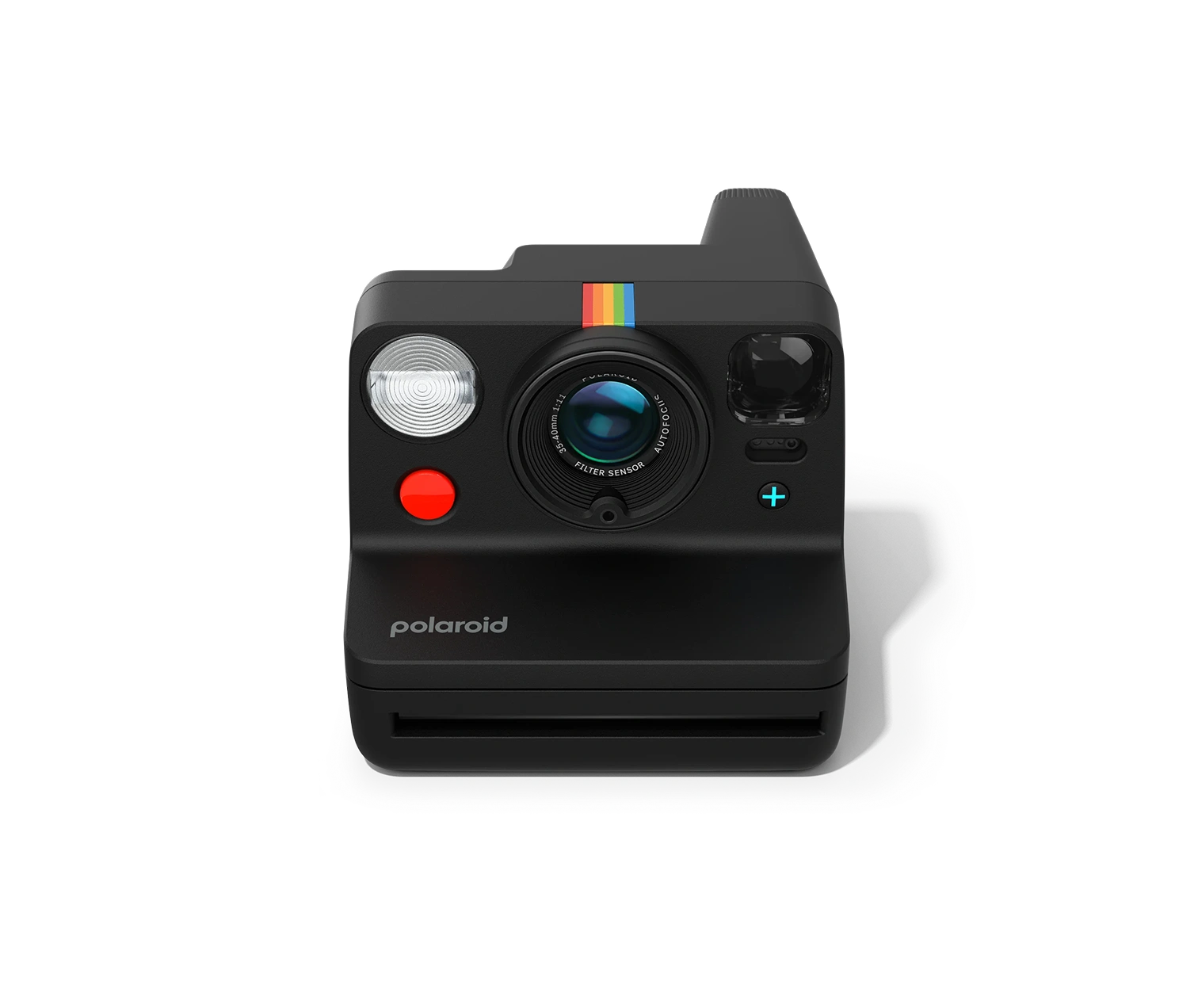
The only camera here that will hold a shutter open for thirty seconds, and the only one whose prints are large enough to read across a room.
Polaroid's Now+ runs two lenses, 102.35mm and 94.96mm, and switches between them by itself depending on how close the subject is. Left alone the shutter runs from 1/200 of a second to one second. Connected to the phone app it runs to thirty seconds, plus a bulb mode, which is how the light-painting and double-exposure modes work.
Five push-on filters come in the box: starburst, red vignette, orange, yellow and blue. They sit in front of the lens and colour the film itself. The effect is in the print, permanently, and no edit put it there.
An i-Type pack holds eight photographs. A pack of Instax mini holds ten and costs less, and a 36-exposure roll through the Kodak returns 72 frames. So every press of this shutter is a real decision, which some people find focusing and others find paralysing.
It is also the largest object here by a distance: 150 by 112 by 96 millimetres and 451 grams empty, against 320 for the Leica and 100 for the Kodak. It takes i-Type and 600 film, charges over USB-C, and runs about fifteen packs between charges. Nothing about it is subtle, and the prints are the reason.
- Film
- Polaroid i-Type and 600, eight per pack
- Lens
- 102.35mm standard and 94.96mm close-up, auto-switching
- Shutter
- 1/200 to 1 sec; 1/200 to 30 sec and bulb in app mode
- Weight
- 451.5 g without film pack
- Size
- 150.2 x 112.2 x 95.5 mm
- Battery
- Lithium-ion over USB-C, about 15 film packs per charge
Specifications as published by the manufacturer. Source
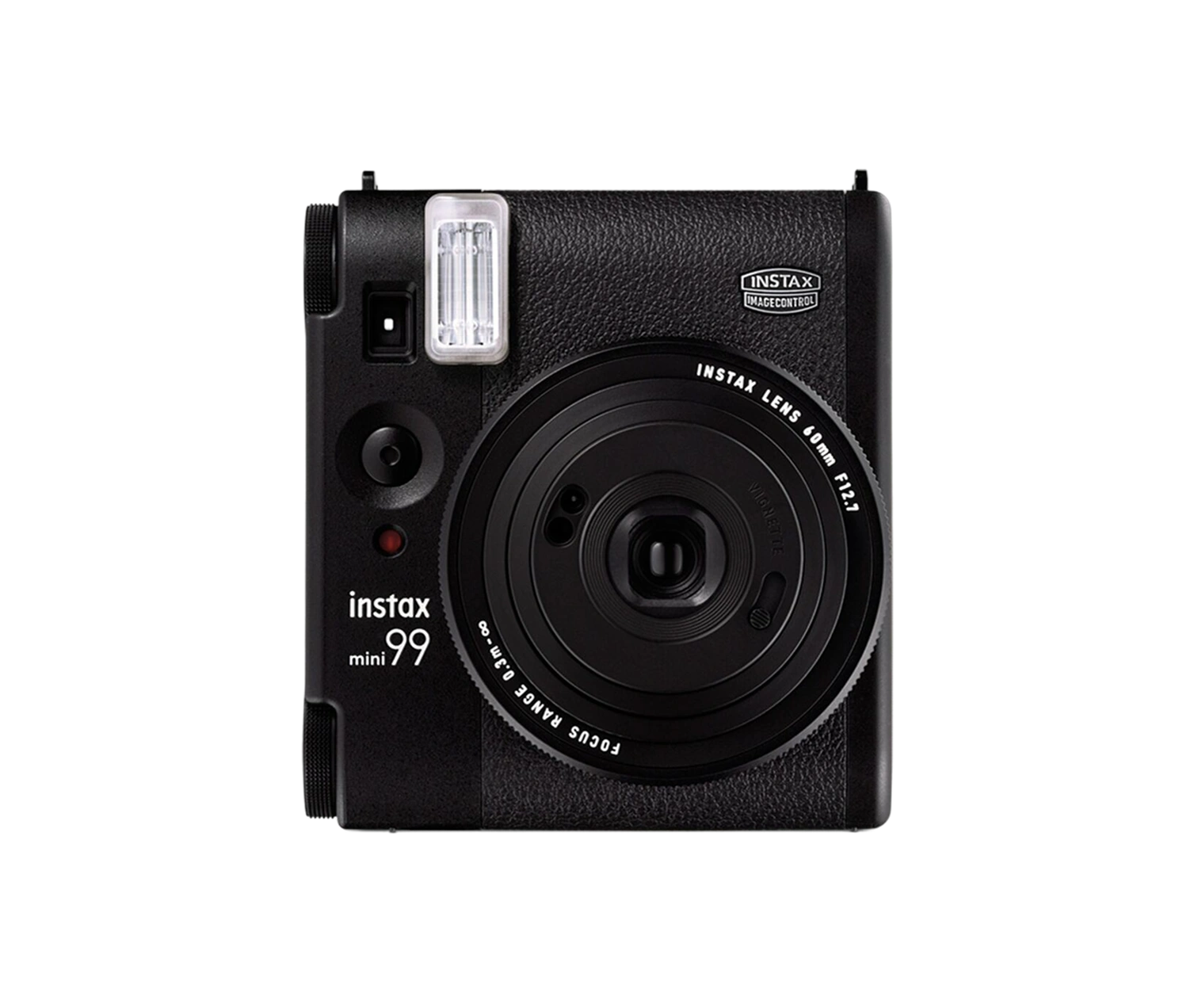
3.Fujifilm Instax Mini 99
Pros
- Coloured LEDs inside the body light the film as it develops, so the effect is in the emulsion
- The deepest exposure control of the three instant cameras, including a ten-second bulb
- Ten photographs per pack, and the cheapest film of the two instant formats here
- Prints are credit-card sized, which suits a wallet or a fridge door
Cons
- Focus is a three-position switch rather than autofocus, so close subjects need setting by hand
- f/12.7 is a slow lens, so indoor shots lean on the flash
Coloured LEDs inside the body light the film as it develops, which puts the effect in the emulsion instead of in a filter.
Every other way of tinting an instant photograph happens in front of the lens. The Mini 99 does it from behind. Fujifilm puts the light behind the film, so the colour belongs to how the print developed. Holding something coloured in front of a cheaper lens will not reproduce it.
The controls are unusually deep for instant. Shutter speeds run from 1.8 seconds to 1/400, with a bulb mode that holds up to ten seconds. Exposure compensation runs four steps, from minus five-thirds of a stop to plus one. Focus is a manual three-position switch: 0.3 to 0.6 metres, 0.6 to 3, and 3 metres to infinity. The lens retracts, and it is a 60mm at f/12.7, which is slow. Indoors you are using the flash.
Prints are 62 by 46 millimetres, and packs hold ten. The camera is 340 grams without film and runs about ten packs on its NP-70S battery.
The trade against the Polaroid is size, both of the camera and of the print. Instax mini prints are roughly credit-card sized and Polaroid's are nearly square and much bigger. If the photograph is going in a wallet or on a fridge door, the smaller print is the right one. If it is going on a wall, it is not.
- Film
- instax mini, 62 x 46 mm print, ten per pack
- Lens
- 60mm f/12.7, retractable, two elements in two components
- Shutter
- 1.8 to 1/400 sec, bulb to 10 sec
- Focus
- Manual three-position: 0.3 to 0.6 m, 0.6 to 3 m, 3 m to infinity
- Exposure
- Compensation from -5/3 EV to +1 EV
- Weight
- 340 g without battery, strap or film
- Size
- 103.5 x 117.5 x 60.0 mm
Specifications as published by the manufacturer. Source
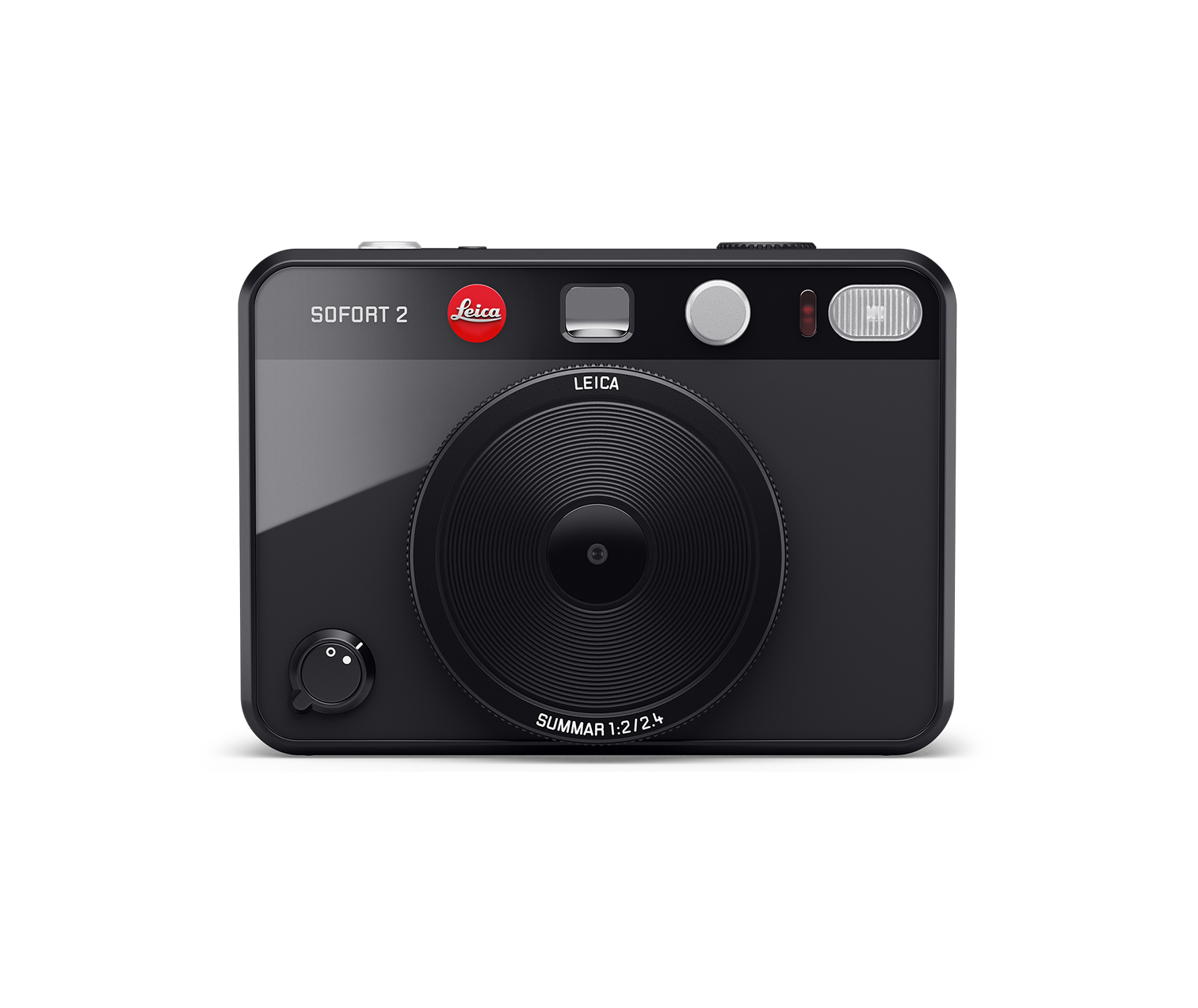
4.Leica Sofort 2
Pros
- You see the picture on a three-inch screen before spending a sheet of film
- Holds about 45 images internally and takes a microSD card, so it also works as a plain digital camera
- Ten film styles and ten lens effects, previewed rather than guessed
- Prints from other cameras over the Leica FOTOS app
Cons
- Prints the same 62 x 46 mm format as the Instax Mini 99 for $139 more
- A 4.9 MP sensor, which is well below any current phone and only makes sense because the output is a small print
A digital camera that prints. You see the photograph on a screen and then choose whether to spend a sheet of film on it.
That is the entire case for the Sofort 2 and it is a strong one. Every other instant camera here commits film the moment the shutter fires, including the frames that are out of focus or have somebody blinking. This one holds about 45 pictures in internal memory, more on a microSD card at roughly 850 per gigabyte, and prints only what you pick.
The sensor is a 1/5-inch CMOS producing 2,560 by 1,920 pixels, which is 4.9 megapixels. That is well below any current phone and it does not matter much, because the output is a 62 by 46 millimetre print. The lens is a Leica Summar at 2.4mm f/2, about 28mm in full-frame terms, with automatic exposure from f/2 to f/16 and shutter speeds from a quarter of a second to 1/8000.
Ten film styles and ten lens effects combine into a hundred looks, previewed on a three-inch screen before anything reaches the film. The body is 123 by 87 by 44 millimetres and 320 grams, and the battery is good for around a hundred prints.
Here is the awkward part. It prints on the same 62 by 46 millimetre format as the Fujifilm above, and costs $139 more. What the money buys is the screen and the decision it lets you make, plus Leica build. Whether that is worth 139 dollars depends entirely on how much film you waste.
- Film
- instax mini, 62 x 46 mm print
- Sensor
- 1/5-inch CMOS, 2,560 x 1,920 pixels (4.9 MP)
- Lens
- Leica Summar 2.4mm f/2, about 28mm equivalent
- Shutter
- 1/4 to 1/8000 sec, automatic exposure
- Storage
- About 45 images internal, plus microSD
- Weight
- 320 g without film pack
- Size
- 123 x 87 x 44 mm
Specifications as published by the manufacturer. Source
5.Pentax 17
Pros
- Seven exposure modes and six focus zones, the only real controls on film here
- Vertical frames by default, which matches how phones trained everyone to shoot
- Magnesium alloy covers and a 40.5mm filter thread
- 72 pictures per 36-exposure roll, the same economics as the Kodak
Cons
- Ten times the price of the Kodak, which shoots the same format on the same film
- Zone focus is set by eye and by hand, so a misjudged distance is not recoverable
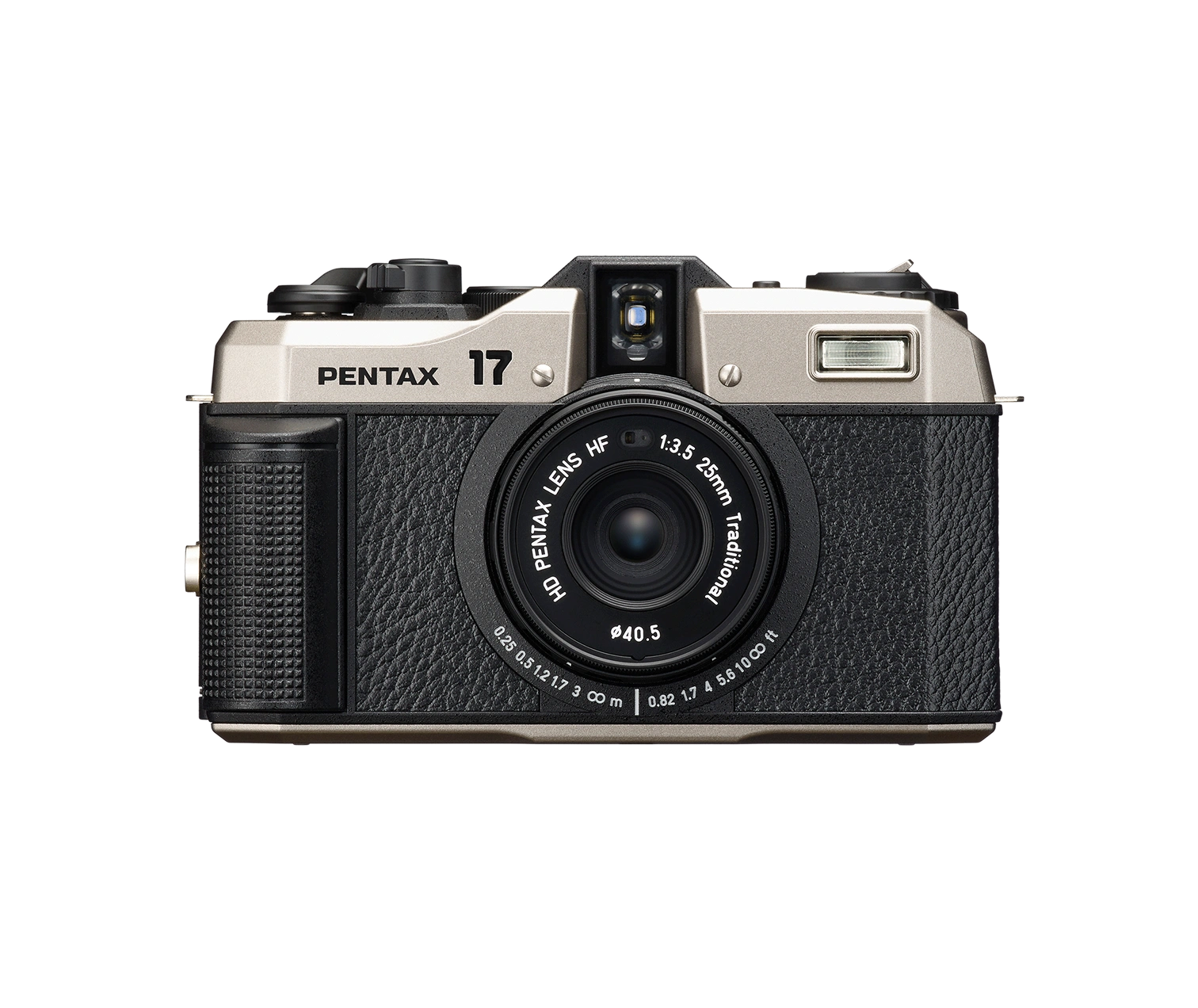
The first new 35mm film camera Pentax has built in almost twenty years, and the only one here designed from scratch instead of revived.
Pentax shoots half-frame like the Kodak, at 24 by 17 millimetres, so a 36-exposure roll gives 72 pictures and a 24-exposure roll gives 48. Unlike the Kodak it does this deliberately: frames come out vertical by default, which is the orientation a phone screen already trained everyone to shoot in.
The 17 is where the money goes. A 25mm f/3.5 lens, 37mm equivalent, three elements in three groups with HD coating. Zone focus across six marked distances, 0.25, 0.5, 1.2, 1.7 and 3 metres plus infinity, with the 0.25 setting close enough for macro. Shutter from 1/350 down to four seconds, plus bulb, across seven auto-exposure modes. An Albada bright-frame viewfinder rather than a plain window.
The build is the other half. Magnesium alloy top and bottom covers, a manual advance lever and manual rewind, and a 40.5mm filter thread on the front. It measures 127 by 78 by 52 millimetres and weighs 290 grams empty.
Nothing else on this page gives you exposure control on film. The Kodak has none. The three instant cameras develop whatever they captured, correct or not. So the $450 between this and the Kodak buys decisions, which is worth paying for only if you intend to make them.
- Film
- 35mm, half-frame at 24 x 17 mm, 72 per 36-exposure roll
- Lens
- 25mm f/3.5, 37mm equivalent, three elements in three groups
- Shutter
- 1/350 to 4 sec, plus bulb, across seven AE modes
- Focus
- Six zones: 0.25, 0.5, 1.2, 1.7, 3 m and infinity
- Weight
- 290 g without film or battery
- Size
- 127 x 78 x 52 mm
- Build
- Magnesium alloy top and bottom covers, 40.5mm filter thread
Specifications as published by the manufacturer. Source
What to consider before buying
Half-frame doubles your roll and halves your negative
Both 35mm cameras here shoot half-frame, and 72 pictures from one roll changes what film costs per picture. The trade is negative size. Half a frame carries half the detail, so big prints show grain that a full frame would not. For scanning, sharing and small prints it is invisible. For a large print it is the limit.
Instant film is priced per photograph, and the packs differ
A Polaroid i-Type pack holds eight. An Instax mini pack holds ten and is cheaper. That gap compounds fast: a weekend through the Polaroid costs several times a weekend through the Kodak. Work out what you will shoot in a month before choosing the format, because the camera is the small purchase.
A screen changes what instant photography is
The Leica is the only one that lets you look before you print. That removes the waste and it removes the gamble, and the gamble is what a lot of people are there for. Decide which of those two you actually want, because it is the only real difference between spending $250 and $389.
Automatic, or something to get wrong
The Kodak has one shutter speed and no meter. The Pentax has seven exposure modes and six focus zones. Both shoot the same film at the same frame size, and the pictures will not look alike. Control is the product here, and it is most of the $450 between them.
Which one, and for whom
Cheapest, and the likeliest to be in a pocket when something happens: the Kodak, at 100 grams. Biggest prints and the only long exposures: the Polaroid. Effects that live in the emulsion: the Fujifilm. The Leica, if you hate wasting sheets. The Pentax, if you want controls and will learn them.
Start with the wait, not the camera. A week between pressing the shutter and seeing the picture is either the whole appeal or an unacceptable delay, and almost nobody is neutral about it. Answer that first and three of these five disappear on their own. For what else fits in the same pocket, see pocket-sized everyday carry.
All 5 compared
Kodak Ektar Half Frame Film CameraLightest here- Film
- 35mm half
- Lens
- 22mm f/9.5
- Shutter
- 1/100 fixed
- Weight
- 100 g
Polaroid Now PlusBiggest prints- Film
- i-Type, 8
- Lens
- Dual, auto
- Shutter
- 1/200 to 30 s
- Weight
- 452 g
Fujifilm Instax Mini 99Effects in the film- Film
- instax mini
- Lens
- 60mm f/12.7
- Shutter
- 1.8 to 1/400
- Weight
- 340 g
Leica Sofort 2Choose before you print- Film
- instax mini
- Lens
- 2.4mm f/2
- Shutter
- 1/4 to 1/8000
- Weight
- 320 g
Pentax 17Most control- Film
- 35mm half
- Lens
- 25mm f/3.5
- Shutter
- 1/350 to 4 s
- Weight
- 290 g
Weight is the body without film or battery, which is how all five makers quote it. Shutter figures are the full published range: the Polaroid's upper end of 30 seconds is only reachable through the phone app, and the Kodak has one speed and no way to change it.
How we chose
We chose these five because all five are still manufactured, which rules out most of what usually appears on a film camera list. Ricoh, Fujifilm, Polaroid and Kodak publish full specifications and each carries a panel quoted from the page that sells the camera. Leica's own product page does not serve its specification table to a reader without JavaScript, so the Sofort 2's panel is sourced to Red Dot Forum, a Leica dealer publication, and every figure in it was cross-checked against PetaPixel's launch coverage. Film prices move too often to publish, so the packs are quoted by count instead.
Common questions
A half-frame camera splits each 35mm exposure into two, so a 36-exposure roll returns 72 pictures instead of 36. The cost of the roll and its development does not change, so the cost per picture roughly halves. The trade is negative size: each frame carries half the area and therefore half the detail, which is invisible when scanning or making small prints and becomes obvious in a large one. Both 35mm cameras here are half-frame, and the Pentax makes the frames vertical by default.
Instax, on two counts. A Polaroid i-Type pack holds eight photographs and an Instax mini pack holds ten, and the Instax pack costs less to begin with. That means the per-photograph gap is wider than the pack prices suggest. Polaroid's prints are much larger, which is what the money buys. Work out roughly how much you will shoot per month before picking a format, because over a year the film costs more than the camera.
No, and that is the point of it. It has a digital sensor, a screen and internal memory, and it prints onto Instax mini film only when you tell it to. Every other instant camera commits a sheet of film the moment the shutter fires, including the frames where somebody blinked. The Sofort 2 lets you look first. If the appeal of instant photography is the gamble, this removes it.
Yes, which is the main practical argument for buying new rather than used. Every camera here is in current production from a manufacturer that still services it. The film cameras most often recommended online, like the Canon AE-1 and the Olympus MJU, stopped being built decades ago, so buying one means an unknown service history and repairs that depend on a specialist and on donor parts.
About the author

Justin Farrugia
Founder & Editor of Curated Supply
Justin Farrugia is the founder and editor of Curated Supply, a design-led directory to things worth owning. He has personally curated over 1,000 products across workspace, carry, coffee, audio, and the home, each judged against one standard: design intent, material quality, and the restraint that lets a thing last.