The best well-designed cameras for photography in 2026
Five well-designed cameras for photography, from the Fujifilm X half to the Sigma BF, which won Red Dot Best of the Best 2026 with a perfect score.
A well-designed camera is not the one that does the most. Every camera on this page refuses to do something: no memory card, no viewfinder, no zoom, no lens mount, no looking at the picture you just took. Each refusal was a decision somebody had to defend in a meeting.
That is unusual in a category where the specification sheet normally wins. One of these won Red Dot's Best of the Best in 2026 with a perfect score from the jury, which is the highest award in industrial design and almost never goes to a camera. If you want the ones that still take film, they are in film and instant cameras you can still buy new.
1.Fujifilm X half
Pros
- Film Camera Mode locks the screen until the roll is finished, which no other digital camera does
- A frame advance lever you physically pull between shots
- A sensor mounted in portrait, so vertical frames are native rather than cropped
- 240 grams with battery and card, the lightest camera here
Cons
- A one-inch sensor is closer to a phone than to anything else on this page
- f/2.8 and a small sensor together make low light hard work
It hides your photographs from you until you finish the roll. Somebody had to build that on purpose.
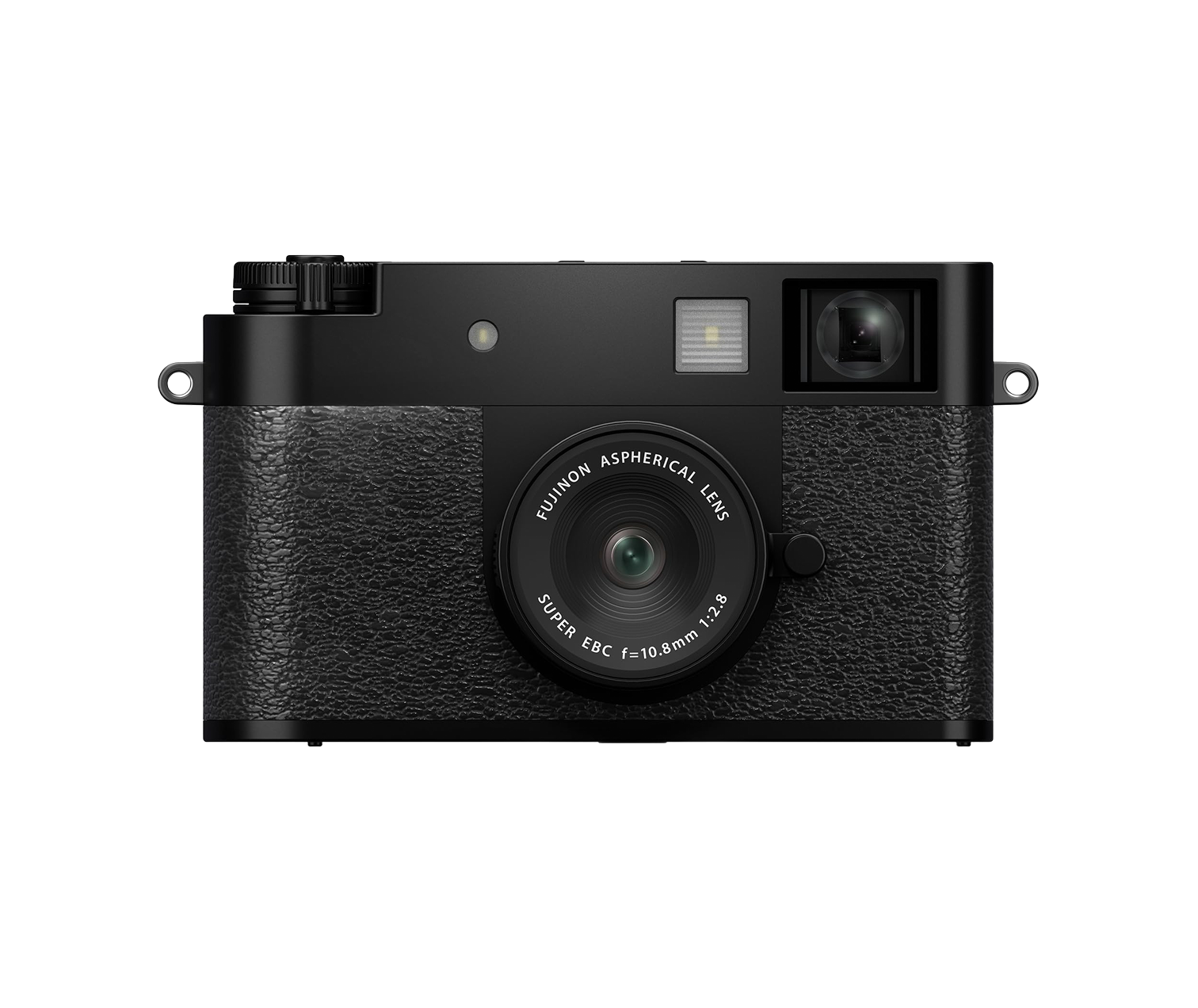
Film Camera Mode is the reason the X half exists. Choose a film simulation on the small side screen, choose a roll length of 36, 54 or 72 frames, and the rear screen goes dark until you have shot all of them. No review, no deleting, no chimping. A digital camera that has been deliberately crippled to feel like a film one.
The physical detail that sells it is the frame advance lever. You pull it between shots, exactly as on a film camera, and it does nothing electrical that a button could not do. Fujifilm put it there because the gesture is the product.
The sensor is the other clever bit. It is a one-inch type, 8.8 by 11.3 millimetres, turned on its side, so the frame is portrait natively and not a landscape one cropped afterwards. 17.8 megapixels through a lens equivalent to 32mm at f/2.8. The optical viewfinder and the rear screen are both 3:4, so nothing about the camera assumes you want a horizontal picture.
Weigh the cost honestly. A one-inch sensor is small, the lens is not fast, and reviewers have been blunt about the limitations. What you are buying is a constraint you cannot switch off, and constraints are the reason anybody finishes anything.
- Sensor
- 1-inch type, 8.8 x 11.3 mm, 17.8 MP, portrait orientation
- Lens
- 10.8mm f/2.8, 32mm equivalent, fixed
- Weight
- 240 g with battery and card, 191 g without
- Size
- 105.8 x 64.3 x 45.8 mm
- Viewfinder
- Optical, 3:4 vertical
- Film mode
- Rolls of 36, 54 or 72 frames, no review until finished
Specifications as published by the manufacturer. Source
2.Ricoh GR IV
Pros
- 32.7 mm deep with an APS-C sensor, which nothing else here approaches
- Five-axis stabilisation is new to this generation and matters most on a one-handed camera
- 53 GB of internal memory, so a forgotten card does not end the day
- Snap focus fires at a preset distance the instant you press
Cons
- No viewfinder of any kind, by design and through four generations
- The lens is fixed at 28mm equivalent with no crop modes to soften that
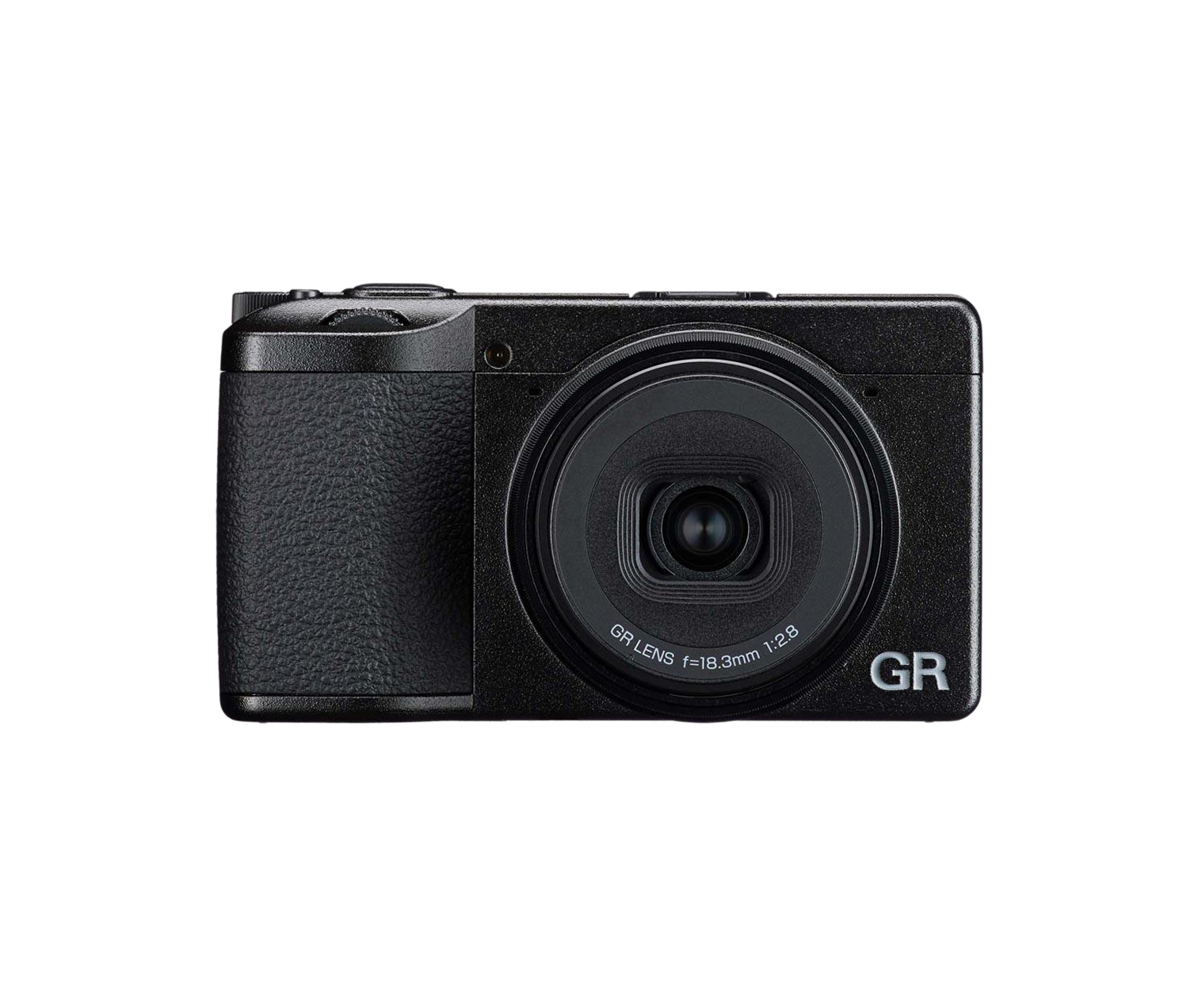
An APS-C sensor 32.7 millimetres deep, which is the whole design brief and the reason this camera has a cult.
There is no viewfinder. Ricoh removed it decades ago and has refused to add one back through four generations, because a viewfinder hump is what stops a camera going flat into a pocket. The GR IV is 109.4 by 61.1 by 32.7 millimetres and 262 grams with the battery and card in it. Nothing else here with a sensor this size is close.
The sensor is a back-illuminated APS-C at 23.3 by 15.5 millimetres, about 25.7 megapixels, behind an 18.3mm f/2.8 lens that works out to 28mm in full-frame terms. Seven elements in five groups, three of them aspherical. Fixed, because a zoom would need somewhere to go.
New in this generation is five-axis sensor-shift stabilisation, rated to six stops. That matters more on this camera than on most: a pocket camera gets used one-handed, at night, without thinking, which is exactly when a shake shows.
Storage is 53 gigabytes built in, plus a microSD slot. The internal memory means the camera works when you have forgotten the card, which sounds trivial until it happens. Snap focus, the mode that jumps to a preset distance the instant you press, is still here and is still why street photographers keep buying these.
- Sensor
- APS-C BSI CMOS, 23.3 x 15.5 mm, 25.74 MP
- Lens
- 18.3mm f/2.8, 28mm equivalent, seven elements in five groups
- Weight
- 262 g with battery and card, 228 g body only
- Size
- 109.4 x 61.1 x 32.7 mm
- Stabilisation
- Five-axis sensor shift, up to 6.0 stops
- Storage
- 53 GB internal, plus microSD
Specifications as published by the manufacturer. Source
3.Sigma BF
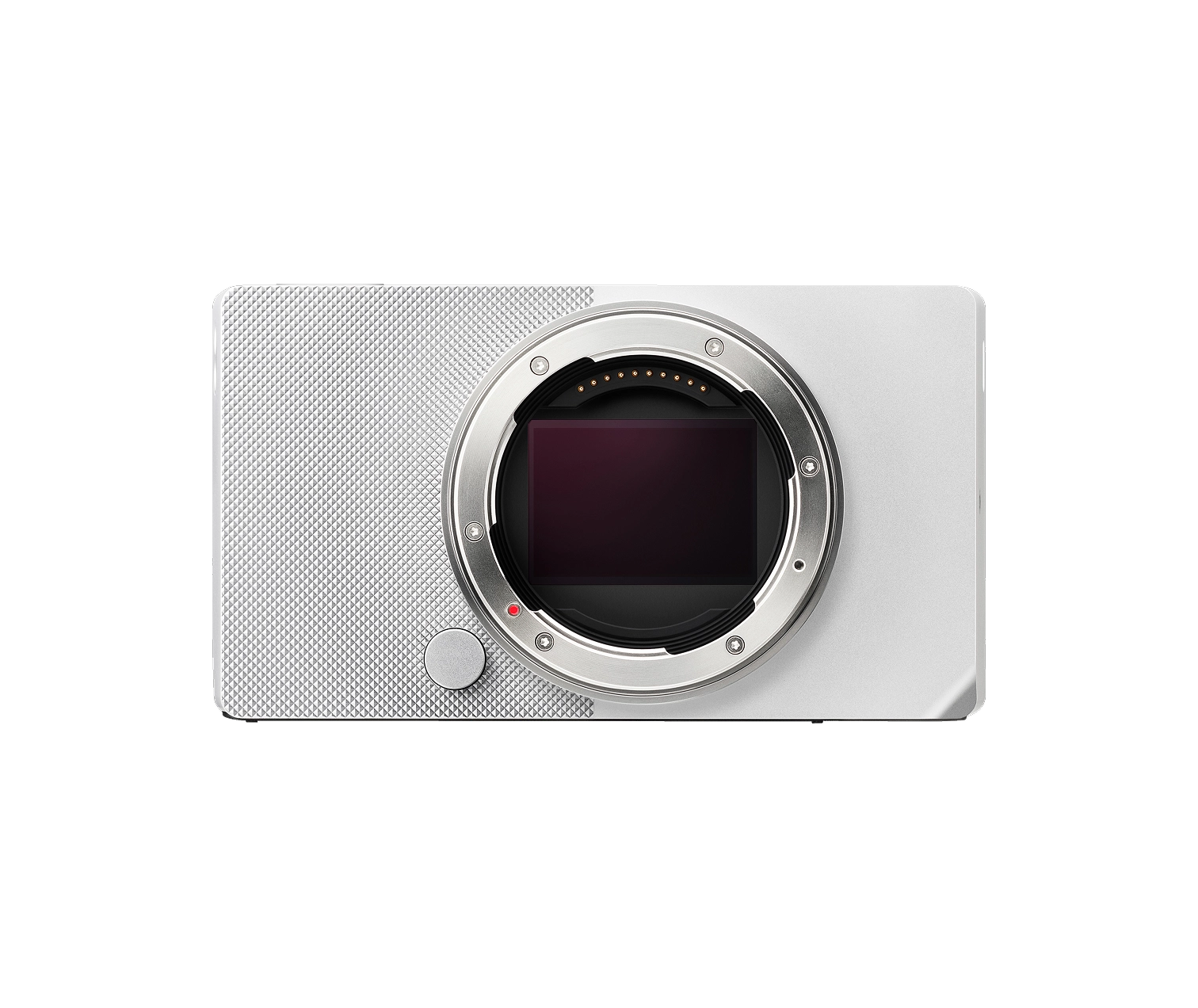
Pros
- Red Dot Best of the Best 2026 with a perfect score from the jury
- The first camera with a true unibody, cut from a single aluminium ingot
- No card door, so one hinge and one spring fewer to fail
- The only body here that takes interchangeable lenses
Cons
- 230 GB is all the storage there will ever be, and it offloads over USB
- Three buttons and one dial means fewer dedicated controls than any rival
Cut from one solid billet of aluminium over seven hours, with three buttons, one dial and nowhere to put a memory card.
The BF won Red Dot's Best of the Best in 2026 with a perfect hundred from the jury. That award goes to a handful of products a year across every category, and it almost never goes to a camera, because cameras are usually designed by adding.
Sigma went the other way and it is the first camera with a true unibody. Each one starts as a solid aluminium ingot and spends about seven hours under a cutter. There is no assembled shell, no seams where panels meet, and no screws on the outside. Every camera you have held before came from parts fastened together.
The subtractions carry on inside. Three buttons and one dial for the whole camera. A menu system rebuilt from nothing, not inherited from the last model. And no card slot at all. 230 gigabytes of SSD sit soldered to the board, so you offload over USB and there is no door, no spring and no flap to break.
The sensor underneath is a 24.6 megapixel full-frame on the L mount, so this is a real camera and not a design exercise wearing a lens. It is also the only body here you can change the lens on, which is the one place the refusal stopped.
- Sensor
- Full frame CMOS, 36 x 24 mm, 24.6 MP
- Lens
- Interchangeable, Leica L mount
- Weight
- 446 g with battery, 388 g body only
- Size
- 130.1 x 72.8 x 36.8 mm
- Body
- Aluminium unibody, machined from one ingot over about seven hours
- Storage
- 230 GB internal SSD, no card slot
- Controls
- Three buttons and one dial
Specifications as published by the manufacturer. Source
4.Sony RX1R III
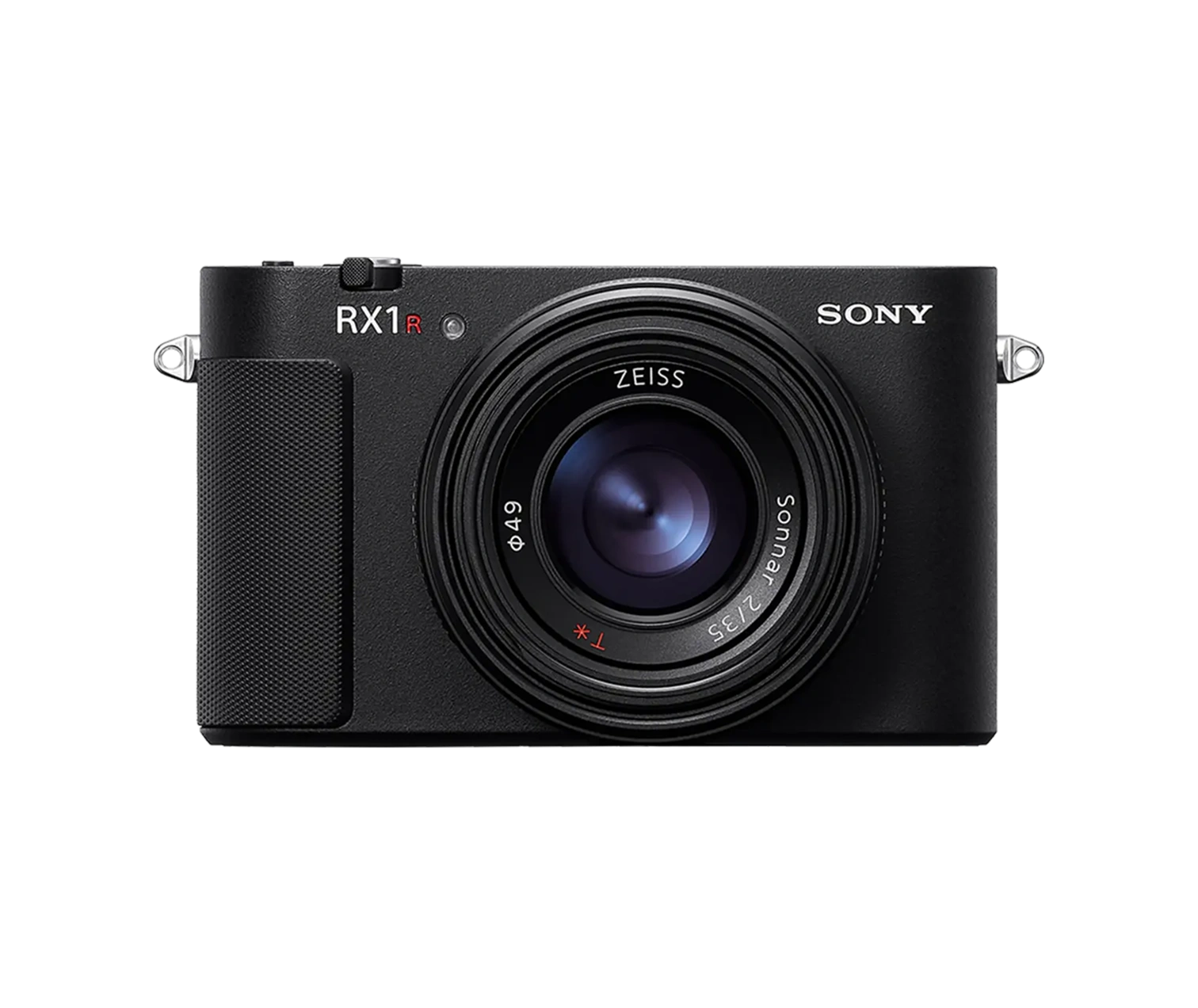
Pros
- 61 megapixels of full frame in 498 grams, lighter than most bodies before a lens
- Step Crop Shooting gives 50 and 70 mm framings out of the resolution
- A macro ring on the barrel focuses to 20 cm
- The same AI subject recognition as Sony's professional bodies
Cons
- A 2.36 million dot viewfinder, less than half the Leica's resolution
- The 35mm lens cannot be removed, and the crop modes cost pixels instead of adding reach
61 megapixels of full frame in 498 grams, which is roughly what a mirrorless body weighs before you put a lens on it.
Fixing the lens is what buys the size. Sony built the RX1R III around a Zeiss Sonnar T* 35mm f/2 that cannot come off, and designing the optics and the sensor as one unit removes the mount, the flange distance and the compromise of covering lenses nobody will ever attach. That buys a magnesium alloy body of 113.3 by 67.9 by 87.5 millimetres.
The sensor is a 61 megapixel back-illuminated full-frame with the BIONZ XR processor and the same AI recognition unit as Sony's professional bodies, which tracks heads, eyes, animals, birds, insects, cars, trains and aeroplanes.
Two details answer the obvious objection. Step Crop Shooting gives 35, 50 and 70mm framings out of the one lens, using the resolution instead of glass, which is a real answer when there are 61 megapixels to spend. And a macro ring on the barrel focuses down to 20 centimetres at 0.26x, so the fixed lens covers close work as well.
The viewfinder is a 2.36 million dot OLED at 0.70x magnification. That is modest against the Leica below, and it is the clearest place Sony spent the budget on the sensor instead.
- Sensor
- Full frame Exmor R BSI CMOS, 61 MP, BIONZ XR
- Lens
- Zeiss Sonnar T* 35mm f/2, fixed
- Weight
- 498 g with battery and card
- Size
- 113.3 x 67.9 x 87.5 mm, magnesium alloy
- Viewfinder
- 2.36 million dot XGA OLED, 0.70x
- Crop modes
- Step Crop Shooting at 35, 50 and 70 mm
Specifications as published by the manufacturer. Source
5.Leica Q3
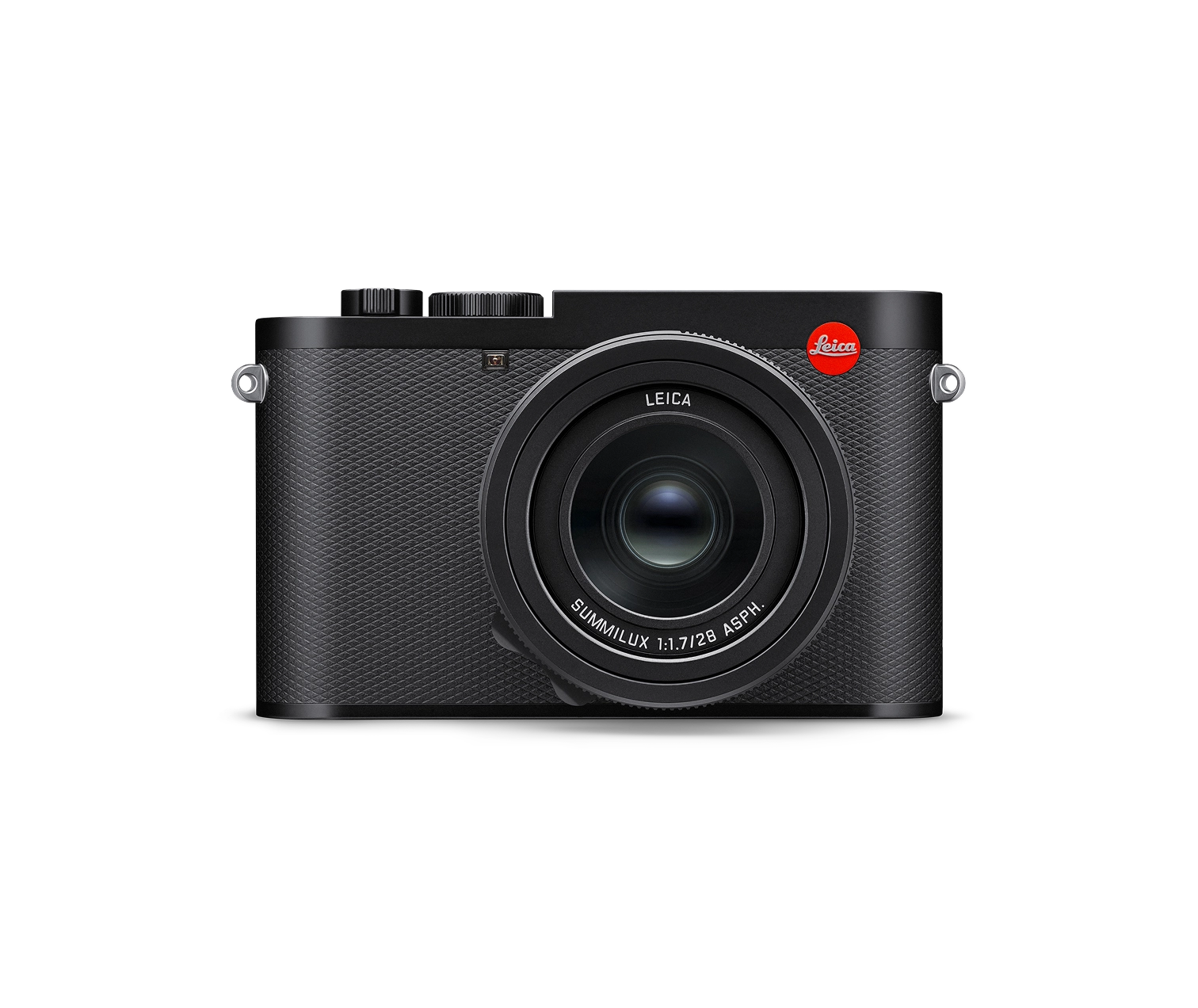
Pros
- f/1.7 gathers roughly three times the light of the two f/2.8 lenses here
- Triple Resolution writes 60, 36 or 18 MP files, so the 35 and 50 mm crops are real files
- A 5.76 million dot viewfinder, more than twice the Sony's
- IP52 sealing, the only weather rating quoted by any camera on this page
Cons
- 743 grams with the battery, the heaviest here by nearly 250 g
- Comfortably the most expensive, and Leica has never argued otherwise
The fastest lens on this page by a stop and a half, and the only camera here that can be three focal lengths without losing the point.
Triple Resolution is the idea worth understanding. The Q3 shoots 60, 36 or 18 megapixels, and the crop modes use that resolution to give 35mm and 50mm framing from a lens that is physically 28mm. Unlike a digital crop applied afterwards, the camera writes the file at the chosen resolution, so the frame lines in the viewfinder and the file on the card agree.
The lens is a Summilux 28mm at f/1.7 ASPH with a macro setting that focuses to 17 centimetres. At f/1.7 it gathers roughly three times the light of the Ricoh's f/2.8, which is what a stop and a half means in practice: indoors, at dusk, without a flash.
Leica then specified everything around it without argument. A 5.76 million dot OLED viewfinder, more than twice the Sony's. A three-inch tilting touchscreen at 1.84 million dots. ISO 50 to 100000, 15 frames a second, 8K video to 30fps, and IP52 weather sealing, which is the only sealing rating quoted by any camera here.
It is also the heaviest, at 743 grams with the battery, and by a distance the most expensive. Leica has never competed on either number and this camera does not start now.
- Sensor
- Full frame BSI CMOS, 36 x 24 mm, 60 MP, with 36 and 18 MP modes
- Lens
- Summilux 28mm f/1.7 ASPH, fixed, macro to 17 cm
- Weight
- 743 g with battery, 658 g without
- Viewfinder
- 5.76 million dot OLED
- ISO
- 50 to 100000
- Sealing
- IP52
Specifications as published by the manufacturer. Source
What to consider before buying
A fixed lens is a design decision, not a limitation
Three of these five cannot change lenses, and that is what makes them small. Designing a lens and a sensor as one unit removes the mount and the flange distance, and lets the optics correct for exactly one focal length. The Sony puts 61 megapixels of full frame into 498 grams that way. The cost is real and permanent: 28mm or 35mm is what you have, forever.
Sensor size decides the size of everything else
The Fujifilm's one-inch sensor is why it fits a pocket and why it struggles in low light. The Ricoh's APS-C is the compromise that made its reputation. The other three are full frame, and all three are heavier, larger and several times the price. Nothing here breaks that relationship, because nothing can.
Put the five in order of price and they also come out in order of weight, exactly: 240 grams, 262, 446, 498, 743. That is not a coincidence and it is not marketing. Bigger sensors need bigger lenses to cover them, bigger bodies to hold the lenses and bigger batteries to feed the lot. In this category the price tag and the bathroom scales are measuring the same thing.
Internal storage is quietly becoming normal
The Sigma has 230 gigabytes soldered in and no card slot. The Ricoh has 53 gigabytes plus a card. Both remove a failure point, since a card door is a hinge and a spring in a device you take to the beach. The trade is that a full camera goes nowhere until you plug it into something.
The viewfinder is where the money shows
The Ricoh has none, the Fujifilm's is optical and simple, the Sony's is 2.36 million dots and the Leica's is 5.76 million. That spread tracks the prices almost exactly, and it is the specification you notice every time you raise the camera, unlike most of the ones printed on the box.
Which one, and for whom
The Fujifilm, if the problem is that you photograph everything and look at none of it. The Ricoh, if it has to be in a pocket with an APS-C sensor and no excuses. The Sigma, if you want the thing itself to be worth holding, which is a legitimate reason to buy a camera and one nobody admits to. The Sony, if you want full frame and 61 megapixels without a bag. The Leica, if the answer to every question above is simply the best available version.
None of these is the sensible choice, and that is the point of the category. A sensible camera is a mid-range zoom body that does everything adequately and that nobody picks up for pleasure. Every one of these gave something up to be worth carrying, and the thing it gave up is how you choose between them.
All 5 compared
Fujifilm X Half Premium Compact CameraHides your photos- Sensor
- 1-inch, 17.8 MP
- Lens
- 32mm f/2.8
- Weight
- 240 g
Ricoh GR IVActually pocketable- Sensor
- APS-C, 25.7 MP
- Lens
- 28mm f/2.8
- Weight
- 262 g
Sigma BFMachined from one block- Sensor
- Full frame, 24.6 MP
- Lens
- L mount
- Weight
- 446 g
Sony RX1R IIILightest full frame- Sensor
- Full frame, 61 MP
- Lens
- 35mm f/2
- Weight
- 498 g
Leica Q3Fastest lens here- Sensor
- Full frame, 60 MP
- Lens
- 28mm f/1.7
- Weight
- 743 g
Weight is with battery and card where the maker quotes it that way, which is how four of the five publish it. Sorted by price, the five also sort by weight exactly, because a larger sensor needs a larger lens to cover it and a larger body to hold both.
How we chose
We chose these five for what each one leaves out, because subtraction is the only design decision a specification sheet cannot flatter. Fujifilm, Ricoh, Sigma and Leica publish full specifications and each panel is quoted from the page that sells the camera. Sony's own product page would not serve its specification table to an automated reader, so the RX1R III is sourced to B&H, an authorised Sony dealer, with every figure cross-checked against DPReview's and CineD's launch coverage. Prices at this end of the market move with tariffs rather than with demand, so treat any figure here as today's.
Common questions
Size, mostly. Removing the lens mount removes the flange distance behind it, and designing the optics and the sensor together lets the lens be corrected for exactly one focal length instead of every lens that might ever be attached. That is how Sony fits a 61 megapixel full-frame sensor into 498 grams. The cost is permanent: whatever focal length it shipped with is the one you have. Three of the five here are fixed, and all three are smaller than they could otherwise be.
Both, which is the unusual part. It has a 24.6 megapixel full-frame sensor on the Leica L mount, so the imaging side is conventional and capable. What is not conventional is the body: a true unibody machined from a single aluminium ingot over roughly seven hours, three buttons, one dial, and 230 gigabytes of internal SSD in place of a card slot. It won Red Dot's Best of the Best in 2026 with a perfect score, an award that almost never goes to a camera.
For the Ricoh GR IV it is the entire design. A viewfinder needs a hump, and a hump is what stops a camera going flat into a pocket. Ricoh removed it decades ago and has declined to add it back through four generations, which is how an APS-C camera ends up 32.7 millimetres deep and 262 grams. You compose on the screen, or you use snap focus and do not compose at all, which is what most people who buy these actually do.
On image quality the three full-frame ones do, comfortably, and the Ricoh does in most light. The Fujifilm's one-inch sensor is closer to a phone than to the others here. But image quality is not really why any of these exists. A phone is a camera you already have and rarely choose to use; these are cameras you decide to carry, and the deciding is the point. If a camera does not make you want to pick it up, its sensor size is irrelevant.
About the author

Justin Farrugia
Founder & Editor of Curated Supply
Justin Farrugia is the founder and editor of Curated Supply, a design-led directory to things worth owning. He has personally curated over 1,000 products across workspace, carry, coffee, audio, and the home, each judged against one standard: design intent, material quality, and the restraint that lets a thing last.