Best fragrances for a signature scent, from fig to oud
Five fragrances for a signature scent, ordered light to dark, from Diptyque's bitter orange Eau des Sens to the smoky Oud Wood Tom Ford launched in 2007.
The best fragrances for a signature scent are the ones you can wear on an ordinary Tuesday and still catch on your collar at six in the evening. These five run from light to dark: a bitter orange eau de toilette first, a smoky oud last, with limestone, fig and sunlit wood in between.
They come from three houses, Diptyque, Aesop and Tom Ford. Two have been on sale since 1996 and 2007. The newest launched worldwide in January 2025 and won an award within six months.
1.Eau Des Sens Eau De Toilette

One tree used whole. Olivier Pescheux composed it for Diptyque in 2016 from the blossom, leaves, branches and fruit of the bitter orange.
Bitter orange is the Seville orange, the sour one grown for marmalade and for perfume. French perfumers call it bigarade, and one tree gives them three separate materials: neroli from the blossom, petitgrain from the leaves and twigs, and a sharp oil from the peel. Diptyque's own description calls the scent a gamble to unite every dimension of the bigarade in one bottle.
The published notes are orange blossom, juniper berry, angelica root and patchouli. Juniper is the berry that flavours gin, and here it keeps the blossom dry so it never turns sweet. Angelica root and patchouli are what stay on skin in the afternoon, earthy and a little green.
It is the only eau de toilette on this page, and the label is telling you something. An eau de toilette carries a lower share of perfume oil than an eau de parfum, so it opens brighter and leaves sooner. Everything else here is an eau de parfum.
The oval label on the front is Diptyque's, unchanged in outline across the range. Turn the bottle round and the back label carries an Op Art pattern, a movement from the 1960s, the decade Diptyque began. Selected Diptyque boutiques refill the bottle for 30% less than a new one.
Wear it close. The orange sits near the skin all day, so a colleague at the next desk notices it only when they lean in. It fades sooner than the others here. A second spray at lunch fixes that, and the 50 ml bottle slips into a bag.
2.Aesop Karst Eau de Parfum

A fragrance named after a rock formation. Karst is the landscape water carves out of limestone, the caves and sinkholes of a coast that dissolves as the sea works at it.
Aesop released it in July 2021 as one of three eaux de parfum called Othertopias, all made with Barnabé Fillion, the perfumer Aesop has worked with for years. Each of the three stands for a place: Miraceti is the boat, Erémia the wasteland, and Karst the shore. Aesop's own words for it are mineral top notes and stormy, metallic base accords.
The pyramid Aesop publishes reads like a walk down a cliff path. Juniper, pink pepper and bergamot at the top. Rosemary, sage and cumin in the heart. Vetiver, sandalwood and cedar at the base.
Cumin is the note to know. It is one of the most divisive materials in perfume because it smells warm and human, close to skin itself, and in quantity it tips into sweat. Karst uses it among herbs, where it reads as savoury, the smell of hot rosemary on a sunny wall. Juniper appears again, the second pick here to use it, but where Eau des Sens hides it under blossom, Karst leads with it.
It comes in one size, 50 ml.
Of the five, Karst is the one least like a traditional perfume. Nothing in it is floral and nothing is sweet, so it sits as easily on a linen shirt in August as on a wool coat. Aesop sells it as unisex, and the notes back that up.
3.Philosykos Eau De Parfum
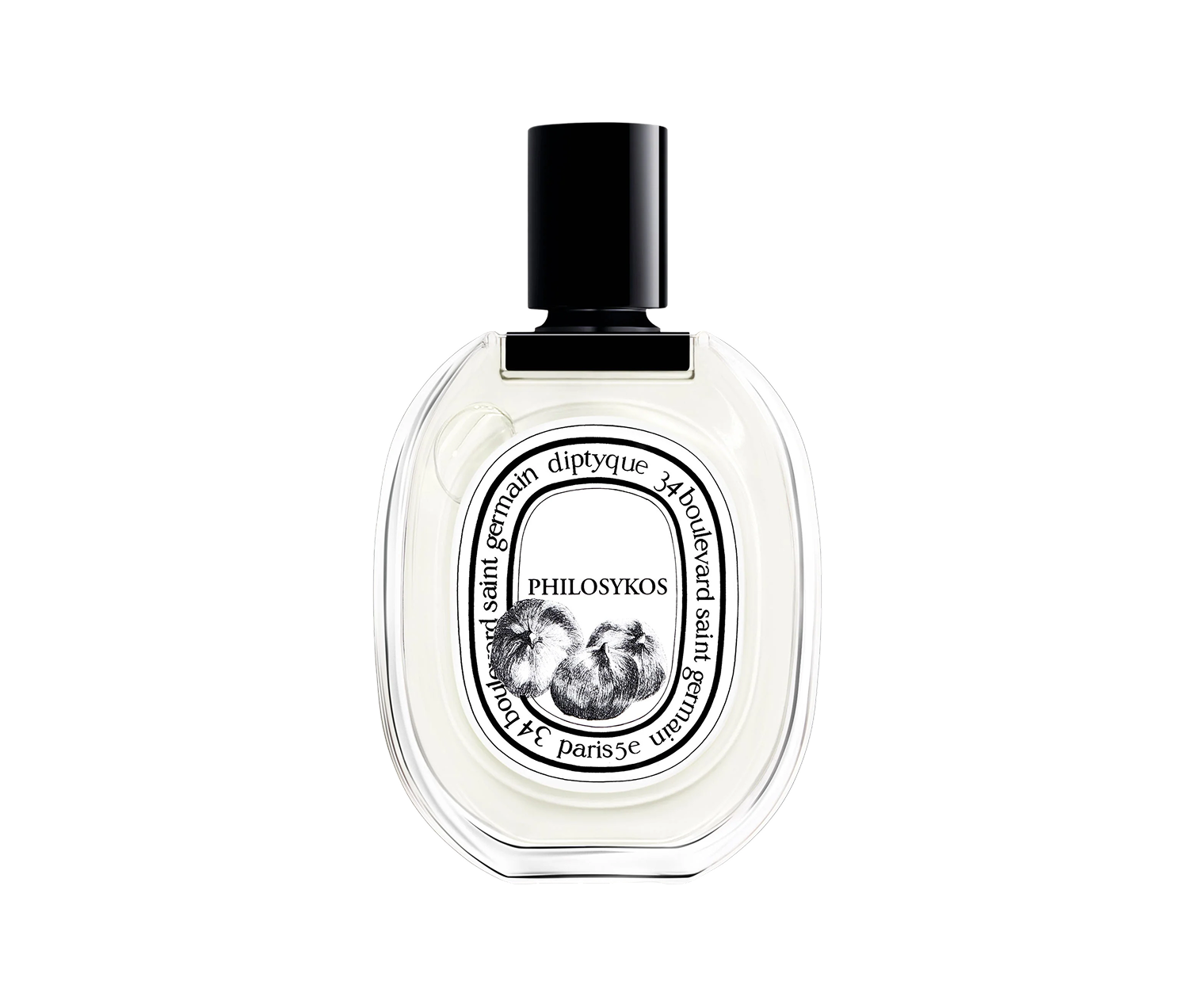
The name is Greek for "friend of the fig tree", and the scent is of the tree more than the fruit.
Olivia Giacobetti made it for Diptyque in 1996. Diptyque traces the idea to a summer crossing a grove of wild fig trees on Mount Pelion in Greece, and to fig leaves and branches kept as souvenirs. Two years earlier Giacobetti had made Premier Figuier for L'Artisan Parfumeur, which is why her name comes up whenever fig perfume does. Philosykos went on to become Diptyque's best seller.
Diptyque lists fig leaves, fig tree sap, fig tree wood and black pepper, and says white cedar underscores the wood. The sap is the unusual part. Snap a fig leaf and a white, milky latex runs from the stem, and that is the smell of the opening: green, faintly bitter, creamy without sugar. Very little of the ripe fruit is in it.
The eau de parfum arrived in 2012, sixteen years after the original eau de toilette, and it is denser and slower. It sits on the wood for longer where the lighter version stays on the leaf.
The bottle is the same oval-labelled Diptyque as Eau des Sens, in 75 ml, and the same boutiques refill it at 30% off.
It is a fragrance that smells like one specific place, which is harder than smelling pleasant. On warm skin the green sap comes forward, and by evening only the cedar and a milky softness remain. Diptyque sells it as unisex, and it has not left the range in close to thirty years.
4.Bois Pacifique Eau De Parfum

The newest pick, and the only one with an award: Fragrance of the Year, Men's Luxury, at the 2025 Fragrance Foundation Awards.
It belongs to Tom Ford's Signature line, the main collection sold at department store counters, as opposed to the Private Blend line that Oud Wood comes from. It launched worldwide in January 2025. Rodrigo Flores-Roux and Adriana Medina of Givaudan composed it, and one of its materials belongs to their employer.
That material is Akigalawood, a Givaudan captive, meaning only perfumers at the company that owns it can use it. Givaudan treats what is left over from patchouli oil production with enzymes. That draws out peppery, woody molecules that exist in patchouli only in traces. The result smells of pepper, dry wood and a hint of oud, without the damp earthiness of patchouli itself.
Tom Ford lists turmeric, cardamom, Akigalawood, sandalwood, oakwood absolute and olibanum, with orris butter underneath. Turmeric is rare in perfume. On skin it reads as a fresh, slightly bitter spice beside the cardamom, sharper than its cousin, ginger. Olibanum is another name for frankincense, the same resin burned in churches.
On this page it sits between Philosykos and Oud Wood, woodier than the fig and a good deal lighter and brighter than the oud, which makes it the natural step for anyone moving from fresh scents towards darker ones. Two sizes. Tom Ford sells it in 50 ml and 100 ml.
Bois Pacifique is the easiest on this list to wear to work without thinking about it. The spice lifts it in the morning, and by the afternoon it has settled into a clean sandalwood that stays within arm's reach.
5.Oud Wood Eau De Parfum
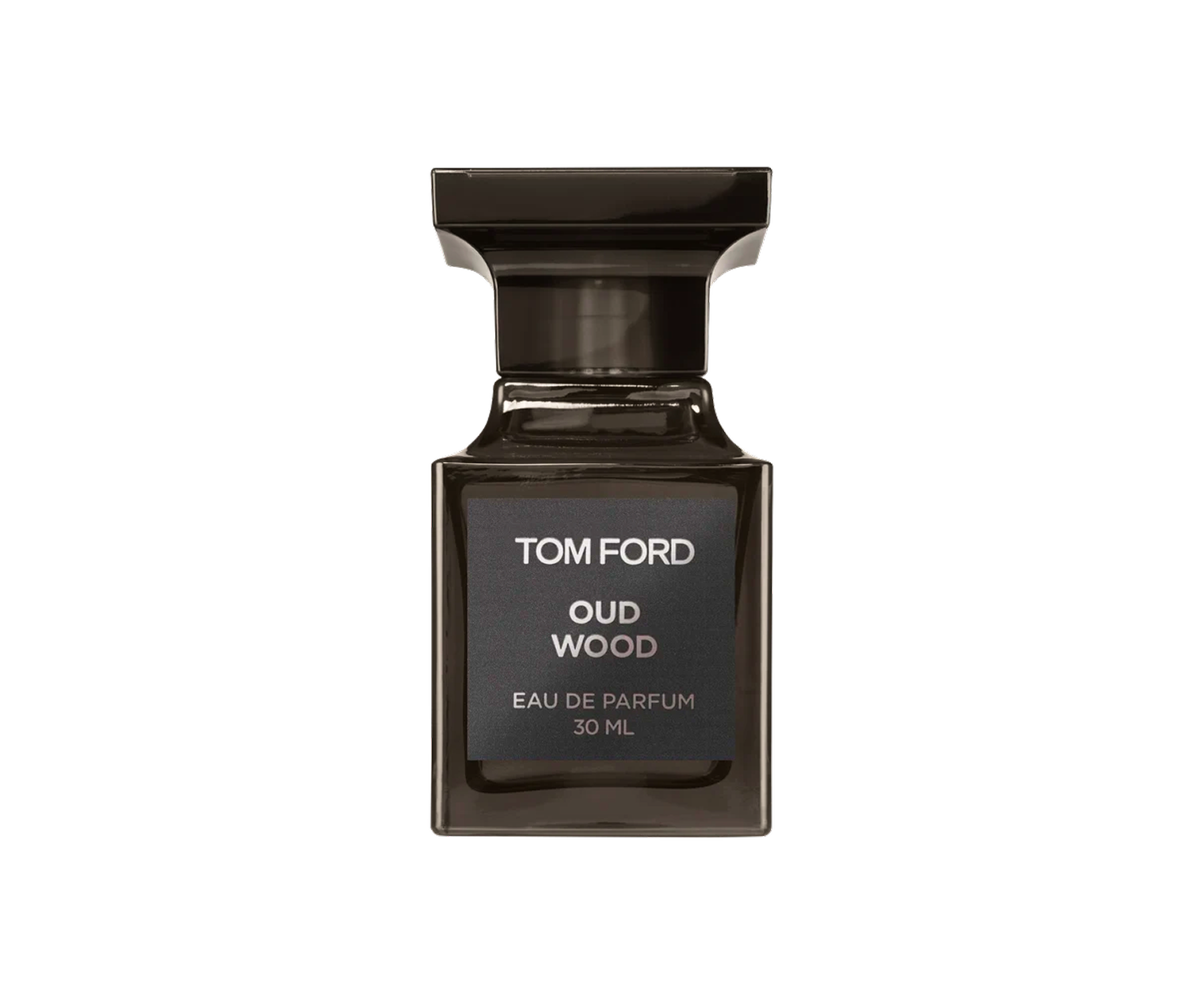
One of the twelve Private Blend fragrances Tom Ford launched in March 2007, and still in production.
The first twelve included Tobacco Vanille, Tuscan Leather and Neroli Portofino. Richard Herpin is the perfumer credited with Oud Wood. Private Blend is Tom Ford's upper line, and Oud Wood is sold in five sizes, from 10 ml to 250 ml.
Oud is the resin an agarwood tree produces when a mould infects its heartwood. The tree darkens the wood to fight it, and that darkened wood is what gets distilled. Because only infected trees make it, natural oud is scarce and costly, so perfumers often build it as an accord from other materials. Tom Ford's own page says "oud notes", which is the careful way of putting it.
The published notes are rosewood and cardamom at the start, then oud, sandalwood and vetiver, finished with tonka bean and amber. Tom Ford's list also names pink pepper and patchouli. Vetiver is the dry, rooty grass that keeps the smoke from turning sweet, and tonka bean, which smells of vanilla and hay, is what lingers.
Oud Wood is the darkest pick here. It fills a room. It opens with a medicinal dryness from the cardamom, turns smoky within the hour, and dries down to a warm wood that is still on a scarf the next morning. It belongs to evenings and cold weather, when a scent can take up more space.
How we chose
We chose five fragrances that can be worn every day for years, which ruled out anything built to be noticed across a room for one season. Each is still in production, each maker publishes its notes, and together they run from bright citrus to dark wood so the list works as a gradient rather than five versions of one idea. We kept to eaux de parfum except where the lighter concentration is the point, and we credited perfumers only where two independent sources agree.
About the author

Justin Farrugia
Founder & Editor of Curated Supply
Justin Farrugia is the founder and editor of Curated Supply, a design-led directory to things worth owning. He has personally curated over 1,000 products across workspace, carry, coffee, audio, and the home, each judged against one standard: design intent, material quality, and the restraint that lets a thing last.