Small air purifiers that fit a bedside, a desk or a side table
Small air purifiers sized to the room, from the Blueair Mini Restful to the Dyson HushJet, plus the Awair Element monitor that says when the air needs one.
Small air purifiers sell on room sizes that assume the machine cleans the air once an hour, and the honest figure is about a fifth of the one on the box. Dyson markets the HushJet for up to 100 m², and its US rating is 203 sq ft, roughly 19 m². That gap is the first thing to know, and the second is that no purifier here does anything about the stuffiness most people blame on dust.
So the post starts with a monitor. It tells you which problem the room actually has, and the three purifiers after it step up in size: a bedside clock, a bedroom or study, then a living room.
The larger purifiers that hold a whole open-plan floor are in air purifiers for bedrooms and living rooms.
1.Awair Element
Pros
- A real NDIR CO2 sensor, which recalibrates every 14 days
- Separates a particle problem from a stale-air one
- Readable over a home network without the cloud
Cons
- Mains only, so it stays where the socket is
- Awair pulled app integrations and older devices in 2022
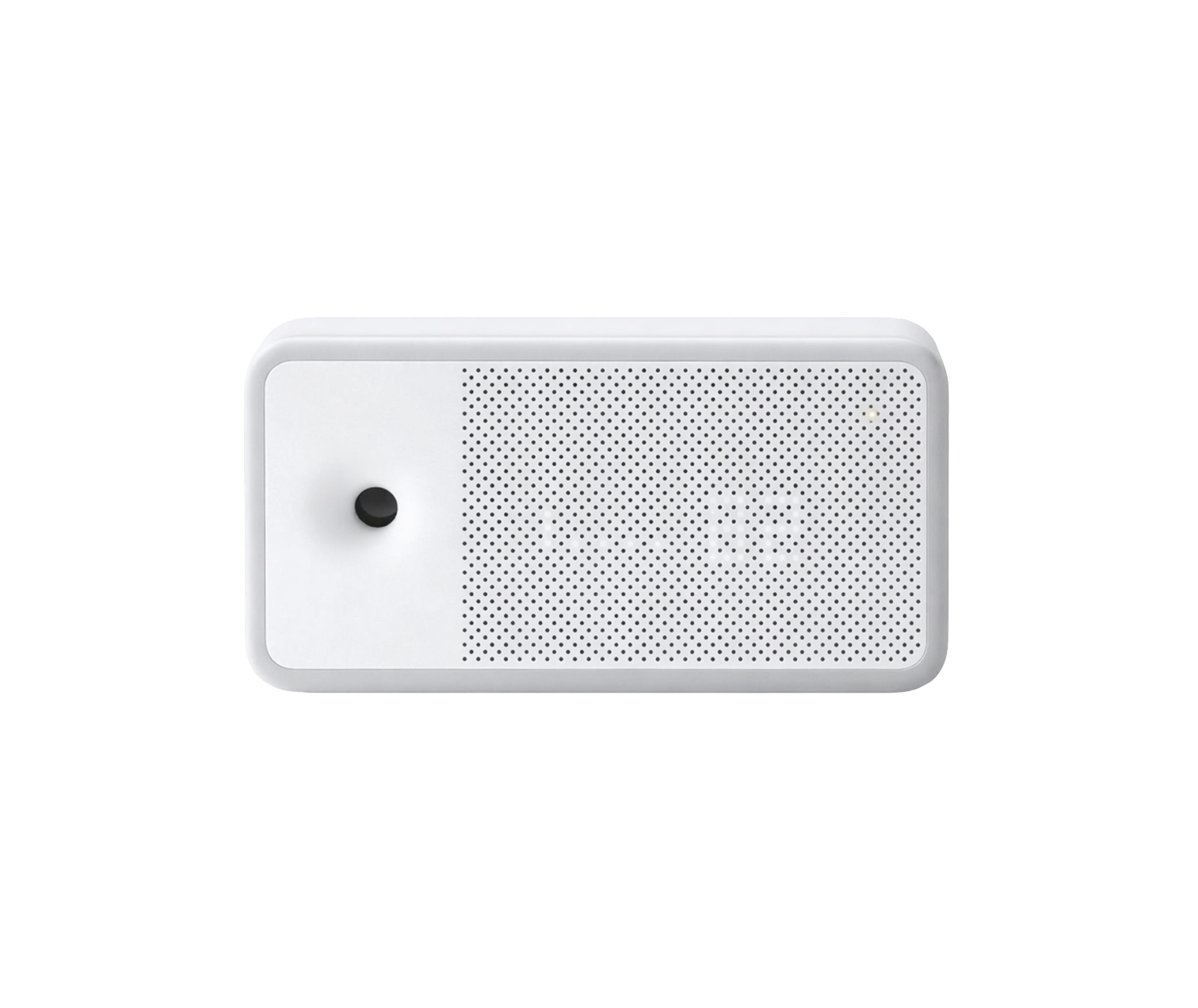
It measures carbon dioxide with a real sensor, which is the reading that tells you to open a window instead of switching on a purifier.
The Element tracks five things: fine particles (PM2.5), carbon dioxide, volatile organic compounds, temperature and humidity, and folds them into one score out of 100 on a dot-matrix face. The CO2 sensor is an NDIR unit, which shines infrared light through a small chamber and measures how much the gas absorbs. Many cheaper monitors estimate CO2 from their VOC reading instead, which is a guess dressed as a number. Awair quotes ±75 ppm or 10% from 400 to 5,000 ppm, and the sensor recalibrates itself every 14 days.
A filter cannot lower CO2. It is the gas you breathe out, so a closed bedroom climbs through the night whether a purifier runs or not, and only fresh air brings it down. The US Environmental Protection Agency ranks ventilation and removing the source ahead of filtration for exactly this reason. Particles are the other half of the score, and that is the half a purifier fixes.
Its particle sensor is a laser unit that counts light scattered by dust. One independent test put its PM2.5 reading within about 14% of a government reference monitor over seven hours.
It needs a wall socket. No battery. The app is free and needs no subscription. Awair has a history worth knowing: in 2022 it cut off its older devices and pulled several app integrations. The Element kept working, and it can also be read over a home network through a local API, with no cloud in between.
- Measures
- PM2.5, CO2, VOCs, temperature, humidity
- CO2 sensor
- NDIR, 400 to 5,000 ppm, ±75 ppm or 10%
- PM2.5
- 0 to 1,000 µg/m³, ±15 µg/m³ or 15%
- Size
- 154 x 84.7 x 45 mm
- Power
- Mains adapter, no battery
Specifications as published by the manufacturer. Source
2.Blueair Mini Restful Sunrise Clock Air Purifier
Pros
- A 15 to 30 minute sunrise light before the alarm
- A USB-C port to charge a phone overnight
Cons
- No air sensor, so no automatic mode
- Alarms are set in the app, not on the clock
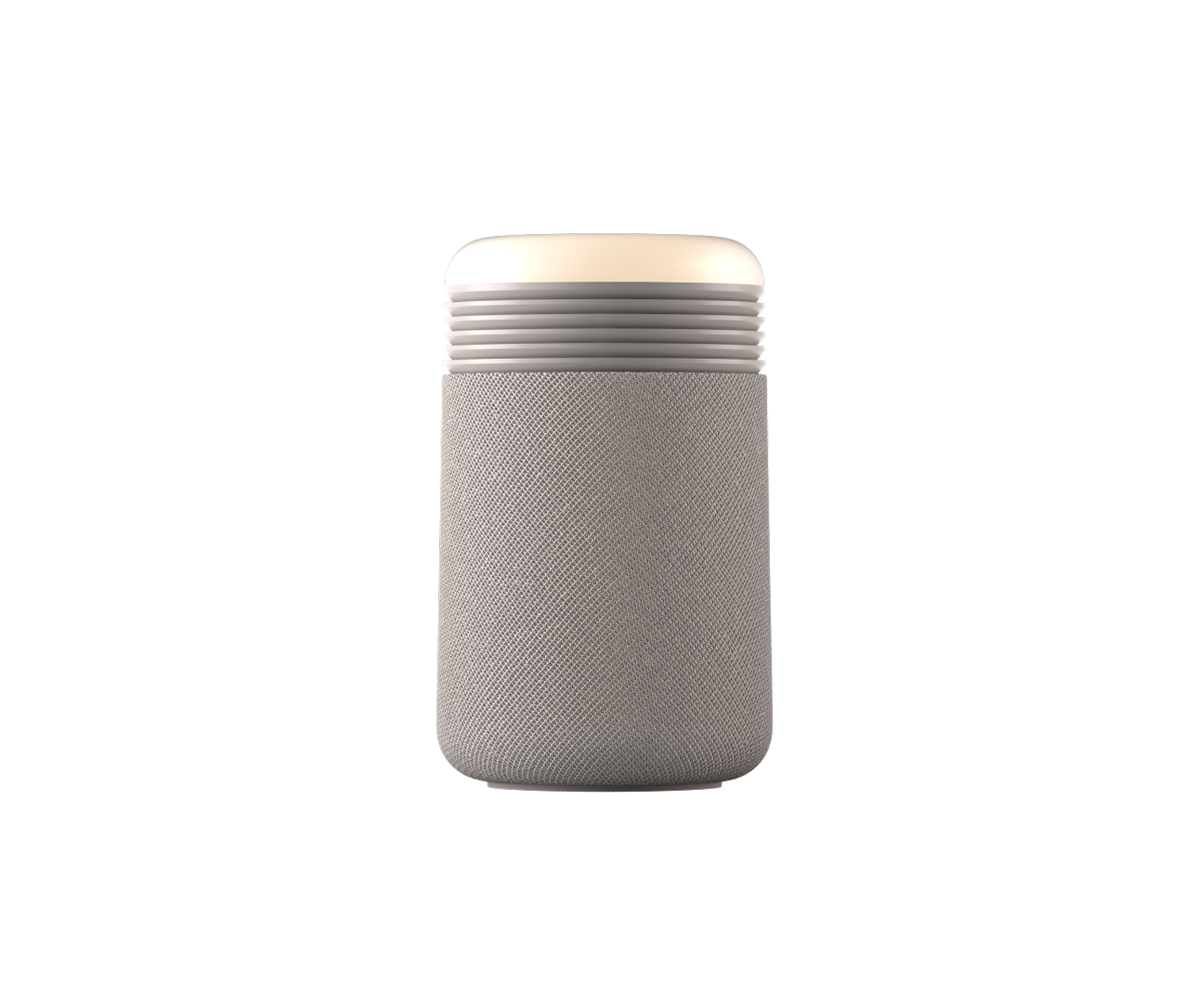
A sunrise alarm clock with a purifier inside, sized for the bedside table it already needed to stand on.
The light brightens over 15 to 30 minutes before the alarm sounds, so the room is lit before you are awake. The purifier underneath is rated for 140 sq ft at 4.8 air changes an hour, which is a small bedroom, and it moves 80 to 93 cubic feet of clean air a minute depending on the pollutant, dust being the hardest. CADR, the clean air delivery rate, is the volume of filtered air it puts out, and every room size starts from it. The 607 sq ft on the Blueair page is the same machine at one change an hour.
The filter is HEPASilent, Blueair's name for a combination of an ionizer and loose filter media. The ionizer charges particles so they cling to fibres that would otherwise let them through, which moves more air with less fan noise than a dense HEPA sheet. California certifies it as an electronic air cleaner, which means it passed the state's ozone limit for ionizers. One filter lasts up to nine months.
There is no air sensor. The Mini Restful cannot react to bad air on its own, and runs at whichever of four speeds you chose. That is where the Element earns its place beside it. You set alarms in the app, not on the clock, and the top button turns the alarm off.
It stands 11.1 inches tall and weighs 2.4 lb, and a USB-C port on the back charges a phone overnight. Blueair's spec table puts it at 21 to 48 dB.
- Room size
- 140 sq ft at 4.8 air changes an hour
- CADR
- 93 pollen, 80 dust, 90 smoke (cfm)
- Noise
- 21 to 48 dB
- Filter life
- Up to 9 months
- Size
- 11.1 x 6.7 x 6.7 in, 2.4 lb
Specifications as published by the manufacturer. Source
3.Dyson HushJet Purifier Compact
Pros
- An electrostatic filter rated for five years
- No ionizer: California lists it as mechanical
- PM2.5 sensing drives Auto mode
Cons
- Purifies only, with no fan or heater mode
- The carbon filter is a yearly cost
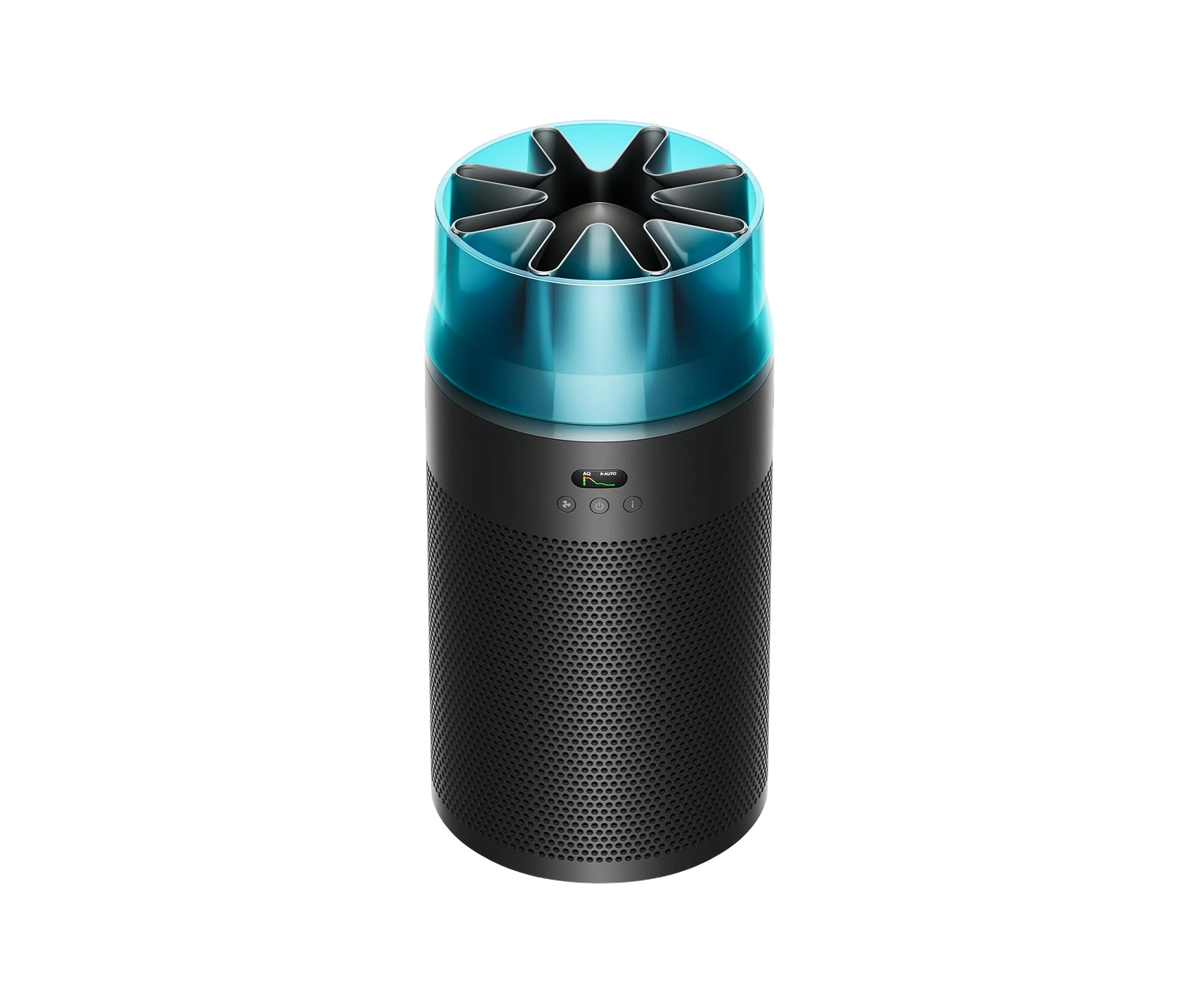
One jet of clean air straight up, which pulls the rest of the room along behind it and keeps the noise down.
The HushJet leaves through a star-shaped nozzle that Dyson based on jet engine design. As the fast stream leaves the top it drags slower air with it, the way the concentrator on a hair dryer does, so the room circulates without a big fan. The star shape breaks up the turbulence that makes compressors whine. Dyson quotes 24 dB in Sleep mode and 42 dB at maximum, and its CADR is 250 cubic metres an hour.
The main filter is electrostatic, charged media that catches 99.97% of particles down to 0.3 microns. It resists clogging better than glass HEPA, which is why Dyson rates it for five years at 12 hours a day, defined as the point where its output has fallen by half. A separate carbon filter takes odours and gases such as nitrogen dioxide and lasts about a year, so that is the recurring cost. California lists it as a mechanical cleaner with no ionizer, the only purifier here classed that way.
A PM2.5 sensor drives Auto mode, so it runs hard only when the air needs it. Dyson seals the whole machine, not just the filter, so air cannot slip around the media. It purifies. Unlike most Dyson purifiers, there is no fan or heater mode.
At 470 mm tall and 3.15 kg it fits on a bedside table or a desk corner. The US rating is 203 sq ft at 4.8 changes an hour, a bedroom or a study. The 100 m² in Dyson's marketing is one change an hour.
- Room size
- 203 sq ft at 4.8 air changes an hour (US rating)
- CADR
- 250 m³/h
- Noise
- 24 dB in Sleep mode, 42 dB at maximum
- Filter life
- Electrostatic up to 5 years at 12 h a day; carbon about 1 year
- Size
- 470 x 230 x 230 mm, 3.15 kg
Specifications as published by the manufacturer. Source
4.Blueair Blue Signature Air Purifier
Pros
- AHAM-verified CADR, tested instead of claimed
- Optional legs or a ring base turn it into a side table
- 3 ppb ozone in AHAM's test, under the zero-ozone line
Cons
- The ionizer cannot be switched off
- 13.2 lb, so it is placed once
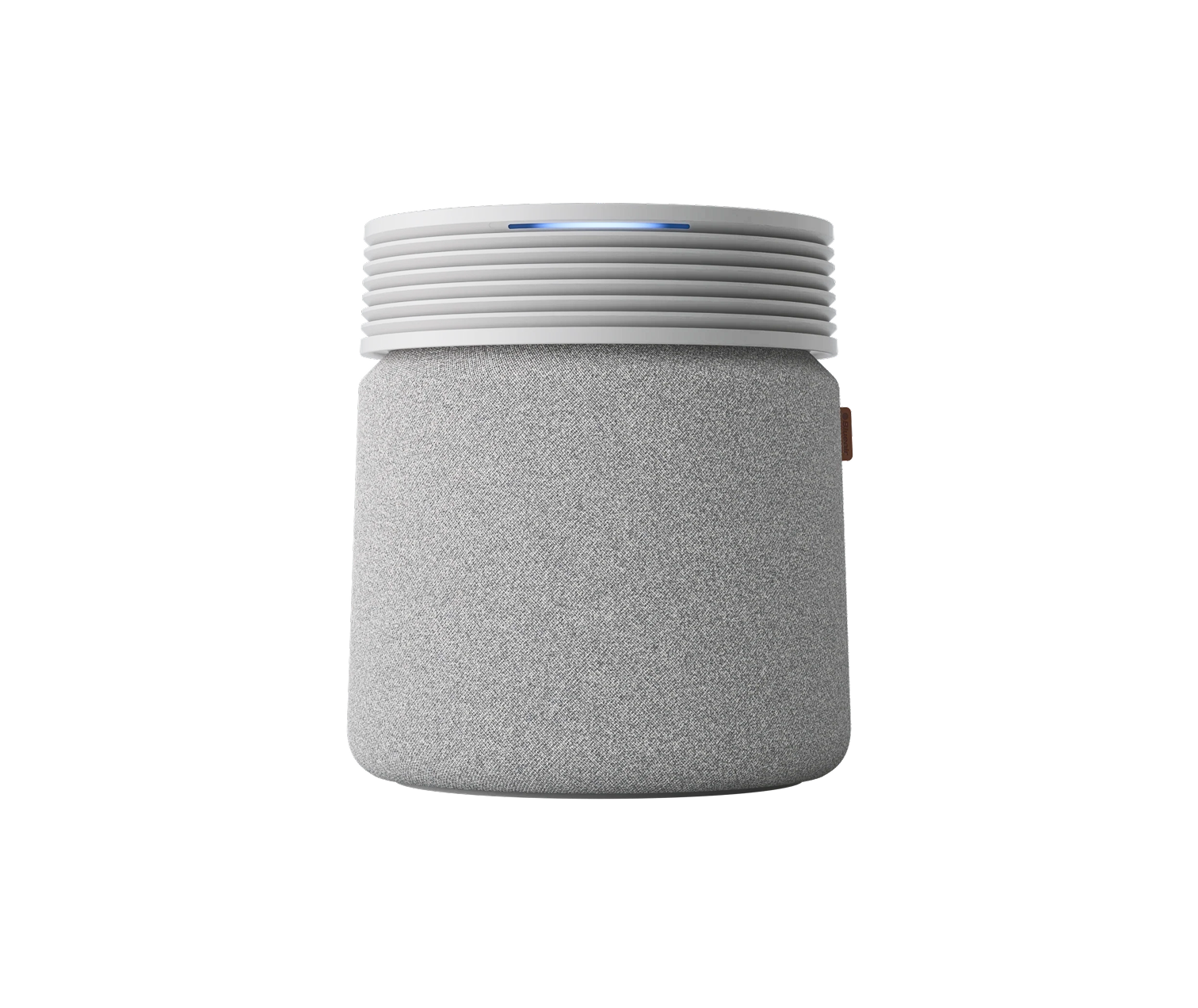
The largest room here, 705 sq ft, from a cylinder built to stand in as a side table.
The Blue Signature is rated to clean a 705 sq ft room 4.8 times an hour, enough for a living room, and its AHAM-verified CADR runs from 434 cubic feet a minute on dust to 455 on smoke. AHAM is the US appliance association, and its Verifide label means an independent lab measured the CADR instead of taking the maker's word. Blueair sells optional wood legs and a chrome ring base, and on either it reads as a table you put a lamp on.
It uses the same HEPASilent approach as the Mini Restful, with a pre-filter and a combined particle and carbon filter. There is no switch for the ionizer. AHAM's ozone test measured it at 3 parts per billion, under the 5 ppb line UL 2998 uses for zero-ozone devices. Blueair's RealTrack system decides when the filter is due by counting hours, fan speed and pollution, typically 9 to 12 months, and a replacement is $99.99.
Built-in particle sensors drive an Auto mode, and the touchscreen wakes when someone approaches. Blueair quotes 23 to 55 dB. HouseFresh measured about 229 cfm while staying under 45 dBA, which is roughly half its top output at the volume of a quiet conversation.
At 17.2 inches tall, 15.5 across and 13.2 lb it is the one purifier here you place with some thought. It is also the only one sized for the room where evenings happen.
- Room size
- 705 sq ft at 4.8 air changes an hour
- CADR
- 455 smoke, 434 dust, 450 pollen (cfm), AHAM Verifide
- Noise
- 23 to 55 dB
- Filter
- Particle and carbon, 9 to 12 months, $99.99
- Size
- 17.2 x 15.5 x 15.5 in, 13.2 lb
Specifications as published by the manufacturer. Source
How to size a small air purifier
Read the room size at 4.8 air changes an hour
AHAM's room ratings assume the purifier replaces the room's air 4.8 times an hour, about every 12.5 minutes. Marketing figures often quote one change an hour, which makes the same machine sound five times bigger. If a maker gives only CADR in cubic feet a minute, multiply by 1.55 to estimate the room in square feet that it can handle at the AHAM rate.
Particles or stale air
A purifier removes dust, pollen, smoke and pet dander. It does not remove carbon dioxide, which is why a closed room still feels heavy with a purifier running. A monitor with a real CO2 sensor tells the two apart, and the fix for high CO2 is a window.
Ionizers and ozone
Both Blueairs charge particles with an ionizer to move more air quietly, and both are certified under California's ozone limit. The Dyson uses no ionizer at all. If ozone is a concern, look for the CARB certification and, where it is published, an ozone figure under 5 ppb.
The cost after the first year
Filters are the running cost. The Mini Restful's lasts up to nine months, the Blue Signature's 9 to 12 months at $99.99, and the Dyson splits it in two: an electrostatic filter rated for five years and a carbon filter that lasts about one.
How we chose
We chose these on the room each one is honestly sized for, read at the 4.8 air changes an hour that AHAM ratings use, because the room sizes on most boxes assume one change an hour and overstate coverage by about five times. The Awair is here because a purifier cannot tell you whether the problem is particles or stale air, and only one of those is a filter's job. Figures are quoted from each maker's page and checked against an independent test or an authorised dealer. Dyson's US site blocks automated readers, so its figures come from Dyson's official Indonesian store and Abt, a US Dyson dealer. The Awair measures air and the others clean it, so there is no comparison table.
Common questions
For a typical 120 to 150 sq ft bedroom, a CADR of about 80 to 100 cubic feet a minute is enough at the AHAM rate of 4.8 air changes an hour. The Blueair Mini Restful (140 sq ft) suits a small bedroom; the Dyson HushJet (203 sq ft) covers a larger bedroom or a study.
Many makers quote the area a purifier can clean once an hour. AHAM's standard assumes 4.8 changes an hour, about every 12.5 minutes. The Dyson HushJet's 100 m² and the Blueair Mini Restful's 607 sq ft are one-change figures; at 4.8 changes they are 203 sq ft and 140 sq ft.
No. Carbon dioxide is a gas that filters do not capture, so a closed room climbs through the night with a purifier running. Only ventilation brings it down. A monitor with an NDIR CO2 sensor, like the Awair Element, shows when to open a window.
Blueair's HEPASilent uses an ionizer, so California classes these as electronic air cleaners, and both models here are certified under its ozone limit. AHAM's test measured the Blue Signature at 3 parts per billion, below the 5 ppb UL 2998 zero-ozone threshold. The Dyson HushJet uses no ionizer.
The Mini Restful's filter lasts up to nine months. The Blue Signature's lasts 9 to 12 months and costs $99.99. The Dyson HushJet's electrostatic filter is rated for five years at 12 hours a day, and its separate carbon filter for about one.
About the author

Justin Farrugia
Founder & Editor of Curated Supply
Justin Farrugia is the founder and editor of Curated Supply, a design-led directory to things worth owning. He has personally curated over 1,000 products across workspace, carry, coffee, audio, and the home, each judged against one standard: design intent, material quality, and the restraint that lets a thing last.