Shelf worthy objects for modern homes
Shelf worthy objects that hold a second look, from a lamp built on a Rafael Moneo glass block to a solid brass Aesop burner and a 1951 Kay Bojesen monkey.
Updated
Shelf worthy objects have a harder job than most things in a home. Nothing on a shelf gets used often enough to justify itself, so it has to be worth looking at, and looking at again in March, which is a much harder test than being worth buying in November.
What fails is decoration: things bought to fill a gap, which read as filler within a month because there is nothing to return to. Each of the six here has something that rewards a second look. Three use materials that change as they age: brass, teak and walnut. The other three do something: a lamp that takes colour filters, a car that rebuilds as a different car, a top that spins.
1.Kismas Doric Lamp 01
Pros
- The glass block can sit either way up on the base, so the ribs run across or up
- Seven colour filters tint the whole block, and two stack to mix a new shade
Cons
- A mood light more than a reading light, even at full brightness
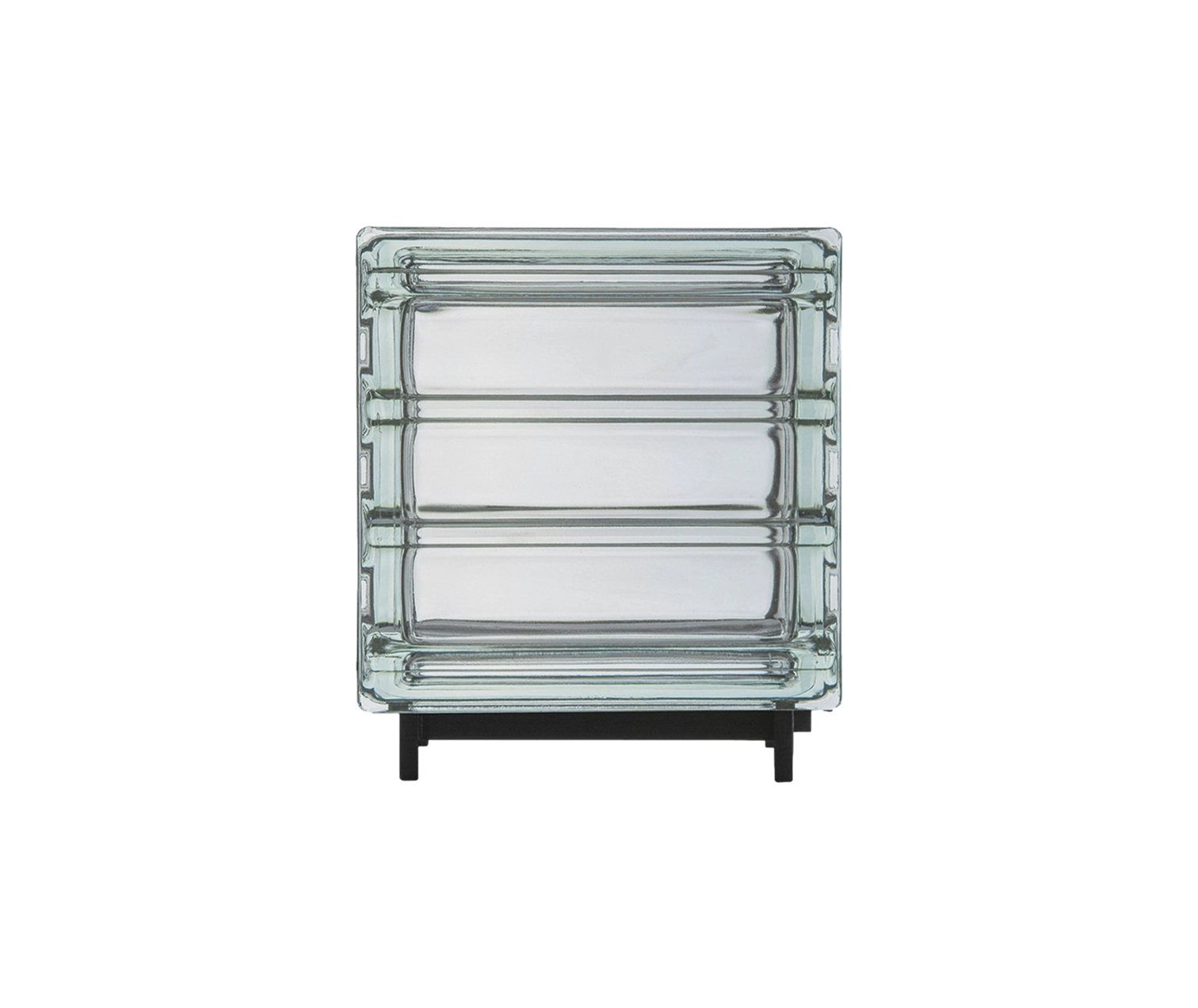
A glass block from a building, lifted off the wall and lit from underneath.
The block is the point. Kismas builds the Doric Lamp 01 around a relief glass block designed by the Spanish architect Rafael Moneo, the kind of thick, pressed glass that walls stairwells and lets daylight through without letting a view through. Its face is not flat. Broad horizontal ribs run across it, so when the LED in the steel base comes on, the light catches on each ridge and the whole block glows in stacked bands.
The block is not fixed to the base. Kismas says it can sit in any direction, which means the ribs can run across or up, and the lamp changes shape without changing parts.
It ships with seven colour filters cut from the gels used in film, TV and theatre lighting. One drops into the diffuser under the glass and tints the whole block, and two stacked together make a colour of your own. The dimmer runs from a faint glow to a working light.
Lit or unlit, the block is still a piece of architecture at table scale. On a shelf it works as the anchor, the heaviest-looking thing in the arrangement, and it is the one pick here that changes the room after dark.
2.Blanked Industrial Bookstand
Pros
- Anodised aluminium holds its colour in the metal, so there is no paint to chip
- No hidden fasteners: the bolts holding the wings apart are part of the look
Cons
- Built for one large book or a few thin ones, not a row of spines
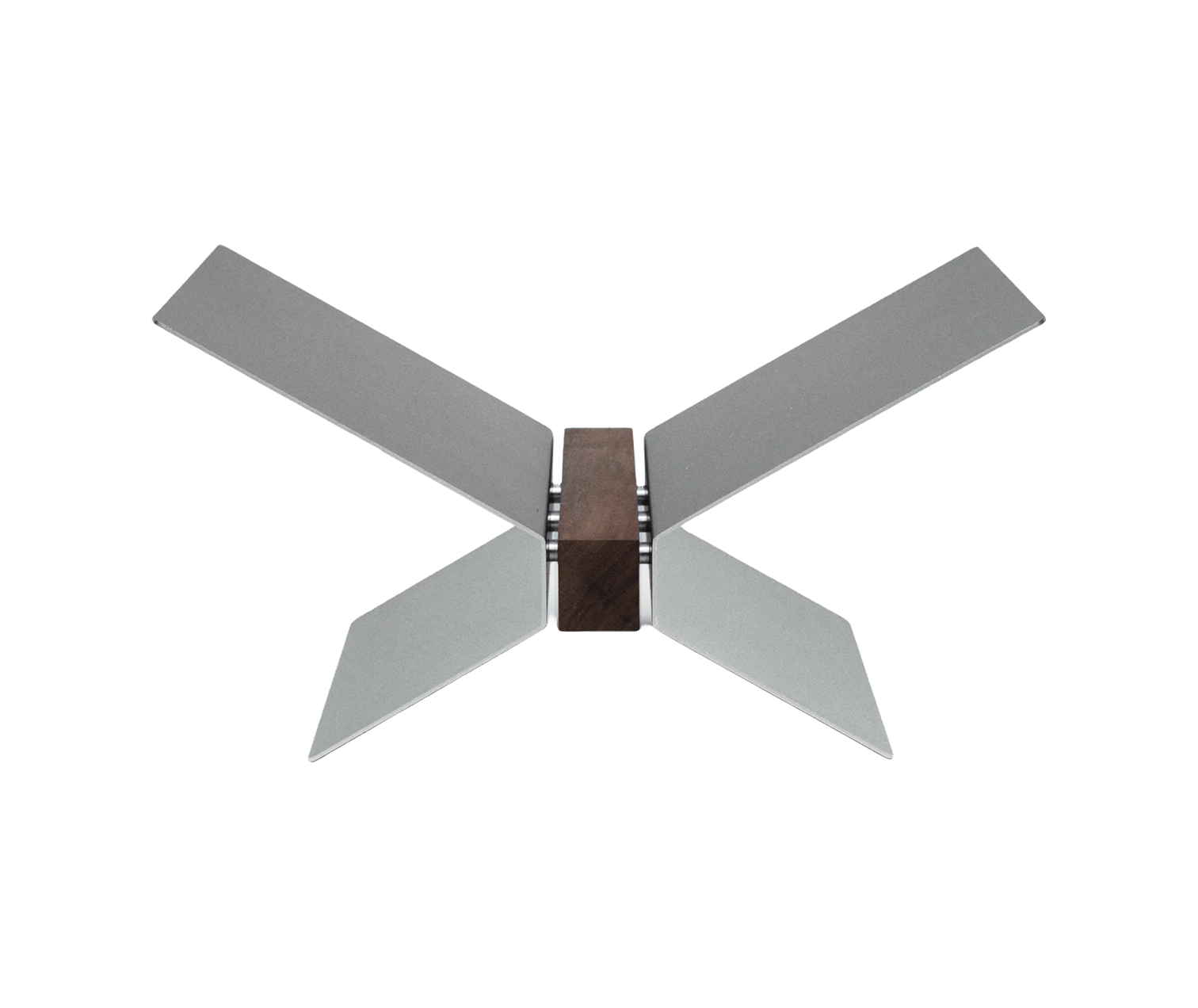
Four aluminium wings around a walnut block, built to hold one book open so the shelf shows a page.
Most shelves store books spine out, so what is on display is a title. Blanked built the Industrial Bookstand as an X: two bent sheets of anodised aluminium, a block of American black walnut between them, and the parts held apart by custom-moulded separation bolts with no hidden fasteners. The upper wings form a cradle. Open a large book into it and the shelf shows a spread that changes whenever you turn the page. Lay two or three thin titles in it instead and it reads as a stack.
Anodising grows a hard oxide skin on the aluminium and puts the matte silver colour in the metal itself, so there is no paint to chip, and it shrugs off fingerprints. The walnut is the warm half of the pairing, and the only part that will change: walnut left in daylight lightens and warms over a few years, while the aluminium stays exactly as it arrived.
It also answers a real question, which is where a big book lives when it is neither shelved nor being read. Laid flat on a coffee table, that book collects keys and mugs. In the stand it becomes the thing people walk over to.
3.Lego Icons 10295 Porsche 911
Pros
- Most of the build is shared, so switching models only means rebuilding the rear
- The Targa roof panel stows under the front hood
Cons
- Only one of the two cars can be on the shelf at a time
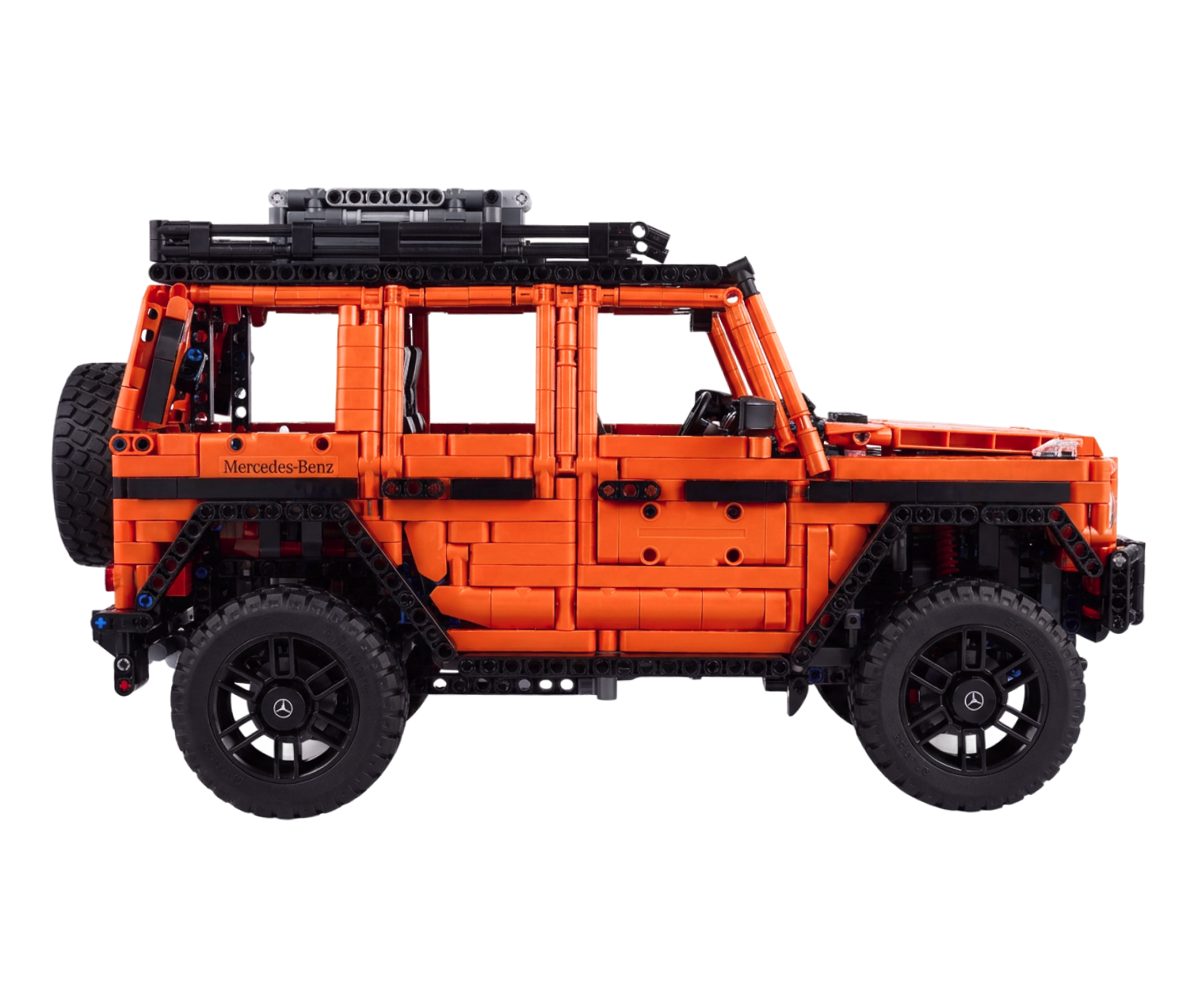
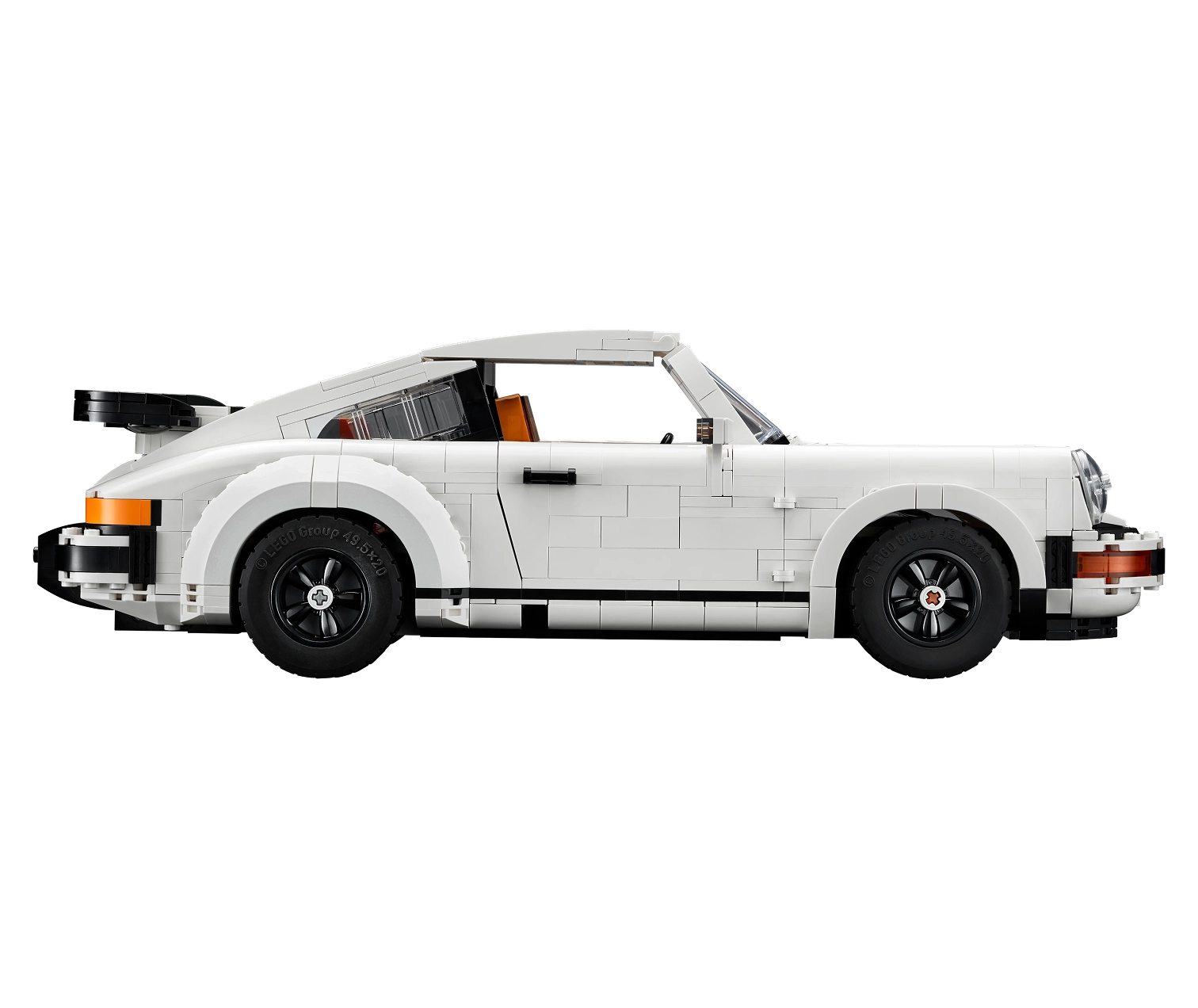
One box, two cars: it builds a 911 Turbo or a 911 Targa, and you can change your mind later.
Most display models are one thing forever. Lego split the Icons 10295 instructions late in the build. Both cars share the chassis, the interior and most of the bodywork, and only the last stages differ: the Turbo gets the wide rear arches and the spoiler built into the engine cover, the Targa gets a narrower rear, the roll bar with its rear glass, and a roof panel that stows under the front hood. Switching later means taking the back of the car apart, not starting again.
It runs to 1,458 pieces and finishes 35 cm long, and it sits in Lego's Icons range, rated 18+, the line built for adults who display what they build. The proportions are what make it work at a distance. What makes a 911 recognisable is the slope of its roof into the rear haunches, and getting that curve out of rectangular parts is the hard part of the design.
It sits closer to a scale model than a toy. For more cars in the same range, the Lego car sets worth displaying post covers the rest of the garage.
- Pieces
- 1,458
- Length
- 35 cm built
- Builds
- 911 Turbo or 911 Targa, one at a time
- Age rating
- 18+
Specifications as published by the manufacturer. Source
4.Aesop Brass Oil Burner
Pros
- Investment cast in one piece, so there are no joints to loosen with heat
- Three parts only: lid, oil well and tea light cradle
Cons
- Stays bright only with polishing, because the brass is unlacquered
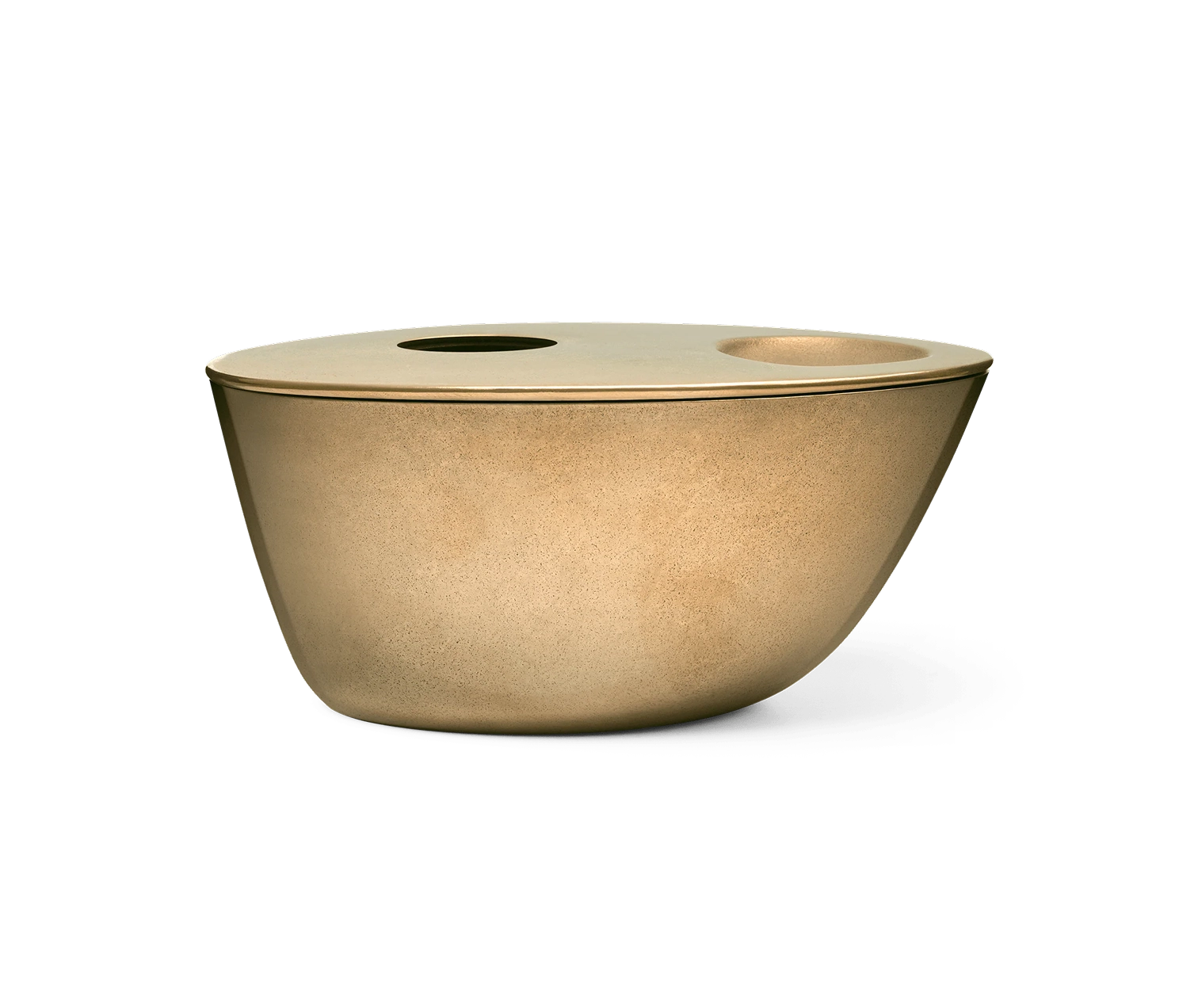
Cast in one piece of solid brass, and left bare so it changes colour where it gets used.
Studio Henry Wilson designed the Brass Oil Burner for Aesop, and it is investment cast in Sydney. That process starts with a wax copy of the object, coats it in ceramic and fires it, which hardens the shell and melts the wax out, then fills the empty space with molten brass. What comes out has no joints and no seams, which matters for something heated by a flame every evening and left to cool overnight.
There are three parts: a lid, a well for the oil, and a cradle beneath for a tea light. A few drops of oil go in the well, the candle goes underneath, the lid goes back on.
The brass is not lacquered, so it oxidises. It moves from bright yellow towards amber and brown, fastest where hands and heat land most often, and a brass polish takes it back to bright whenever you want that. Aesop's own advice is to let the patina come. It is the pick here that people pick up and turn over, and it is a different colour in its third year than in its first.
5.Kay Bojesen Wooden Monkey
Pros
- Two woods in one figure, so no two monkeys carry the same pattern
- Teak warms to golden brown with age
Cons
- The two tones soften towards one as the teak darkens, which some owners want and some do not
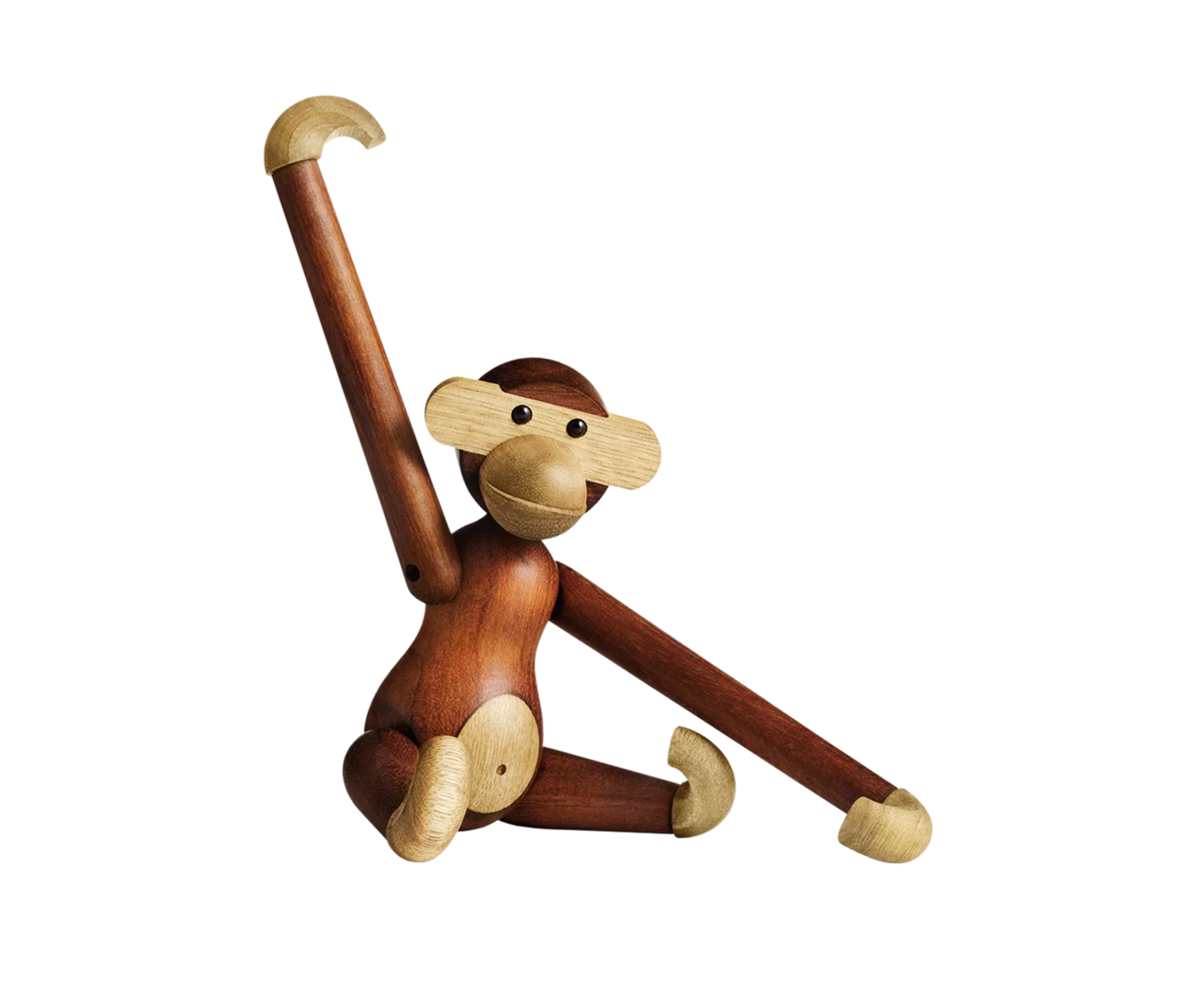
A toy designed in 1951 that grown-ups put on shelves, in two woods that darken as it ages.
The Danish designer Kay Bojesen made the Wooden Monkey in 1951, and the company that carries his name still produces it. It uses two woods, dark teak and limba, a paler West African hardwood, so the two tones read as the monkey's markings. Because the grain of solid wood never repeats, the pattern across each one is its own.
The one linked here is the small size, 20 cm tall, about the height of a paperback stood on end. A 9.5 cm mini follows the same drawing, and set side by side they look like a parent with its young.
Kay Bojesen oils the wood, and oiled teak takes on a golden brown over time in light and air, so the contrast between the two timbers softens year by year. Of everything here it is the one with a face, which is why it gets moved around the most: from shelf to stack of books to windowsill.
- Height
- 20 cm (small)
- Material
- Teak and limba
- Designed
- 1951, by Kay Bojesen
Specifications as published by the manufacturer. Source
6.ForeverSpin Stainless Steel Spinning Top
Pros
- Machined from one piece of steel, so it holds a clean line as it slows
- The easiest pick here to give
Cons
- Spins noticeably shorter on a surface that is not truly flat
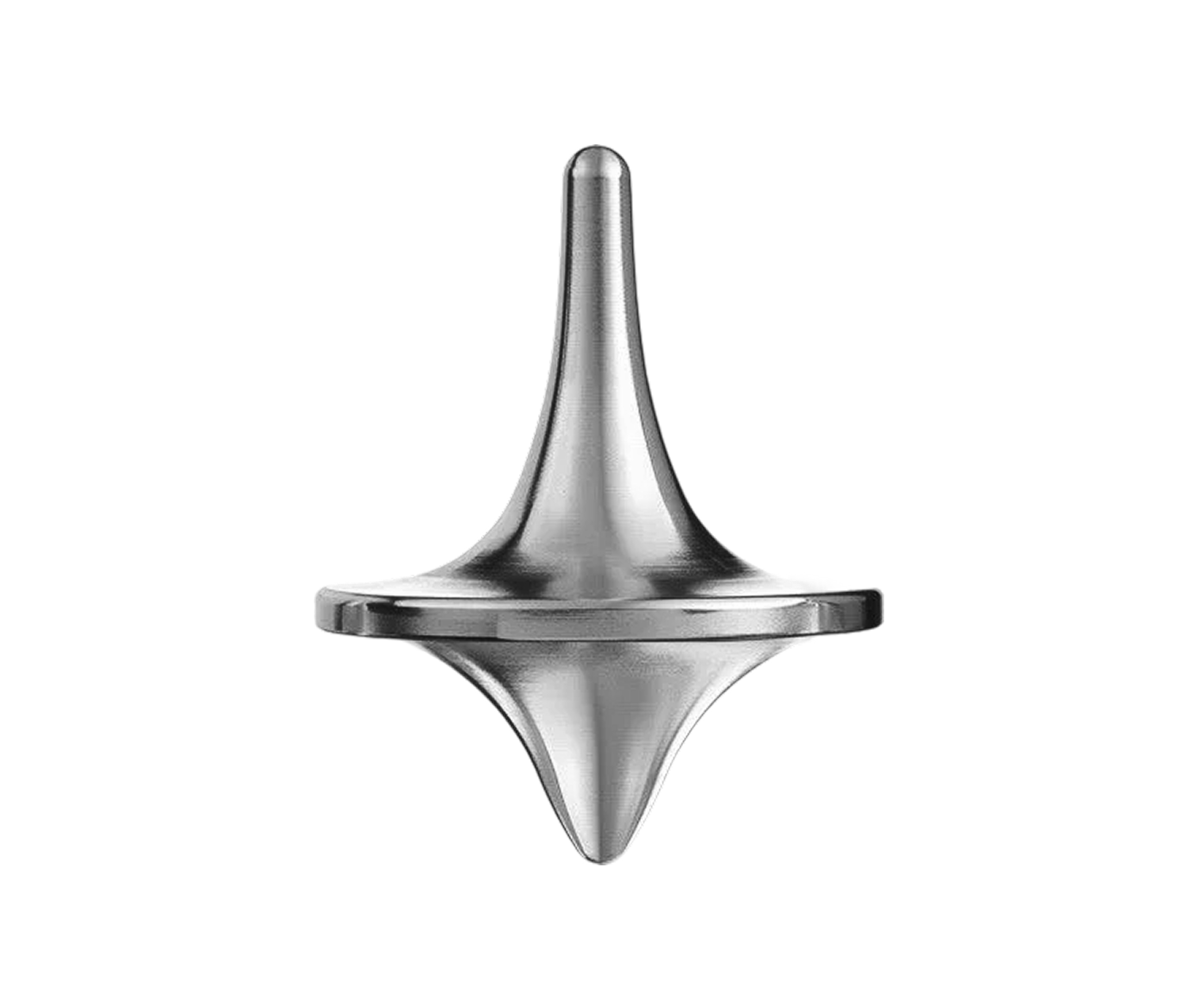
The smallest pick, and the one object on this page that moves by itself, for a few minutes at a time.
A spinning top is easy to make and hard to make well. As the spin slows, any unevenness in the metal pulls the axis off centre and the top starts to walk across the table. ForeverSpin machines the Stainless Steel top from a single piece of steel, with no joins, so the weight sits evenly around the axis and it holds a clean line for longer as it slows.
It is 3.55 cm tall and 2.8 cm across, and weighs 28 g. The weight is what carries it. ForeverSpin's rule is that a heavier top spins longer, which puts stainless steel in the middle of its range, between aluminium and the denser metals.
On a shelf it sits still and reads as a small polished object. In a hand it becomes the thing guests reach for, and the flattest surface in the house is the one it spins longest on, because a table that only looks flat cuts the spin short. It is also the smallest outlay here by some way, and the easiest of the six to give.
- Height
- 3.55 cm
- Diameter
- 2.8 cm
- Weight
- 28 g
- Material
- Stainless steel, one piece
Specifications as published by the manufacturer. Source
What makes an object shelf-worthy
The test is whether it survives the second month. Almost anything looks considered on the day it arrives. The question is whether there is still something to notice after it has stopped being new.
What survives tends to share one of two properties. Either the material changes, as bare brass, oiled teak and walnut do, so the object slowly stops being the one you bought. Or it does something: it lights, opens, rebuilds or spins, so there is an action available as well as a view.
Objects that do neither are decoration, and decoration is what goes the next time someone rearranges the room. The same test at desk scale runs through everyday objects that look better than they need to, and design toys worth displaying takes the playful half further.
How we chose
We chose six objects on whether they survive a second month on a shelf, which is a harder test than looking good on arrival. In practice that means one of two things: the material changes as it ages (bare brass, oiled teak, walnut), or the object does something (lights and takes colour filters, rebuilds as a second car, spins). We dropped the Craighill Granule Hourglass from the first version of this post because Craighill no longer sells it. Figures are printed only where two sources agree, which is why the lamp, bookstand and burner carry no spec panel: their makers' measurements could not be matched by a second source, and the burner's published sizes disagree with each other.
Common questions
Something that is still worth looking at after it stops being new. In practice that is either a material that changes with age, like bare brass, oiled teak or walnut, or an object that does something, like a lamp, a rebuildable model or a spinning top. Objects that do neither tend to read as filler within a month.
Yes, if the brass is bare, as Aesop's is. It moves from bright yellow towards amber and brown, fastest where hands and heat touch it most. Aesop suggests letting the patina develop; a brass polish returns it to bright whenever you want.
Not at the same time. Set 10295 builds one or the other. The chassis, interior and most of the body are shared, and the instructions split near the end, so switching later means rebuilding the rear of the car, not starting from scratch.
About the author

Justin Farrugia
Founder & Editor of Curated Supply
Justin Farrugia is the founder and editor of Curated Supply, a design-led directory to things worth owning. He has personally curated over 1,000 products across workspace, carry, coffee, audio, and the home, each judged against one standard: design intent, material quality, and the restraint that lets a thing last.