Multi-device charging docks worth the investment
Multi-device charging docks have become desk objects. Five picks balancing MagSafe performance, premium materials and design worth placing beside your gear.
Updated
A charging dock is bought once and looked at every day for five years, so the question that matters is what its surface does in that time. Leather darkens and softens. Anodised aluminium picks up a sheen where a hand lands repeatedly. Plastic stays exactly as moulded and looks progressively cheaper next to everything around it.
The six here are the ones whose materials have somewhere to go. They also differ on the thing nobody counts before buying: how many devices, and how much desk that costs. Two devices in a small footprint is a genuinely different object from three in a large one.
1.Courant MAG:3 Classics
Pros
- Italian leather and Belgian linen, the only textile surface here
- A 10 W USB-C port on the back takes a watch puck or a third device
- 1 inch tall, so it reads as a tray rather than a gadget
Cons
- 7.5 W to the phone, half what the Belkin and Native Union give
- 11 × 8 inches is the largest footprint here, for two wireless devices
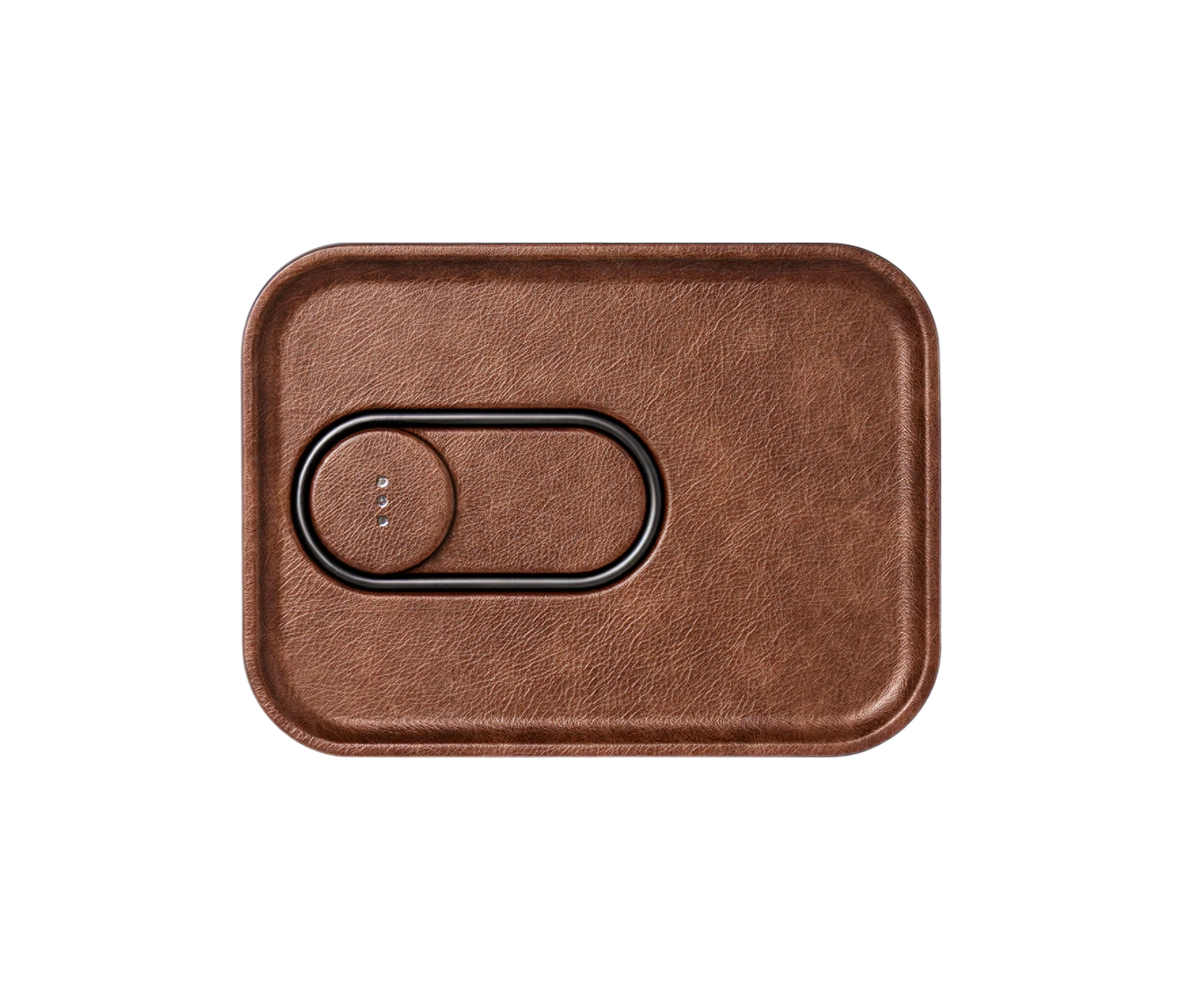
Pebble-grain Italian leather over a matte aluminium base, which is furniture construction applied to an electronic accessory.
The pebbling is functional as well as tactile. A textured surface scatters reflected light, so the scuffs and finger marks a smooth leather dock collects in its first month sink into the grain instead of catching your eye every time you look down.
Courant puts three MagSafe positions on the MAG:3 Classics, and the aluminium underneath supplies the mass that stops a dock travelling when you pull a phone off it one-handed.
It costs more than anything else here. What that buys is a surface with somewhere to go over five years, which no plastic dock offers at any price.
- Phone
- 7.5 W magnetic, on the left pad
- Also charges
- 5 W Qi pad, plus a 10 W USB-C port on the back
- Surface
- Italian leather and Belgian linen
- Dimensions
- 11.0 × 8.0 × 1.0 in
- In the box
- USB-C cable and a power adapter
Specifications as published by the manufacturer. Source
2.Nomad Base Station
Pros
- Four devices at once: two on the pad, one USB-C PD at 18 W, one USB-A
- Three coils, so a phone charges wherever it lands rather than on one spot
- An ambient light sensor dims the LEDs, which matters on a bedside table
Cons
- 10 W is the slowest phone charge here, and there is no magnetic alignment
- Padded leather marks where the aluminium and glass rivals wipe clean
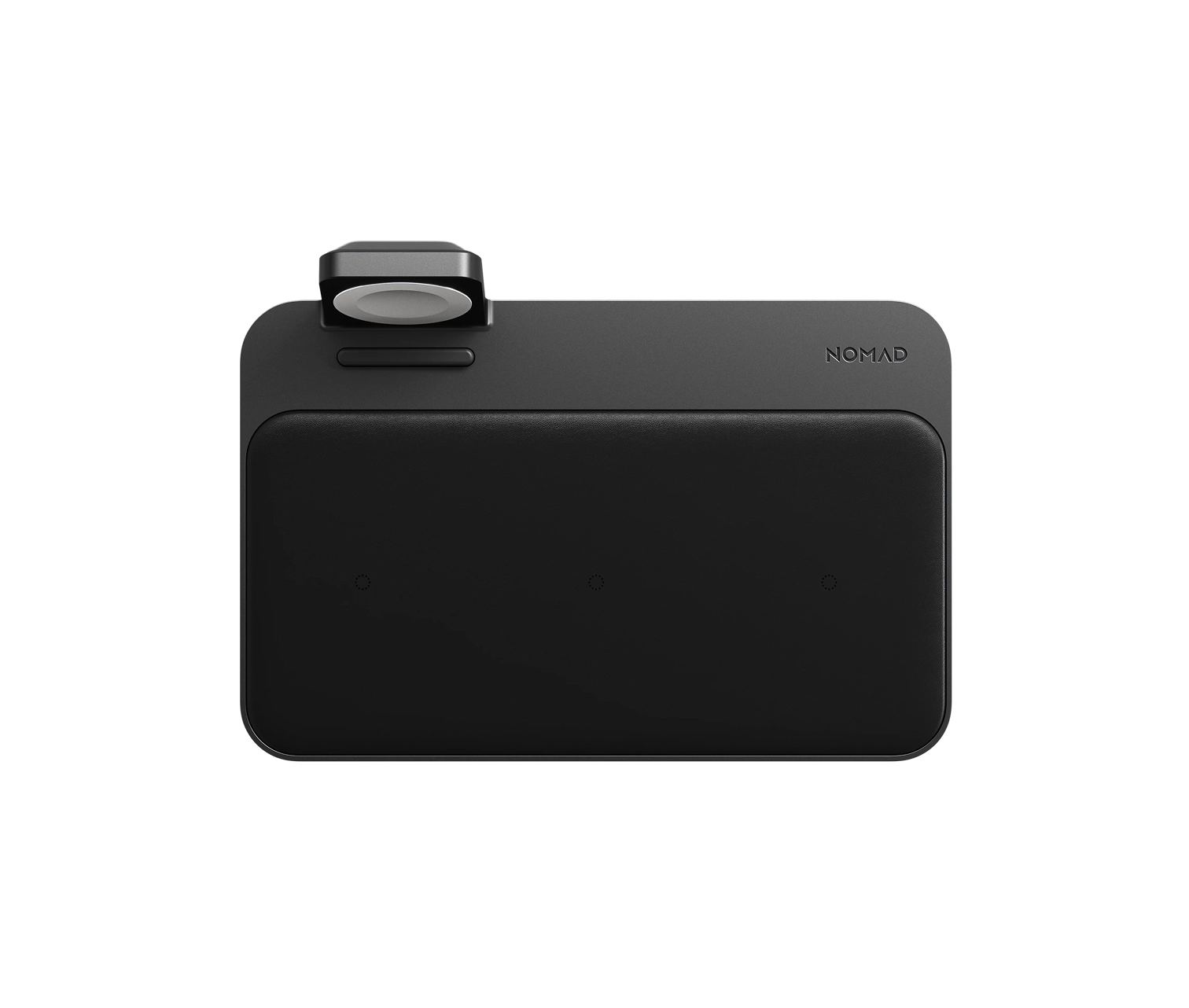
An ambient light sensor, which is the detail that separates a dock designed for a bedroom from one designed for a photograph.
Every charging dock has status LEDs and most of them run at one brightness, which on a nightstand at two in the morning is a small floodlight. Nomad reads the room and dims accordingly, so the Base Station disappears at night and stays legible in daylight.
Nomad anodises the aluminium body and pads the charging surface in leather, matte throughout, with no branding visible from above. Wired ports sit alongside the wireless pads, which is what makes this the pick for a household that is not entirely Apple.
Nothing here is trying to be sculptural. It is trying to be the object you stop noticing, which for a bedside charger is the harder brief.
- Phone
- Up to 10 W, from three high-power coils
- Also charges
- A second device on the pad, plus USB-C PD 18 W and USB-A
- Surface
- Padded leather on an aluminium chassis
- Dimensions
- 10.28 × 7.56 × 1.97 in
- Weight
- 1.43 lb (649 g)
- Light sensor
- Ambient sensor dims the indicator LEDs at night
Specifications as published by the manufacturer. Source
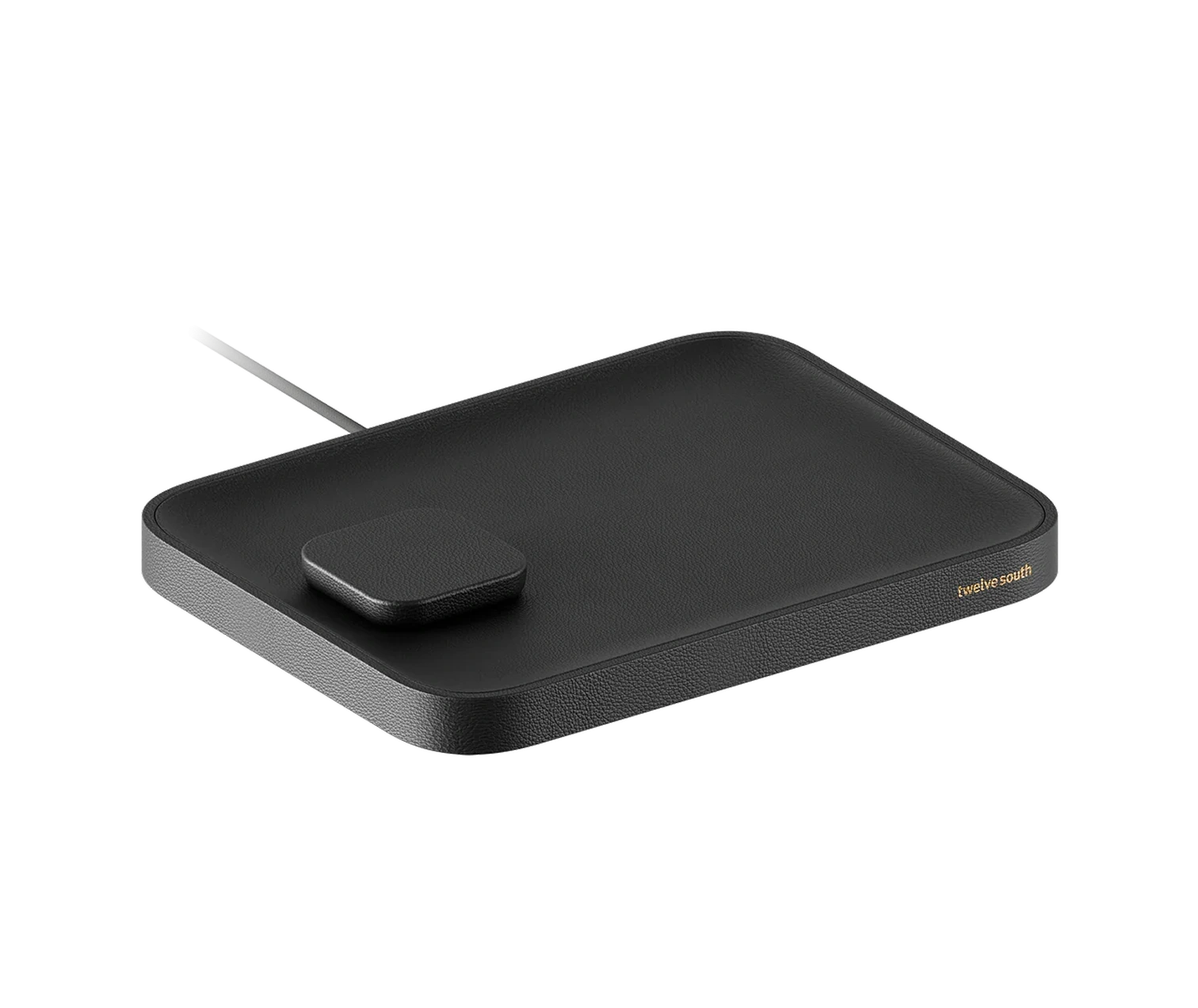
3.Twelve South Valet
Pros
- A real catch-all tray, sized for keys and a wallet rather than a second puck
- Weighted zinc alloy base, so the phone comes off one-handed
- A 36 W adapter in the box, where two rivals ship none
Cons
- No wireless watch or AirPods charging at all, by design
- The USB-C port drops from 25 W to 10 W the moment the pad is in use
It is a catch-all tray with charging in it, which makes it the most space-efficient thing on this page.
Every other dock here occupies desk and gives back only charging. The Valet replaces the dish where keys, coins and a watch already land, so its footprint is space you had already surrendered.
Napa leather is the material Twelve South chose, and it is the one used in furniture meant to last decades: it softens with handling without losing its structure, and it keeps the marks of everything dropped into it.
For a hallway table or the corner of a desk where things accumulate anyway, this is the version of the idea that admits what actually happens.
- Phone
- 15 W, Qi2
- Also charges
- Nothing wirelessly. USB-C at 25 W alone, 10 W alongside the pad
- Surface
- Leather tray on a weighted zinc alloy base
- Size
- 7.5 in across
- In the box
- 36 W USB-C adapter
Specifications as published by the manufacturer. Source
4.Native Union Rise 3-in-1
Pros
- The only one here that folds, at 130 × 65 × 22 mm and 295 g
- Official Apple Watch fast charge: 0 to 80% in about 45 minutes
- Weighted metal base for one-handed detachment
- Holds the phone at a readable angle rather than flat
Cons
- 295 g of charger plus 105 g of adapters is real weight in a bag
- Three devices on a 130 mm footprint means everything is close together
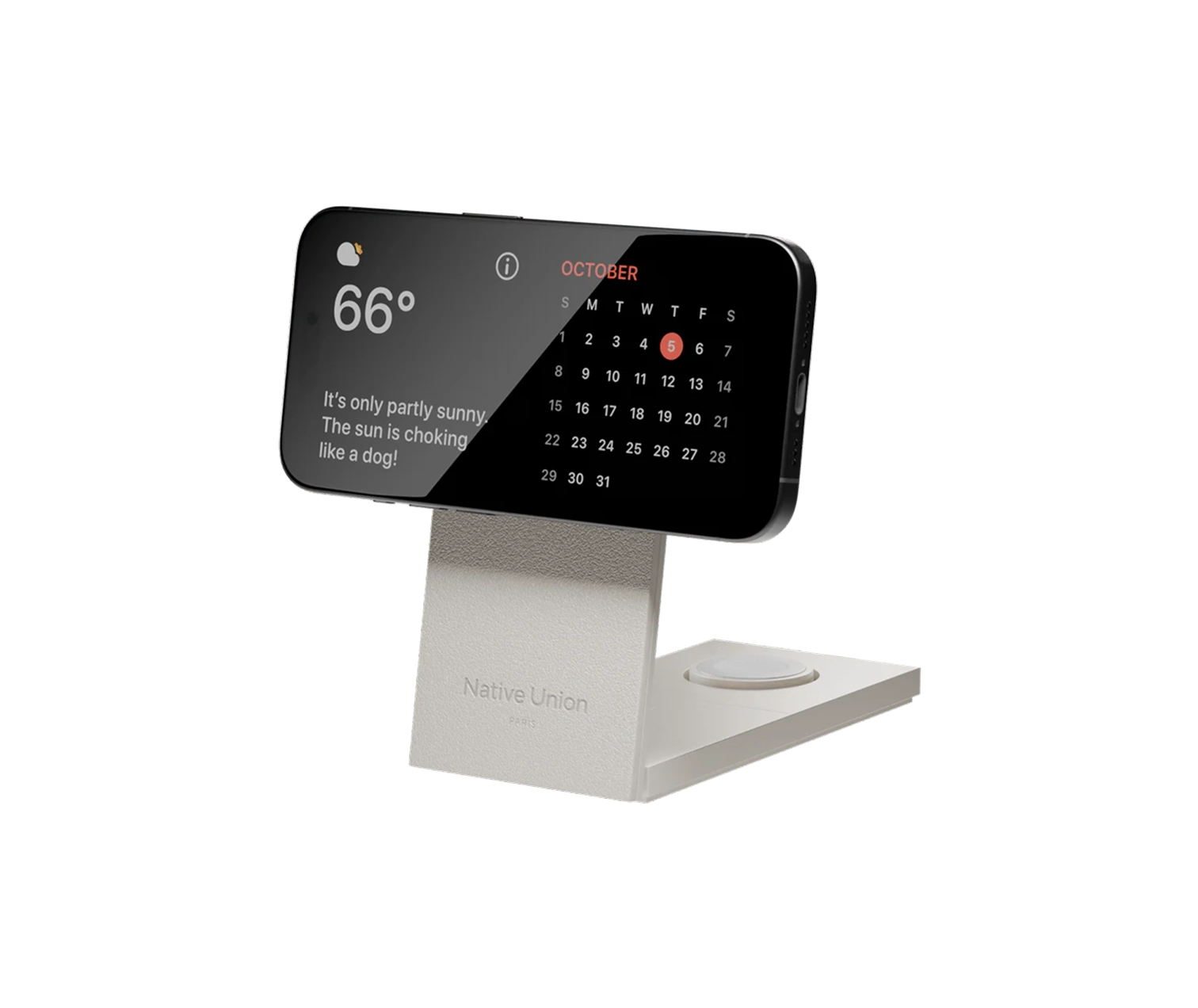
The phone arm floats the device instead of laying it flat, which changes what the dock is for.
A flat pad charges a phone you have finished with. An arm holds it at a readable angle, so it charges a phone you are still glancing at: notifications, the time, a video propped up while you do something else. That is a different piece of furniture wearing the same description.
Native Union has spent years building tech accessories that survive being on a shelf next to objects that are not tech, and the Rise 3-in-1 is the clearest example: fabric and metal, nothing glossy, no light visible from above.
It does phone, AirPods and Watch, which puts it directly against the Courant at a lower price and in a lighter material.
- Phone
- 15 W, Qi2 certified
- Also charges
- Apple Watch at 5 W with fast charge, AirPods at 5 W
- Surface
- Zinc alloy with silicone, on a weighted metal base
- Dimensions
- 130 × 65 × 22 mm
- Weight
- 295 g, plus 105 g of adapters
- Watch charge
- 0 to 80% in about 45 minutes on a Series 9
Specifications as published by the manufacturer. Source
5.Belkin BoostCharge Pro 2-in-1

Pros
- Tilts 0 to 70 degrees, so the phone can sit flat or run StandBy
- 30 W supply and a 1.5 m braided cable in the box
- At least 60% post-consumer recycled housing
- Palm-sized, the smallest footprint here
Cons
- Two devices, not three, so the watch and the AirPods compete for one pad
- Soft-touch plastic against leather, aluminium and zinc elsewhere on this page
Two devices, not three, in a footprint roughly the size of a coaster.
That subtraction is the product. Most people charge a phone and earbuds nightly and a watch every second or third day, so a 3-in-1 dock spends most of its life with an empty third pad taking up a nightstand. Belkin removed it.
The BoostCharge Pro 2-in-1 is also the one that behaves properly in the dark: no bright status light, and magnets positive enough to find the right position by feel without looking.
It is the cheapest thing here and the least ambitious, and on a small nightstand it is the correct answer.
- Phone
- 15 W, MagSafe
- Also charges
- Apple Watch or AirPods at 5 W on the rear pad
- Surface
- Soft-touch housing, at least 60% post-consumer recycled
- Tilt
- 0 to 70 degrees, for StandBy
- In the box
- 30 W power supply and a 1.5 m braided USB-C cable
Specifications as published by the manufacturer. Source
6.Getri Flask 2-in-1
Pros
- Milled from a single piece of aluminium, with no seams to open up
- Two Qi2 pads at 15 W, so it charges two phones rather than a phone and a watch
- 920 g, heavy enough that the phone comes off without the base following
- Rotates 180 degrees for portrait or landscape
Cons
- No Apple Watch charging, which on a 159 dollar dock is a real gap
- 920 g and 201 mm wide is the least portable thing on this page
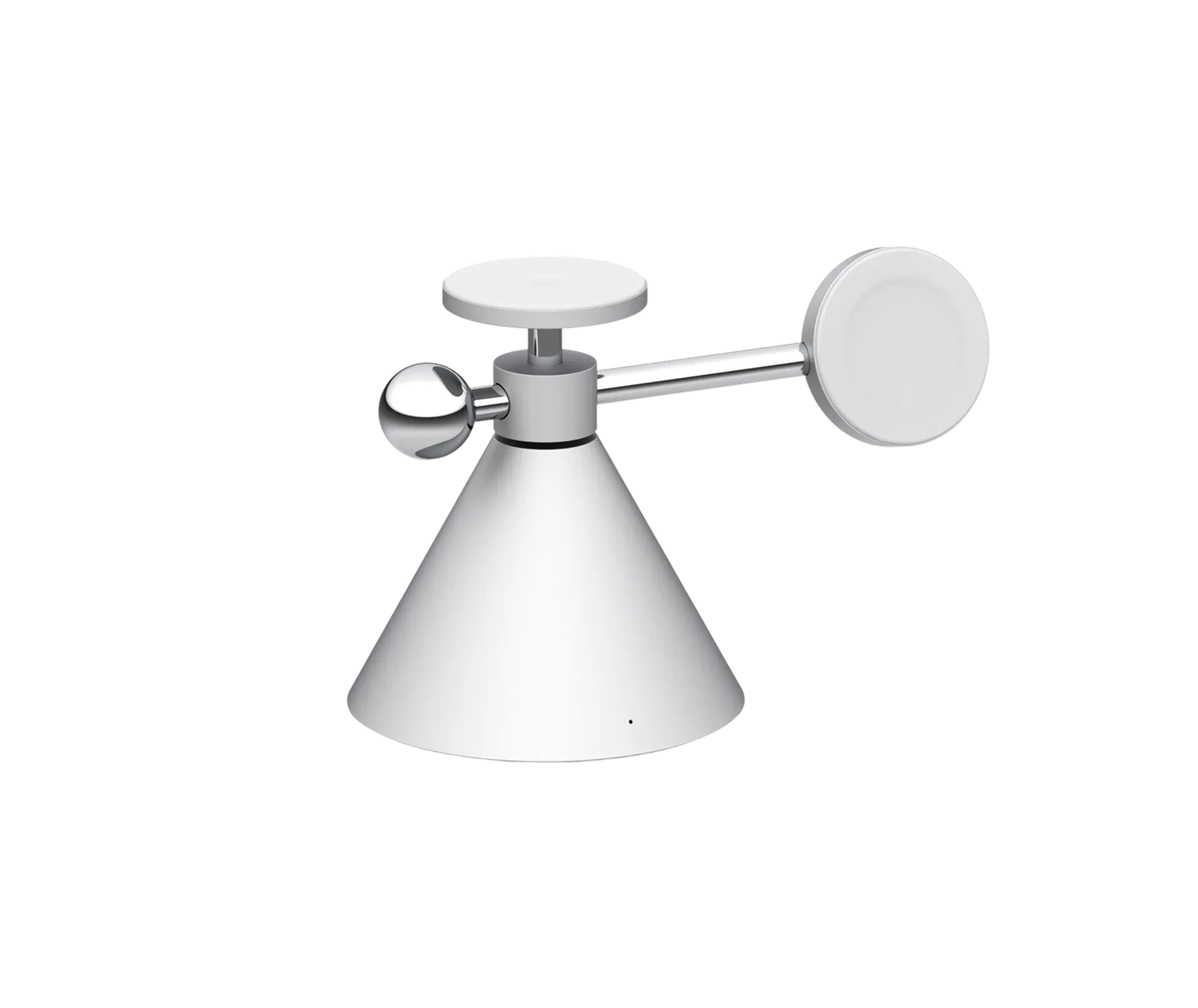
Machined from a single block of aluminium, at 920 grams, with no seams and no assembled panels anywhere on it.
That is an expensive way to make an object and it produces two things nothing else here has. The mass means it never moves, ever, regardless of how you pull a phone off it. And with no joints there is no seam to collect dust or to open up as the plastic around it ages, because there is no plastic.
Milling a solid billet also means the tolerances are the machine's rather than an assembly line's, so the radii are continuous and the surface is one surface. Getri has made the Flask the kind of desk object that gets picked up by visitors.
Two devices, like the Belkin, at considerably more money and considerably more presence.
- Phone
- 15 W, Qi2 certified
- Also charges
- A second Qi2 device at 15 W, with an AirPods tray at the base
- Surface
- Unibody aluminium, with silicone, ABS and brass
- Dimensions
- 201 × 116 × 127 mm
- Weight
- 920 g
- Rotation
- 180 degrees, for portrait or landscape
Specifications as published by the manufacturer. Source
What to look for in a charging dock
Count how many devices you actually charge nightly
Most people charge a phone and earbuds every night and a watch every second or third day. A 3-in-1 dock therefore spends most of its life with one pad empty, occupying nightstand that a 2-in-1 would have given back. Count the real routine before buying for the theoretical one, because the extra pad is the most expensive square inch on the object.
Weight is what stops it moving
Pulling a phone off a magnetic pad takes more force than people expect, and anything under roughly 300 g lifts or slides with it. That turns a one-handed action into a two-handed one every morning. This is why the metal docks cost more to make and feel better to use, and it appears on no product page as a benefit.
Look for what the lights do at night
A dock on a nightstand runs eight hours in a dark room, and a status LED at daytime brightness is a small floodlight for all of them. Ambient light sensing, as on the Nomad Base Station, is the correct solution; no light at all is the second best. A charging dock that cannot be slept next to is a desk dock, whatever the marketing photograph shows.
Materials that have somewhere to go
Leather darkens and softens with handling. Anodised aluminium picks up a sheen where a hand lands repeatedly. Plastic stays exactly as the mould left it, which sounds like durability and reads as cheapness after two years beside objects that have aged. On something you look at daily for five years, that trajectory matters more than the first impression.
Which of the six
So: the material that ages best, the Courant. A bedroom, the Nomad. A tray you already needed, the Valet. A phone you are still looking at, the Native Union. The smallest sensible footprint, the Belkin. And the Getri if the object is the point.
A dock is one of half a dozen objects that live permanently on a surface. The rest are in desk organizers and tech storage.
All 6 compared
Courant MAG:3 ClassicsPebbled Italian leather on aluminium, so scuffs sink into the grain- Phone
- 7.5 W
- Also charges
- Qi pad + USB-C
- Surface
- Leather + linen
Nomad Base StationAn ambient light sensor, so it disappears at night- Phone
- 10 W
- Also charges
- Pad + USB-C + USB-A
- Surface
- Padded leather
Twelve South ValetA catch-all tray that happens to charge- Phone
- 15 W
- Also charges
- USB-C only
- Surface
- Leather on zinc
Native Union Rise 3-in-1 Magnetic Wireless ChargerAn arm that holds the phone readable instead of flat- Phone
- 15 W
- Also charges
- Watch + AirPods
- Surface
- Zinc alloy
Belkin BoostCharge Pro 2-in-1 Wireless Charging DockTwo devices in a coaster, because the third pad is usually empty- Phone
- 15 W
- Also charges
- Watch or AirPods
- Surface
- Recycled soft-touch
Getri Flask 2-in-1 Wireless ChargerMilled from one aluminium block, 920 g, no seams at all- Phone
- 15 W
- Also charges
- Second phone
- Surface
- Unibody aluminium
Phone output is the coil's rating. Two of these do not charge a watch at all, which is a design decision rather than an omission: the Twelve South leaves the space for keys, and the Getri gives its second pad to a second phone.
How we chose
We chose these six on what the surface does after five years and on how much desk each one costs per device charged. None of these makers serves a specification page our fetcher can read, so no pick carries a panel and there is no comparison table. The figures in the prose are each maker's own and are flagged internally as unverified.
Common questions
Probably not. Most people charge a phone and earbuds every night and a watch every second or third day, so the third pad sits empty most of the time while occupying the most expensive part of a nightstand. Count what actually goes on charge nightly before paying for a position you will use twice a week.
Because it weighs too little for the magnets holding the phone. Pulling a phone off a MagSafe pad takes more force than people expect, and anything under roughly 300 g lifts or slides with it, which turns a one-handed action into a two-handed one every morning. Mass is the fix, which is why metal and leather docks cost more to make and feel better to use.
If you look at the object daily, yes, and the argument is about ageing rather than luxury. Leather darkens and softens where hands touch it. Anodised aluminium picks up a sheen in the same places. Plastic stays exactly as moulded, which reads as new for a year and cheap for the four after that, next to objects that have aged.
It dims the status lights to match the room. A dock on a nightstand runs for eight hours in the dark, and an LED set at daytime brightness is a small floodlight for all of them. Sensing the room is the proper solution and no visible light at all is the second best; a bright fixed LED makes an otherwise good dock unusable in a bedroom.
It is better at two specific things. Milling a solid billet leaves no seams, so there is no joint to collect dust or to open as surrounding plastic ages, and the mass that results means the dock never moves. It is an expensive way to make a small object, and what you are buying is permanence rather than performance.
About the author

Justin Farrugia
Founder & Editor of Curated Supply
Justin Farrugia is the founder and editor of Curated Supply, a design-led directory to things worth owning. He has personally curated over 1,000 products across workspace, carry, coffee, audio, and the home, each judged against one standard: design intent, material quality, and the restraint that lets a thing last.