About
Every other tracker on the market solves the same problem by buying a phone connection of its own: a cellular chip inside, a monthly fee to keep it alive. Apple's AirTag has neither, and finds a bag left in another country anyway.
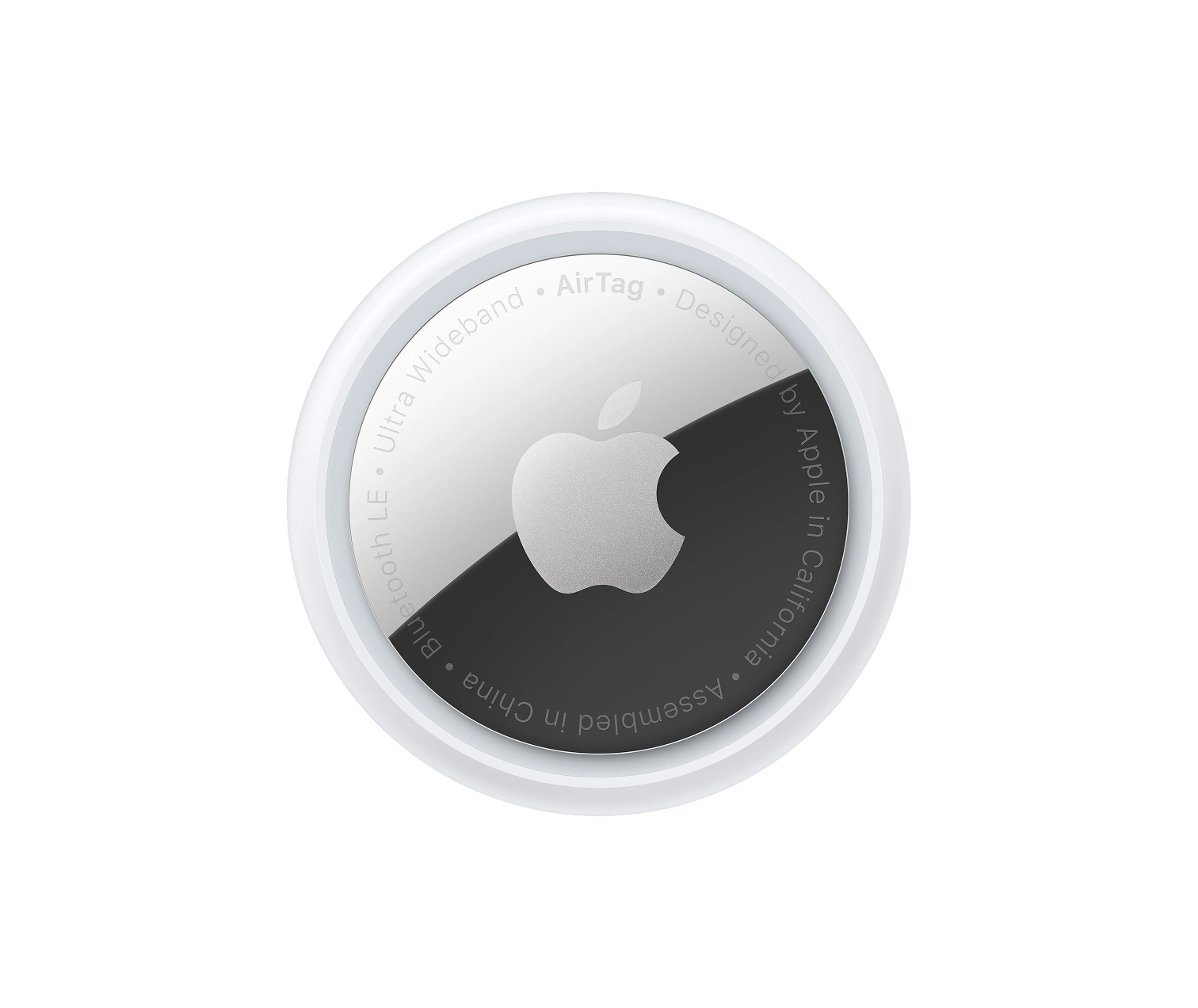
The Apple AirTag carries no GPS and no cellular radio, locating a lost item instead by borrowing the more than a billion iPhone, iPad and Mac devices that make up the Find My network. It puts out a Bluetooth signal. Any Apple device that walks past picks it up and relays the position anonymously, so the location arrives on your map without the stranger who carried it past ever knowing they did. Nothing needs plugging in, ever.
Close range is a different problem, because knowing the bag is somewhere in the house does not tell you it is under the bed. That half falls to the second-generation Ultra Wideband chip, which points an arrow at the tag and counts the distance down as you walk, across a Precision Finding range Apple puts at up to 1.5 times the previous generation's. The speaker was reworked in the same revision: 50 percent louder, audible from twice as far.
Two features handle the case where somebody else has your things. Lost Mode turns the tag into a contact card, readable by tapping any NFC phone against it, so a finder gets your details without getting your address book. Share Item Location passes a temporary tracking link to another person, more than 50 airlines among them, and revokes it after seven days or the moment you and the bag are reunited, whichever comes first.
- Designed in
- United States

- Awards
- Materials
- Size
- 31.9 mm across, 8.0 mm thick
- Weight
- 11.8 g
- Battery
- User-replaceable CR2032, over a year
- Water resistance
- IP67, 1 m for up to 30 minutes


Figures as published by the manufacturer. Source