About
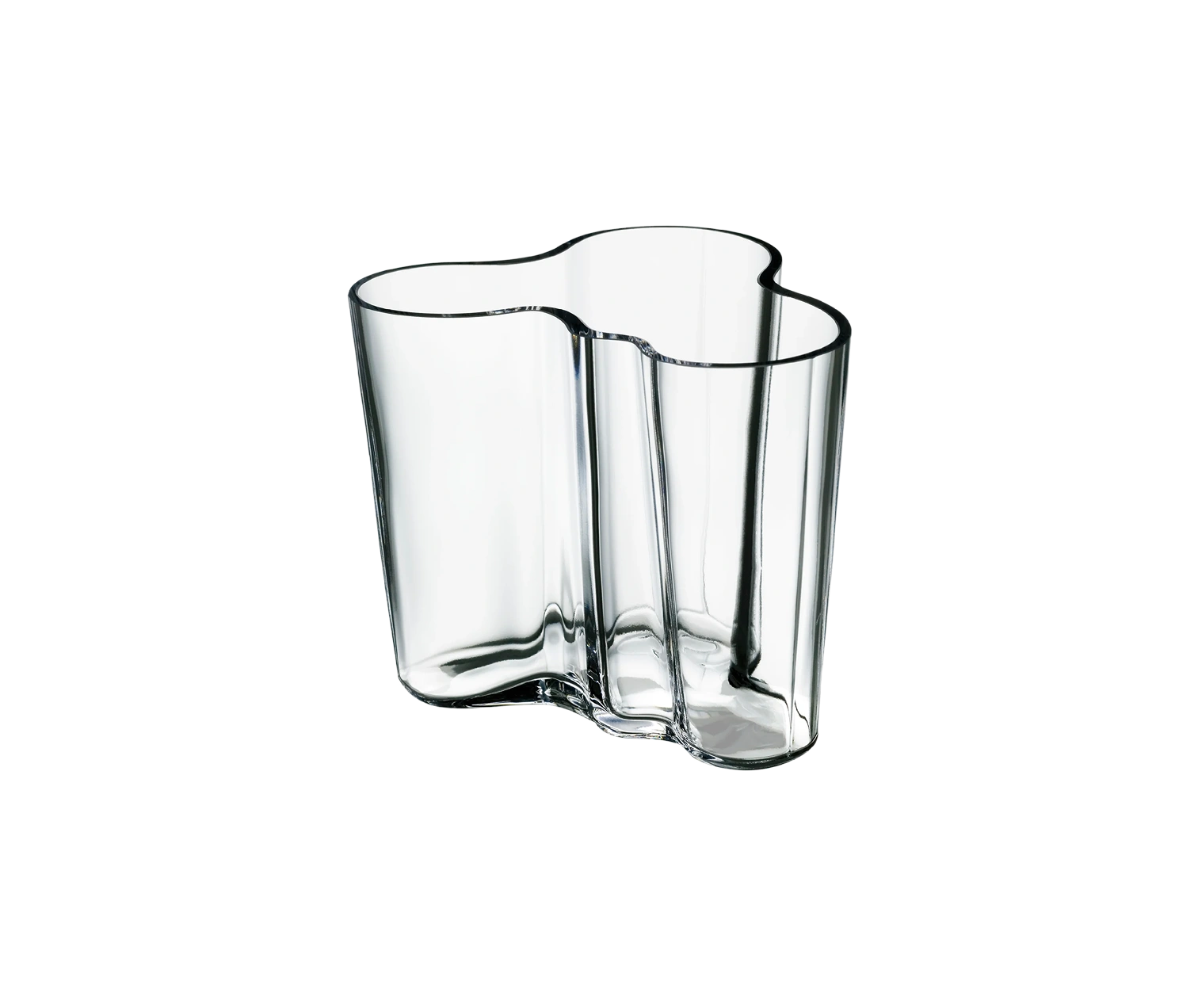
A pressed glass vase leaves its mould finished. This one leaves its mould barely started.
The Alvar Aalto vase is mouth blown into a mould at Iittala's glass factory in Finland, which sets the wave, and then hand cut and put through several stages of polishing before it is packed. That sequence is the reason the shape has survived ninety years without being simplified: the mould only gets the piece partway there, and a person finishes it. Aalto arrived at the form the same unhurried way, drawing freehand outlines that followed shorelines and organic growth at a moment when European glass still ran on symmetry. The earliest vases varied in size, proportion and colour, because the blowing shaped them as much as the drawings did. Iittala's position on that variation is that Aalto embraced it rather than corrected it, which is also why no two are identical today.
The shape was never a single object. It came in a range of heights and colours from the start and is still sold that way, from small clear pieces to tall coloured ones. It won first prize in the 1936 Karhula-Iittala glass design competition, and the Savoy name attached to it later, after the Helsinki restaurant whose interior Alvar and Aino Aalto designed in 1937, the year the vase was first shown abroad at the Paris World Fair. Aalto, for what it is worth, is Finnish for wave.
- Designed & made in
- Finland

- designer
- Alvar Aalto
- Material
- Mouth-blown glass
- Finish
- Hand cut, then polished in several stages
- Sizes
- Range of heights, clear and coloured
Figures as published by the manufacturer. Source