About
A blood pressure cuff measures pressure and an ECG measures electricity, and between them they miss the one thing a doctor does first: listening.
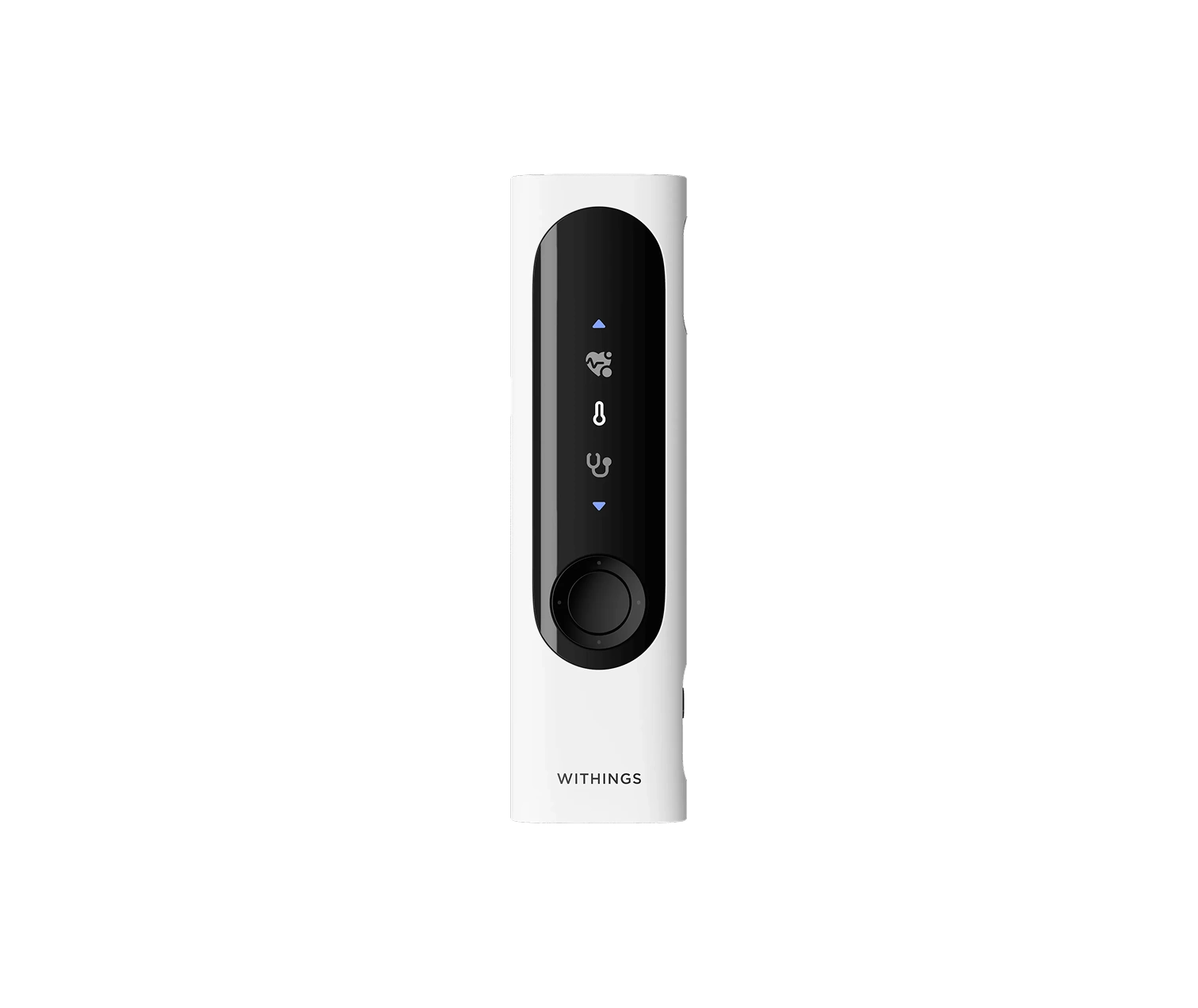
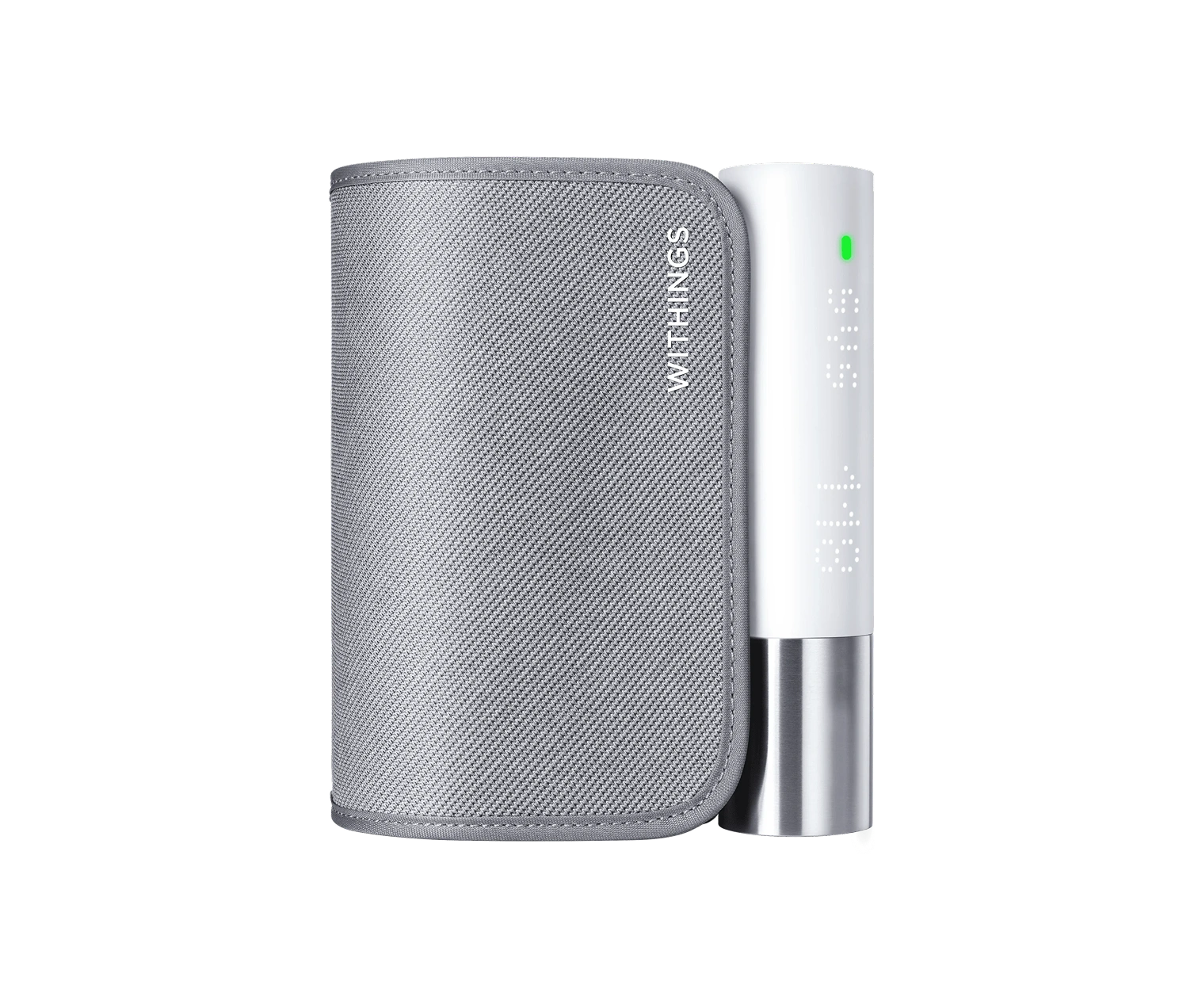
The Withings BPM Core puts a digital stethoscope in the cuff, so a single 90-second measurement returns blood pressure, a one-lead ECG and a recording of the heart's valves. The three readings answer different questions. A cuff measures the pressure blood exerts on an artery wall. An ECG reads the electrical signal that tells the muscle to contract, taken here through three stainless steel electrodes. Neither of them hears anything. The stethoscope is a silicone membrane on a stainless steel support, held against the chest while the cuff inflates, and it listens for the murmur a narrowed or leaking valve makes, which is the sign the other two instruments cannot pick up.
The app also flags atrial fibrillation, though a complete analysis needs the heart rate to stay between 50 and 100 beats a minute for the whole recording. Results appear colour-coded on an LED matrix on the cuff itself, before a phone is involved at all, and the device holds up to eight measurements between syncs before sending them over Wi-Fi to a Withings account.
Pressure accuracy is quoted at 3 mmHg or 2 per cent of the reading, measured against a protocol drawn from the European Society of Hypertension, the Association for the Advancement of Medical Instrumentation and the International Organization for Standardization. One honest limit sits alongside that: a pacemaker or an implanted defibrillator can leave both the pressure reading and the ECG inconclusive, which is worth knowing before the cuff goes on rather than after.
- Designed in
- France

- Materials
- Battery
- Rechargeable, up to 6 months
- Fits
- Arm circumference 22 to 42 cm
- Weight
- 430 g
- Display
- Colour-coded LED matrix
- Storage
- Up to 8 measurements between syncs
Figures as published by the manufacturer. Source