About
A wallet made from luggage material sounds like a marketing line until you look at what the canvas was actually built to survive. Goyardine was designed for steamer trunks that crossed oceans in the hold, and the same cloth is now cut into something that lives in a jacket pocket.
Most canvas luggage of the 1890s was a plain coated linen, which cracked and stiffened as it aged. Edmond Goyard's Goyardine, created in 1892, mixed linen with cotton and took its piled-dot chevron pattern from the log drives his family had guided along French rivers. The design descends from Poutangris, a coated cloth the Compagnons de Rivières once cut into their work garments, called Biaudes, and it proved hard-wearing, flexible and waterproof while rival trunk-makers were still working in plain linen. The recipe remains a maison secret. A ground colour goes onto the bare canvas first, then three further layers of etched colour are added by screen printing, building the raised chevron surface and letting it take on a patina with age rather than crack.
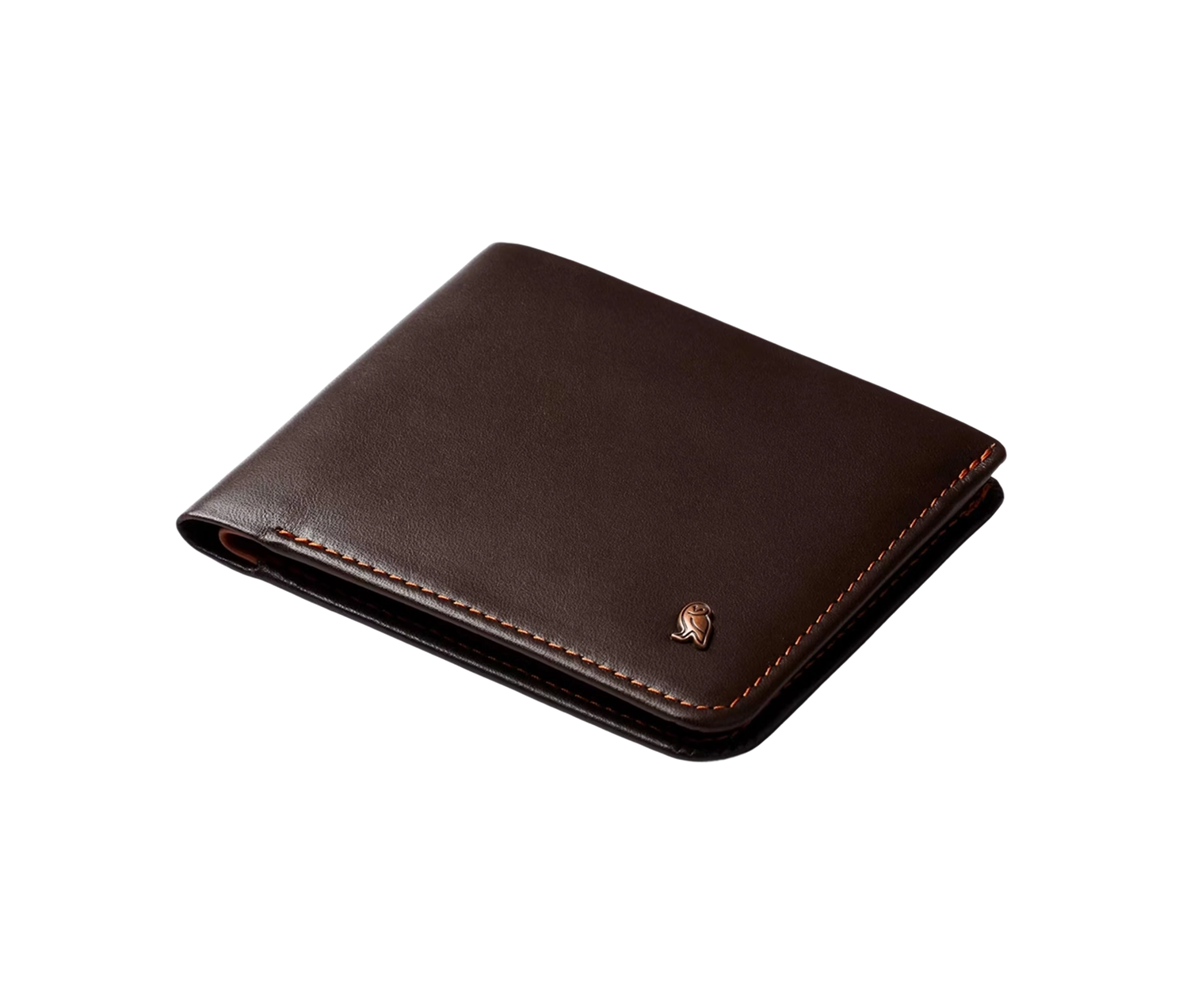
The Saint-Florentin is Goyard's compact wallet, holding four card slots, two flat pockets, a note pocket and a gusseted change pocket that closes with a palladium clasp milled flat enough to disappear in a trouser pocket. At 90 grams it asks very little of the pocket it sits in, which is the point of a compact wallet and the part most of them get wrong. Assembly happens at the maison's own workshops.
- Designed & made in
- France
- Materials
- Goyardine canvas, Vauzelles calfskin trim
- Lining
- Yellow Nièvre goatskin
- Dimensions
- 12 x 2.4 x 10.5 cm
Figures as published by the manufacturer. Source