About
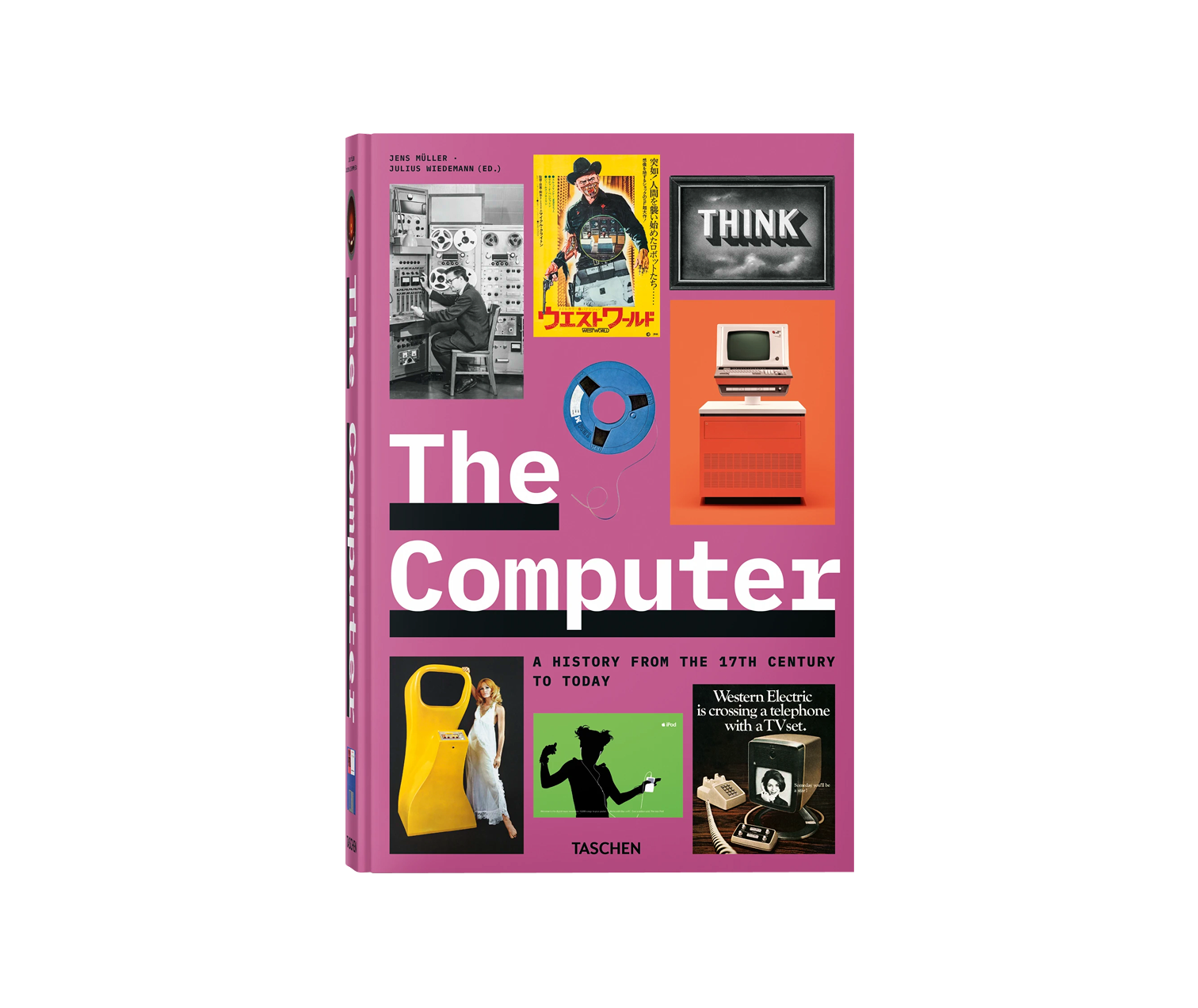
A nine-pound book about computing history arrives on a desk with a certain authority. TASCHEN's The Computer is a history book in the fullest sense, tracing the arc from 17th-century calculating machines through mainframes, personal computers, and wearables across 472 pages that treat the subject with the same visual seriousness the publisher brings to architecture and art.
Written by Jens Müller and edited by Julius Wiedemann, the book works through the material chronologically but never lets the timeline become a crutch. Historical documents sit alongside photographs and infographics on wireless communication, so the reader moves between primary evidence and editorial interpretation rather than simply absorbing a sequence of product releases. The coverage of IBM, Apple, Microsoft, and Google is expected, but the book earns its depth by anchoring those names in the engineering and cultural conditions that made them possible, not just the logos.
What distinguishes this from a standard technology retrospective is the multilingual edition format, which suggests TASCHEN designed it as a global object rather than an Anglo-American one. The scope runs from abstract mechanical logic to the devices sitting in pockets right now, and that span rewards browsing as much as reading. A page about early punch-card systems reads differently when it's a few inches from a photograph of a wearable processor.
This is a book for people who think about tools rather than just using them, designers, engineers, and curious generalists who want to understand how the objects shaping daily life came to exist. At this size and weight, it doesn't pretend to be casual reading. It asks to be returned to.