The World Atlas Of Coffee
About
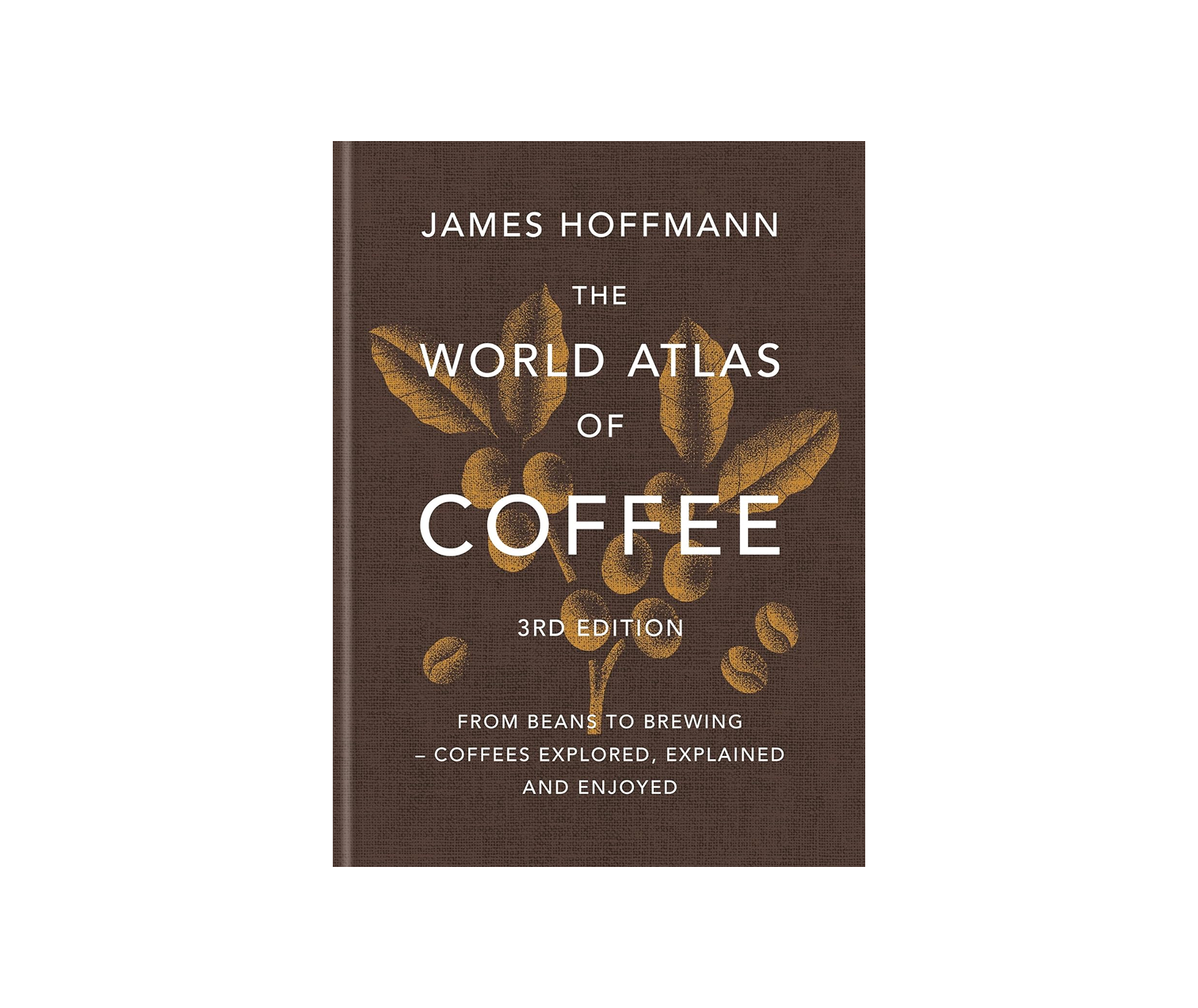
Knowing where a coffee comes from changes how it tastes in the cup, which is the quiet argument at the center of every serious coffee book. Mitchell Beazley's The World Atlas of Coffee, now in its third edition, makes that case across 288 pages and more than 35 producing countries, from Bolivia to Zambia, with the kind of geographic and agronomic detail that turns a morning routine into something more deliberate. James Hoffmann, a World Barista Champion, wrote it, and his authority shows not in the tone but in the specificity.
New to this edition are chapters on decaffeination and steep-and-release brewers, additions that reflect how the broader conversation around coffee has shifted since the last printing. Origins like Australia, Japan, and Puerto Rico appear here too, countries that rarely surface in coffee writing but whose micro-production scenes have grown into something worth understanding. The color illustrations throughout do real work, mapping terroir and processing methods in ways that prose alone cannot quite manage.
This is a reference book that earns its place on the counter rather than the shelf. It belongs to someone who has started asking questions about why one natural-process Ethiopian tastes like fermented fruit and another like dried flowers, and who wants a grounded, geographical answer rather than a tasting note. The hardcover format holds up to repeated use, which matters for a book that tends to get opened mid-brew rather than read in sequence. Hoffmann's approach is instructive without being prescriptive, the difference between a guide and a manual.