About
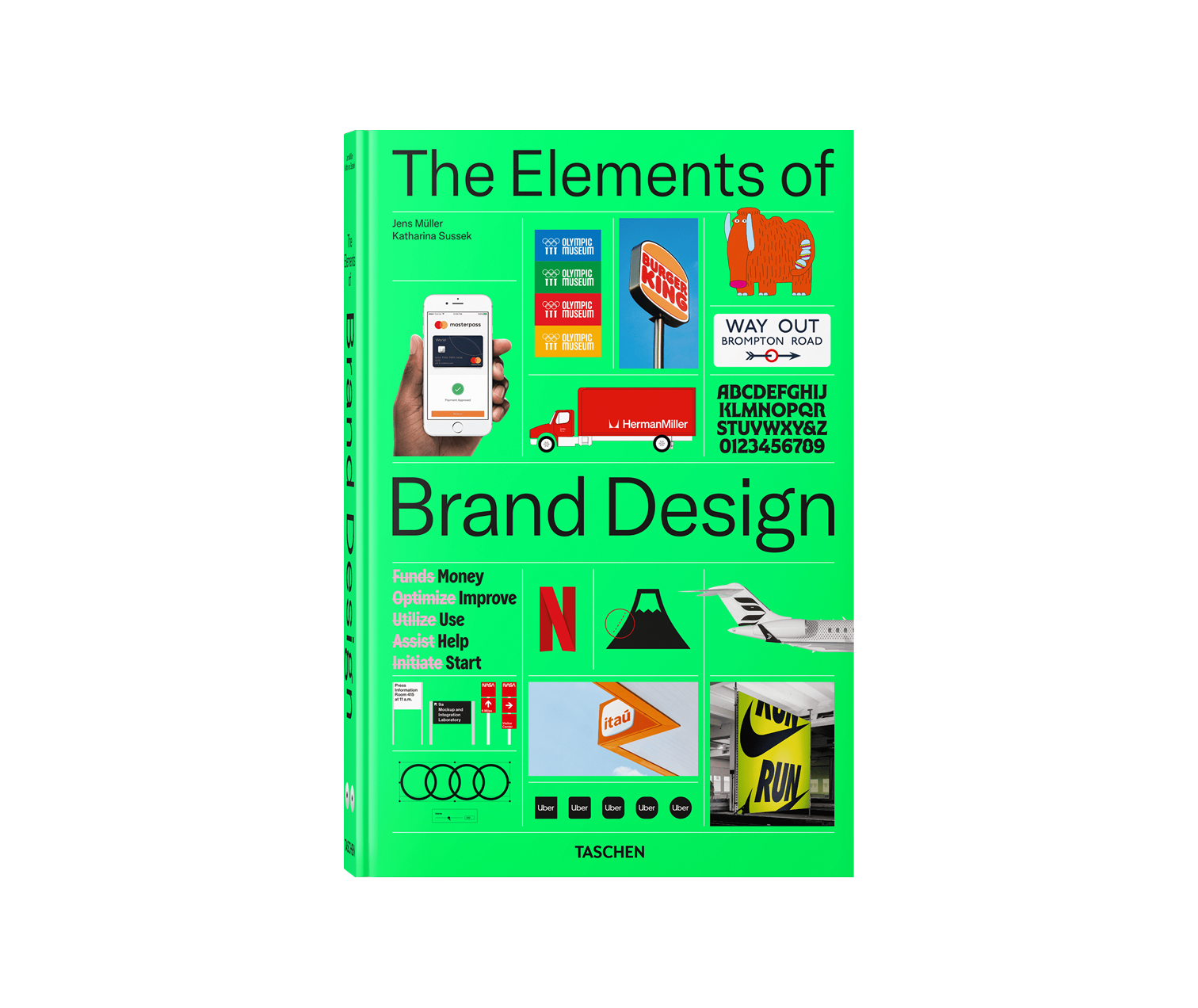
Brand design books tend to age faster than the work they document. TASCHEN's The Elements Of Brand Design sidesteps that problem by building its argument around structure rather than trend, organizing 496 pages across 17 chapters that examine branding as a discipline with repeatable logic: form, color, and typography as the actual materials designers work with, not aesthetic choices made by instinct.
The 110 case studies are where the book earns its weight. Rather than assembling a highlights reel of famous logos, the format moves through specific decisions made by real studios on real problems, showing how the same underlying principles surface differently across industries and scales. Interviews with Pentagram's Paula Scher and Michael Bierut ground the theoretical framework in practice, two designers whose combined output includes some of the most recognized visual identities of the past four decades.
What distinguishes this from the shelf of brand books that treat the subject as biography or celebration is the editorial restraint. The XL hardcover format gives the reproductions room to breathe, and the multilingual presentation signals that the audience is working designers and students who need a reference that holds up under repeated use, not a coffee table object that rewards a single pass.
This is a book for people who think about why a logotype works before they think about whether they like it. TASCHEN has built a reputation on volumes that take visual culture seriously without condescending to the reader, and this one fits that catalog without apology.