About
Most surveys of furniture history are written in libraries. The mistakes in them travel, book to book, until a wrong date has been repeated so often it looks like a fact.
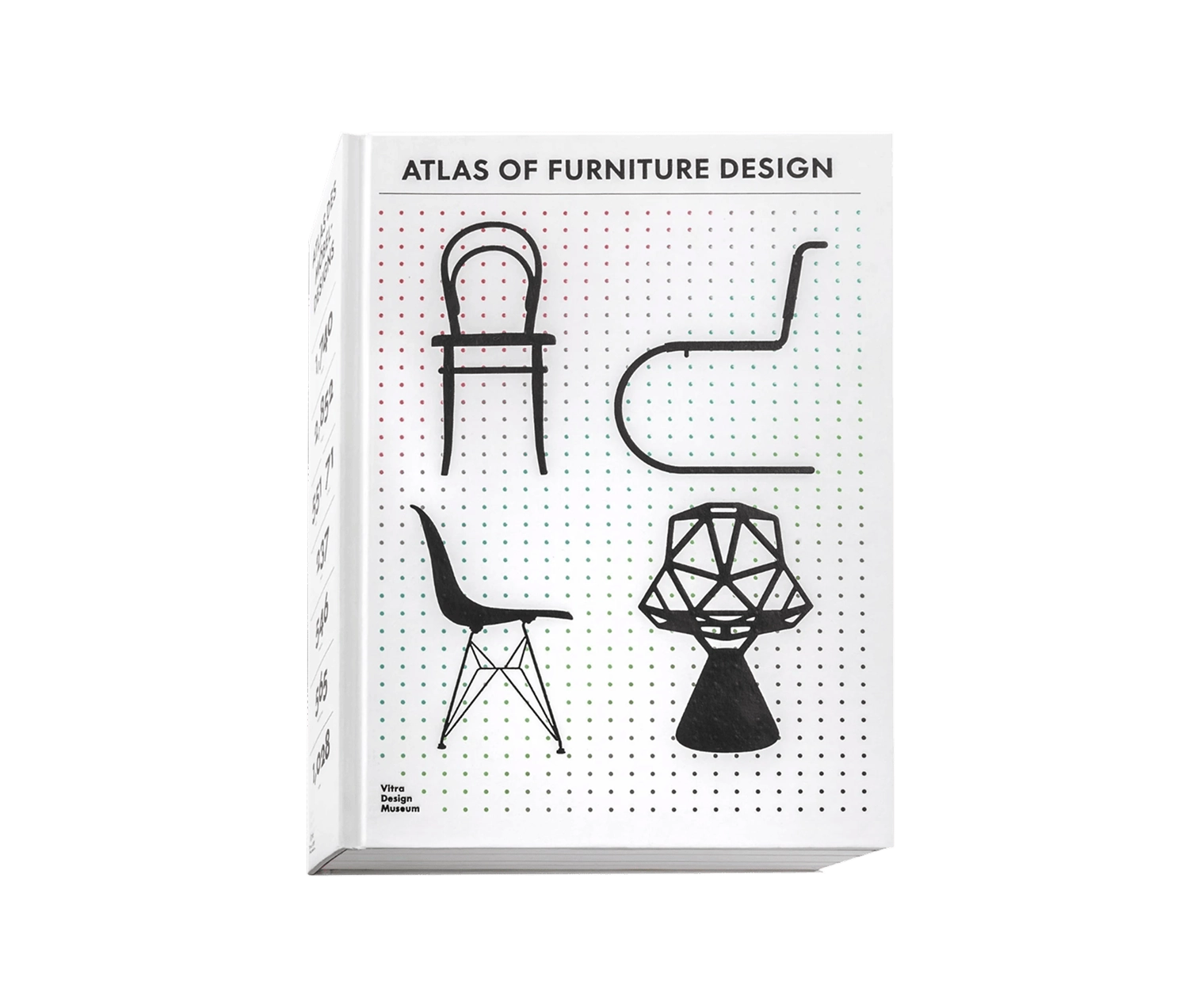
The Vitra Design Museum wrote this one beside the objects instead. Vitra's Atlas of Furniture Design took more than twenty years and over 70 contributing experts to assemble, drawing on a collection of more than 20,000 artefacts, around 7,000 of them furniture, with the pieces under discussion physically in front of the editors. They had them re-photographed for the book, which meant upholstery seams, fabrics, joints and manufacturers' marks could be studied at first hand rather than inferred from an old catalogue plate. Mateo Kries, the museum's director and the book's editor, says the team kept running into inaccuracies in the existing literature and wanted the Atlas to put the subject on a reliable factual basis.
What came out of that is 1,740 objects by more than 540 designers, from the early nineteenth century to the present. Around 550 texts take on individual key pieces, and four long essays set the social and design history of their periods around them. The images run well past object photography into design sketches, interiors, patents, brochures, art, architecture and portraits of the designers themselves.
Then there is the annex: designer biographies, bibliographies, glossaries of manufacturers and materials, and infographics that follow a single idea across decades, the cantilever chair and the Monobloc among them. First published in November 2019, and the copy sold today is the third printing, unchanged. Nothing has needed correcting, which is the whole point of having worked this way.
- Published in
- Switzerland

- Publisher
- Vitra Design Museum
- Dimensions
- 31 x 23.5 cm
- Weight
- 4.7 kg
- Size
- 1,028 pages, 2,852 images
Figures as published by the manufacturer. Source