Best over-ear headphones for your next deep work session
Five over-ear headphones built for long focus sessions, from the Sony XM6 to Marshall Monitor III. Honest picks based on comfort, ANC, and real work use.
Updated
What decides a four-hour session is weight and clamping force, and almost nobody publishes either. Noise cancellation is the number every product page leads with, and it is the one that stops mattering after the first twenty minutes, because by then the drone is gone whichever pair you bought and what is left is the object sitting on your head.
The five here cover $200 to $549 and one of them tells you what it weighs. That figure, 386.2 grams, is roughly half again what a typical premium over-ear runs, and it is the single most useful thing on this page.
1.Sony WH-1000XM6

Twelve microphones feeding an HD Noise Cancelling Processor QN3, which is the most cancellation hardware in this group by a distance.
Microphone count is what separates good ANC from great ANC, because cancellation works by sampling the incoming noise and generating its inverse, and more sampling points mean a more accurate inverse across more frequencies. On the WH-1000XM6 the effect is not the pressurised silence of older systems: HVAC drone and open-office chatter drop to a level where they stop registering, which is closer to a library than a vacuum.
Sony tunes the sound balanced where a consumer headphone would be spectacular, which is correct for work. LDAC carries high-resolution audio over Bluetooth if you want it, and the app offers a 10-band EQ that is practical without becoming a hobby.
Thirty hours of battery, with a quick charge that buys several hours in minutes. Most people should buy this one, and the rest of this page is the reasons somebody might not.
- Weight
- 254 g
- Battery
- Up to 30 h with noise cancelling on
- Driver
- 30 mm dynamic
- Bluetooth
- 5.3, with SBC, AAC, LDAC and LC3
- Charging
- Approx. 3.5 hours to full
Specifications as published by the manufacturer. Source
2.Apple AirPods Max
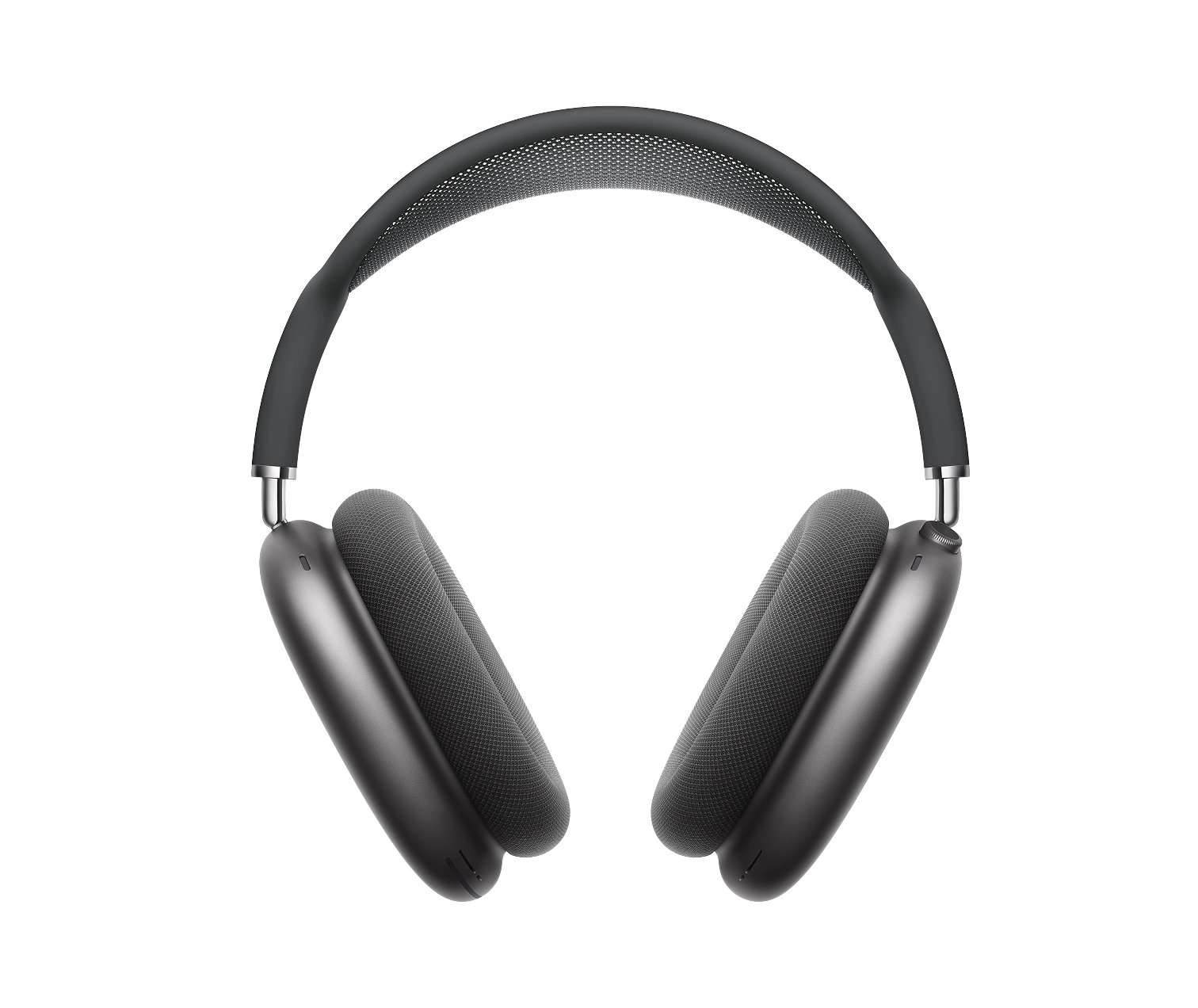
386.2 grams, published, which is the number every other maker here leaves out.
That weight is the whole argument in both directions. It comes from machined aluminium cups and a stainless steel frame, which is why the AirPods Max feel like an object built to last instead of to be replaced. It is also why the knit mesh canopy exists: weight this high concentrates on the crown of the skull, and a mesh band spreads it wider than a padded strip would. Some people wear them all day. Some find them tiring by hour three, and the number is how you guess which you are before spending.
An H2 chip sits in each cup, so cancellation and spatial processing run per ear instead of through one shared processor. Twenty hours with cancellation on, five minutes on the charger for about ninety, and the port is USB-C.
The Digital Crown is the best volume control on any headphone here, because it is a knob and knobs beat touch panels for anything you adjust without looking. The trade is Apple's ecosystem: on Android a good deal of this stops working.
- Weight
- 386.2 g (13.6 oz)
- Battery
- Up to 20 h with noise cancellation
- Bluetooth
- 5.3
- Chip
- Apple H2, one per ear cup
- Fast charge
- 5 minutes for about 1.5 hours
- Port
- USB-C
- Canopy
- 90% recycled polyester yarn
Specifications as published by the manufacturer. Source
3.Bose QuietComfort Ultra
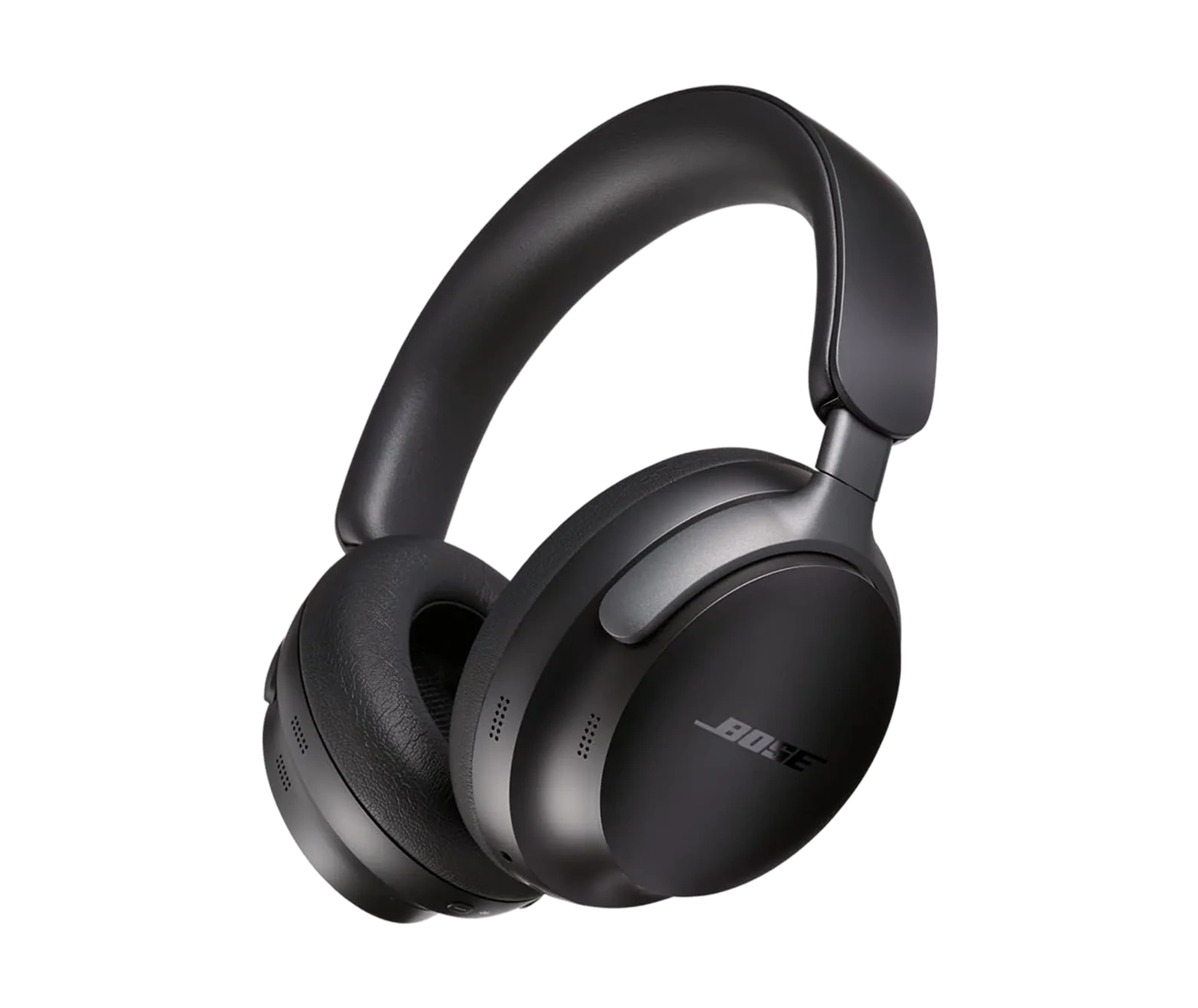
CustomTune measures the shape of your ear canal on first wear and adjusts the output to it, which is a per-person calibration nothing else here does.
Every ear is a differently shaped tube and it resonates differently, which is why the same headphone sounds unlike itself on two heads. Bose plays a tone, listens to what comes back, and corrects. It is not audiophile tuning and it is consistent, which is what you want from a tool.
The cancellation does not go as deep as Sony's and it is more comfortable across a long stretch. There is no pressure sensation and no artificial quality to the quiet, which if strong cancellation gives you a headache is the reason to choose the QuietComfort Ultra over the technically stronger option.
Three modes cover the working day: Quiet, Aware and Immersion. Metal accents, slim headband, soft cushions, nothing asking to be looked at.
- Weight
- 252 g
- Battery
- Up to 24 h, or 18 h with Immersive Audio on
- Bluetooth
- 5.3, with SBC, AAC and aptX Adaptive
- Impedance
- 32 ohms
Specifications as published by the manufacturer. Source
4.Nothing Headphone (a)
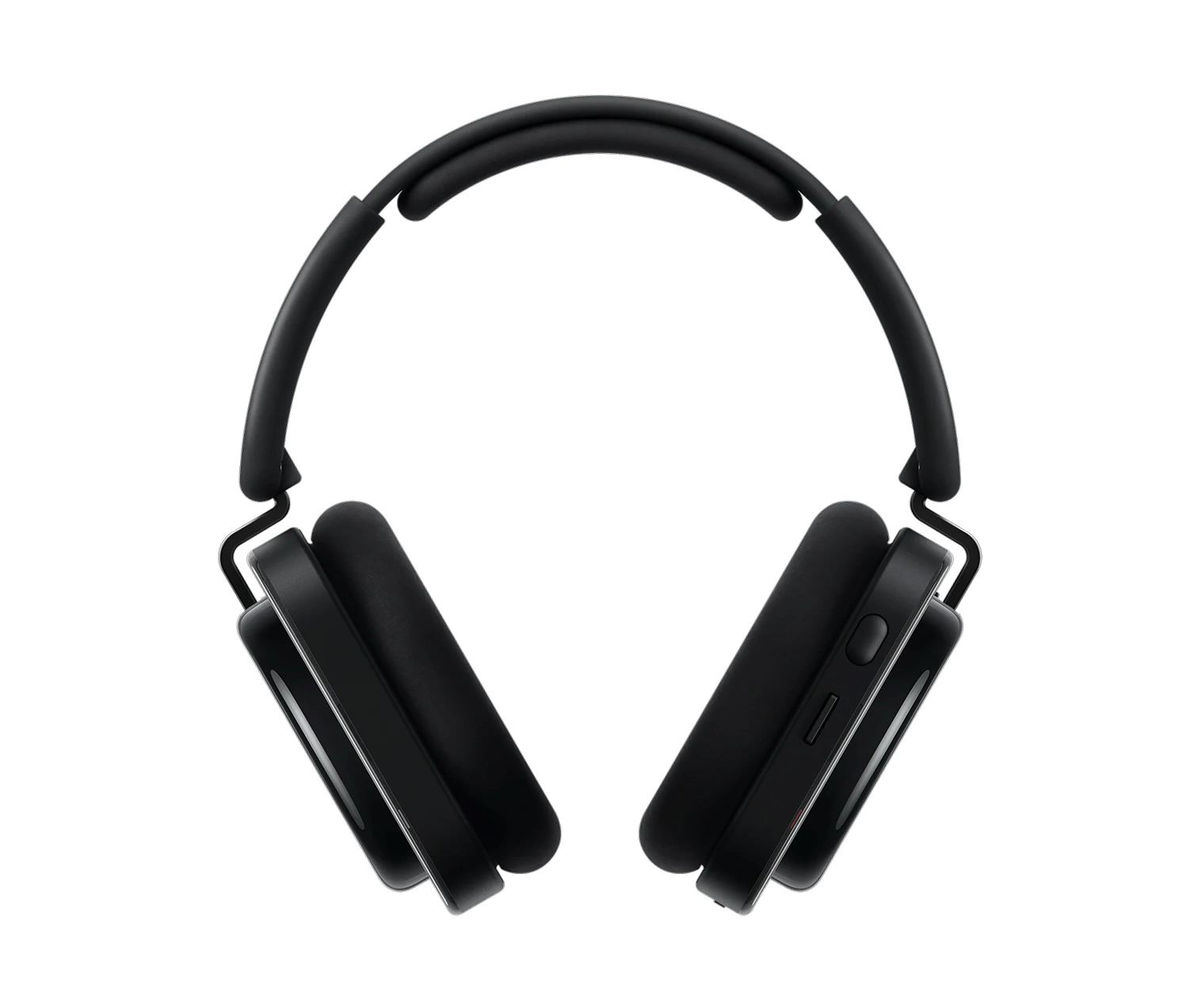
A button, a roller and a paddle, which is the only set of real physical controls on this page.
Touch panels on headphones fail in exactly the situation you need them: gloves, a hood, a hand that is not quite where it thinks. Nothing has put three distinct mechanisms on the Headphone (a), each shaped differently, so volume, playback and ANC mode are operable by feel alone.
A 40 mm titanium-coated driver carries LDAC at a price where most competitors ship SBC and hope. The semi-transparent industrial look is either the reason you buy it or irrelevant to you.
The honest limitation is finish. The plastics are lighter than the Sony's or the Bose's and the cushion material wears faster. Nothing is a young company with strong ideas and less accumulated manufacturing, and at this price that is a fair trade.
- Weight
- 308 g
- Battery
- Up to 75 h with ANC on, 135 h with it off
- Driver
- 40 mm dynamic
- Bluetooth
- 5.4, with LDAC
Specifications as published by the manufacturer. Source
5.Marshall Monitor III A.N.C.
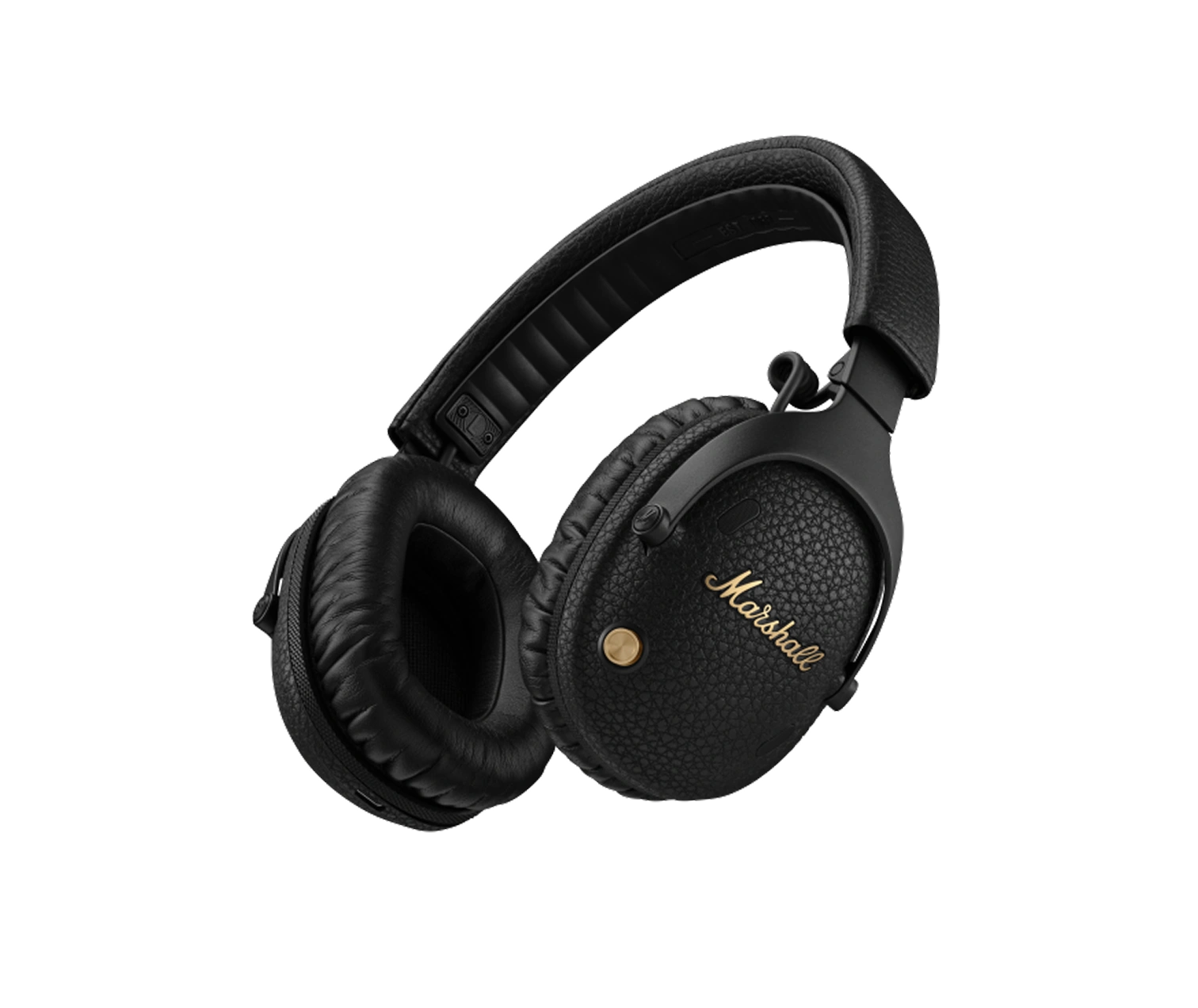
Seventy hours of battery, which is more than twice what the Sony manages and changes the relationship entirely.
Thirty hours means charging weekly. Seventy means charging when you remember, and after a few months you stop thinking about it at all. That is the argument for the Monitor III A.N.C. and it is a bigger practical difference than any sound comparison on this page.
Marshall carries its amplifier heritage openly: textured finish, brass accents, the visual language of stage equipment. The tuning follows, leaning warm and present where a monitor headphone stays clinical, which is easier across a long session and less accurate on a mix.
The size is the cost. It is physically larger than the Sony or the Bose and folds less compactly, which makes it a desk headphone and not a travel one. For a setup that stays in one room, that is not a cost at all.
- Weight
- 250 g
- Battery
- 70 h with cancellation on, 100 h with it off
- Driver
- 32 mm dynamic
- Bluetooth
- 5.3, with LE Audio and Auracast
- Fast charge
- 15 minutes for 12 hours of playtime
Specifications as published by the manufacturer. Source
What to look for in headphones for focus
Weight is the specification that decides comfort
Premium over-ears run from about 250 g to just under 400 g, and the AirPods Max sit at the top of that range at 386.2 g. That difference is what determines whether a headphone is wearable across an afternoon, and it is the figure most likely to be missing from a product page. When a maker does not publish it, that is worth reading as an answer.
Clamping force matters as much as padding
A headphone seals by squeezing, and the pressure that gives good cancellation is the same pressure that makes your temples ache by hour three. Thick cushions spread the load; they do not reduce it. If a pair feels tight in a shop it will feel worse at hour four, and stretching the band over a box for a few nights is the only real fix.
More microphones mean better cancellation
Active cancellation samples the incoming noise and plays its inverse, so accuracy depends on how many points it can sample from. The Sony's twelve microphones are the reason it goes deepest here. Depth is not everything, though: Bose cancels less and produces less of the pressure sensation that gives some people headaches, which for those people is the better headphone.
Battery is about ritual, not endurance
Nobody runs a headphone flat in one sitting. What the number decides is how often charging interrupts you, and the gap between 30 hours and 70 is the gap between a weekly ritual and forgetting about it. At a desk with a cable on it, quick charge matters more than total capacity.
Which of the five
So: the deepest cancellation and the safest recommendation, the Sony. Materials and a real volume knob, the AirPods Max, if 386 grams suits you. Comfort over depth, the Bose. Controls you can find by feel, the Nothing. And the Marshall if you want to stop charging things.
Headphones are one layer of a room built for concentration. The others are in premium task lights for focused work.
All 5 compared
Sony WH-1000XM6Twelve microphones into a dedicated processor, and 30 hours- Weight
- 254 g
- Battery
- 30 h
- Bluetooth
- 5.3 · LDAC
Apple Airpods Max386.2 grams, published, with an H2 chip in each cup- Weight
- 386.2 g
- Battery
- 20 h
- Bluetooth
- 5.3
Bose QuietComfort Ultra HeadphonesCancels less deeply and produces less of the pressure that causes headaches- Weight
- 252 g
- Battery
- 24 h
- Bluetooth
- 5.3 · aptX
Nothing Headphone (a)A button, a roller and a paddle, all operable by feel- Weight
- 308 g
- Battery
- 75 h
- Bluetooth
- 5.4 · LDAC
Marshall Monitor III A.N.C.Seventy hours, which is more than twice the Sony- Weight
- 250 g
- Battery
- 70 h
- Bluetooth
- 5.3 · LE
Weights are each maker's own except the Bose and the Nothing, whose figures come from the listing this page links to. Battery is the figure with noise cancelling switched on, which is how these are actually worn.
How we chose
We chose these five on what a four-hour session actually costs, which is weight and clamping force rather than cancellation depth. Apple is the only maker here that publishes a weight, so that pick carries a panel quoted from Apple's own specification page. Sony blocks automated readers and Bose, Nothing and Marshall publish nothing our fetcher can reach, so four picks carry no panel and there is no comparison table. Their figures are each maker's own and are flagged internally as unverified.
Common questions
Most premium over-ears land between 250 and 320 grams, and the AirPods Max are 386.2 g. Weight is the best single predictor of whether a headphone survives an afternoon on your head, because it concentrates on the crown of the skull and no amount of padding removes it. It is also the figure most often absent from a product page, which is worth reading as an answer in itself.
Not necessarily. Cancellation works by sampling incoming noise and playing its inverse, so more microphones give a more accurate result across more frequencies, and the Sony's twelve go deepest here. But strong cancellation produces a pressure sensation that gives some people headaches, and Bose deliberately cancels less to avoid it. For those people the shallower headphone is the better one.
It is how hard the headband squeezes your head, and it is what creates the seal that cancellation and bass response both depend on. It is also what makes your temples ache by hour three. Thicker cushions spread that pressure over more area but do not reduce it. If a pair feels tight in a shop it will feel worse after four hours, and stretching the band over something box-shaped for a few nights is the only reliable fix.
Not because anyone runs a headphone flat in a sitting. What it changes is the ritual: 30 hours means charging about weekly, and 70 means charging when you happen to notice, which after a few months stops being a thought at all. For a desk with a cable on it, quick-charge speed matters more than the total.
They pair and play audio, and a good deal of what you paid for stops working. Spatial audio with head tracking, automatic device switching, the settings in iOS and firmware updates all live inside Apple's ecosystem. On Android they are expensive, well-built Bluetooth headphones with cancellation, which is not nothing and is not $549 of value.
About the author

Justin Farrugia
Founder & Editor of Curated Supply
Justin Farrugia is the founder and editor of Curated Supply, a design-led directory to things worth owning. He has personally curated over 1,000 products across workspace, carry, coffee, audio, and the home, each judged against one standard: design intent, material quality, and the restraint that lets a thing last.