Lava Studio
$849
About
Every modelling amp arrives with its sounds already decided. The maker measures a set of real amplifiers, bakes the results in, and that is the amp you own for as long as you own it.
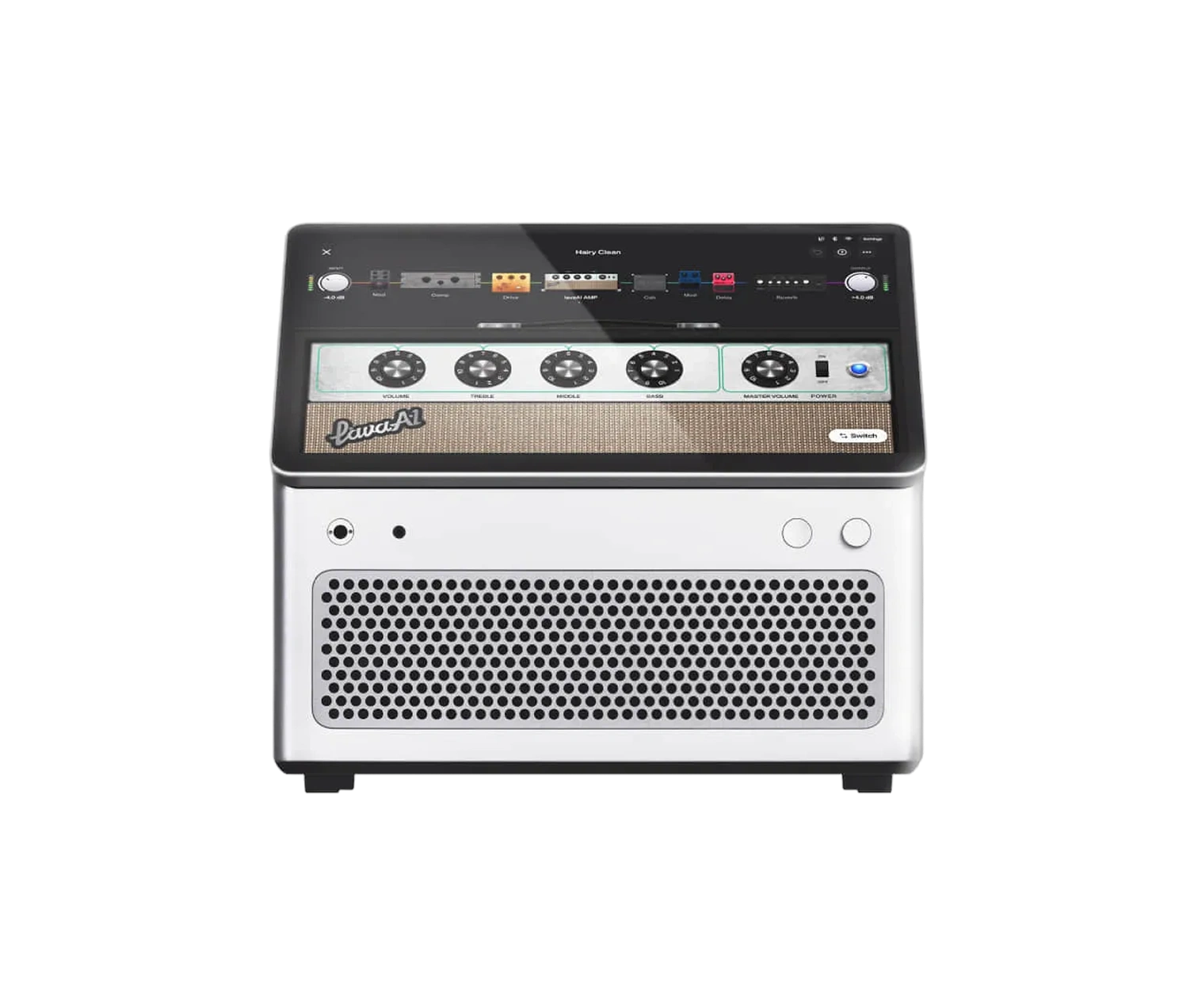
The Lava Studio reads the open Neural Amp Modeler format, so it will load amp profiles other people captured, not only the 40 that LAVA measured itself. Those 40 come with matched cabinets and more than 50 effects, tuned by LAVA's own neural modelling, which the company puts at over 99 per cent accuracy against the original signal. Beyond them sit the 25,000 or so profiles shared on TONE3000, and a capture somebody made in their own room drops in the same way. Custom impulse responses load by the same route. The effects chain runs ten slots deep.
A 13.3-inch touchscreen sits where the knobs would be, and behind it an 800 MHz audio DSP works alongside a six-core processor running to 1.8 GHz. That headroom is why the amp records as well as plays: an eight-track looper, 700 backing tracks and drum grooves, and a recorder that exports the full mix or each track on its own. Stem separation pulls vocals, drums, bass and guitar back out of a finished song, free for the first 50 minutes and priced in credits after that.
The output is 40 watts RMS of Class D into a bass reflex cabinet, one woofer and two 2-inch tweeters covering 50 Hz to 20 kHz. The screen tilts to 80 degrees for playing seated, and an optional stand lifts the whole cabinet anywhere between 32 and 115 centimetres, which is the difference between a practice amp on a desk and something you stand behind.
- Screen
- 13.3 inch, 1920 x 1080, multi-touch
- Dimensions
- 314 x 168 x 197 mm (12.4 x 6.6 x 7.8 in)
- Weight
- 9.8 lb (4.5 kg)
- Storage
- 64 GB, with 4 GB of RAM
- Range
- 50 Hz to 20 kHz
- Controls
- Touchscreen, tilts to 80 degrees
Figures as published by the manufacturer. Source