About
Noise cancelling is usually sold as a number, a decibel figure or a marketing name. Sony has spent this generation on something less visible: how fast the headphones can think.
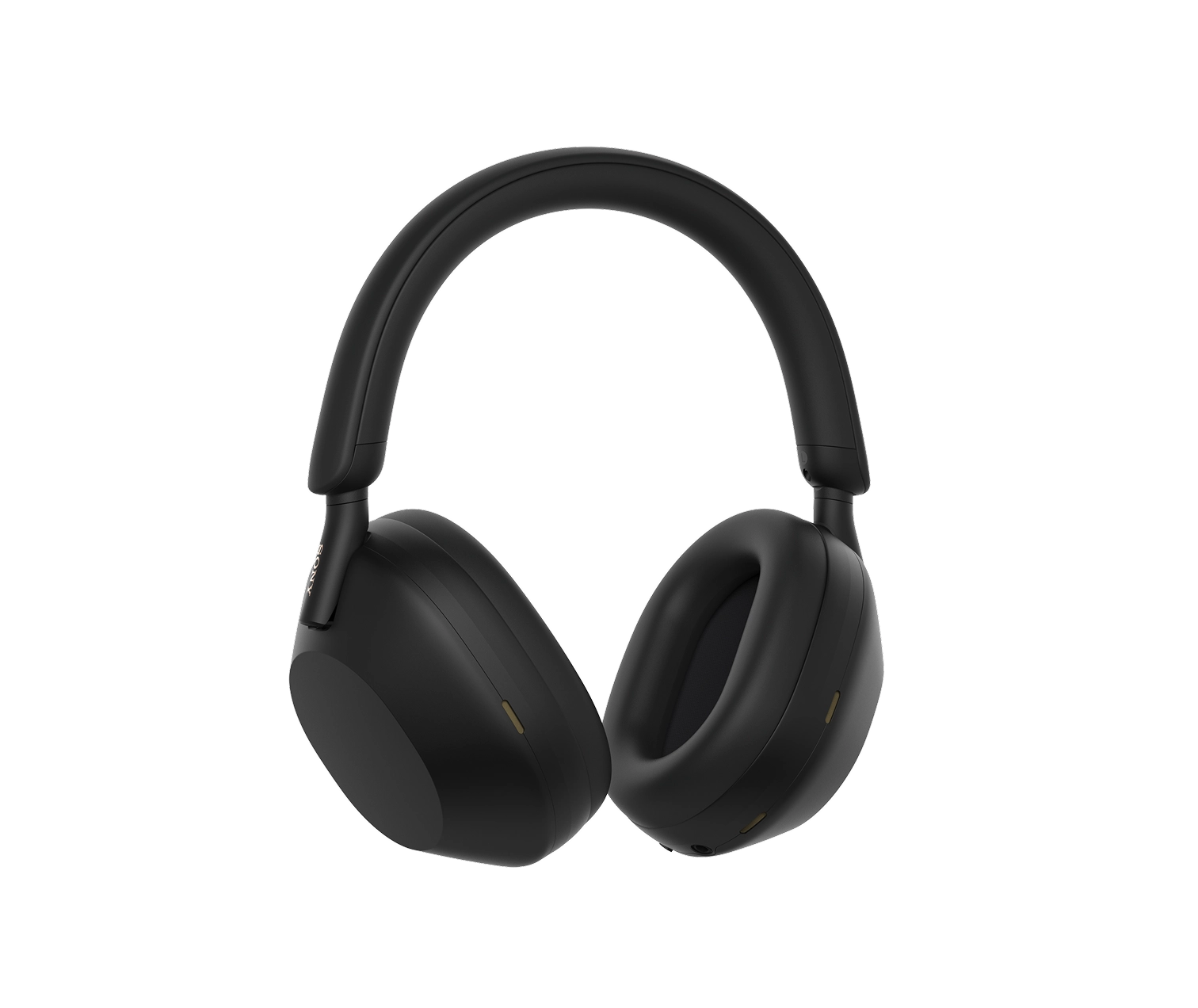
The Sony WH-1000XM6 runs a new QN3 processor that Sony says reads the headphones' 12 microphones seven times faster than the QN1 in the XM5. The microphones are MEMS units, the same silicon type a phone uses, sitting inside and outside both cups. Speed is the whole purchase. The sooner the chip can measure the sound arriving at a cup and answer it, the less of that sound survives the trip to your ear.
Above the raw sampling rate sits the Adaptive NC Optimizer, which keeps rechecking three things that shift while you wear them: the noise around you, the air pressure, and how the cups are actually sitting on your head. Glasses arms and a hat both break the seal, and a broken seal is exactly where low frequencies get in. Atmospheric pressure optimisation is listed as a function in its own right, which is the one that earns its keep at altitude.
Tuning was done with mastering engineers. The drivers are 30 millimetres across on neodymium magnets, and wired they run 4 Hz to 40,000 Hz on the JEITA measure. Over Bluetooth you get 20 Hz to 20,000 Hz on ordinary codecs, or the full 40,000 Hz when LDAC is streaming at its 990 kbps ceiling. SBC, AAC, LDAC and LC3 all work over Bluetooth 5.3, and multipoint holds a laptop and a phone at the same time.
Two details suggest these are meant to last. The earpads come off and go back on by hand with no tools, so a worn pair is a replacement rather than a write-off, and recycled plastic goes into several parts of both the body and the case. Turn the cancelling off entirely and the battery stretches to 40 hours.
- Designed in
- Japan

- Controls
- Tactile buttons, responsive touch panel, voice commands, multi-point switching
- Colours
- Black, Platinum Silver, Midnight Blue
- Fast charge
- 3 minutes charge = 3 hours playback
Figures as published by the manufacturer. Source