About
Louis Cartier drew the Tank in 1917 after looking down at a Renault FT from above. The case is the hull. The lugs are the tracks. Once somebody has told you that, you cannot unsee it.
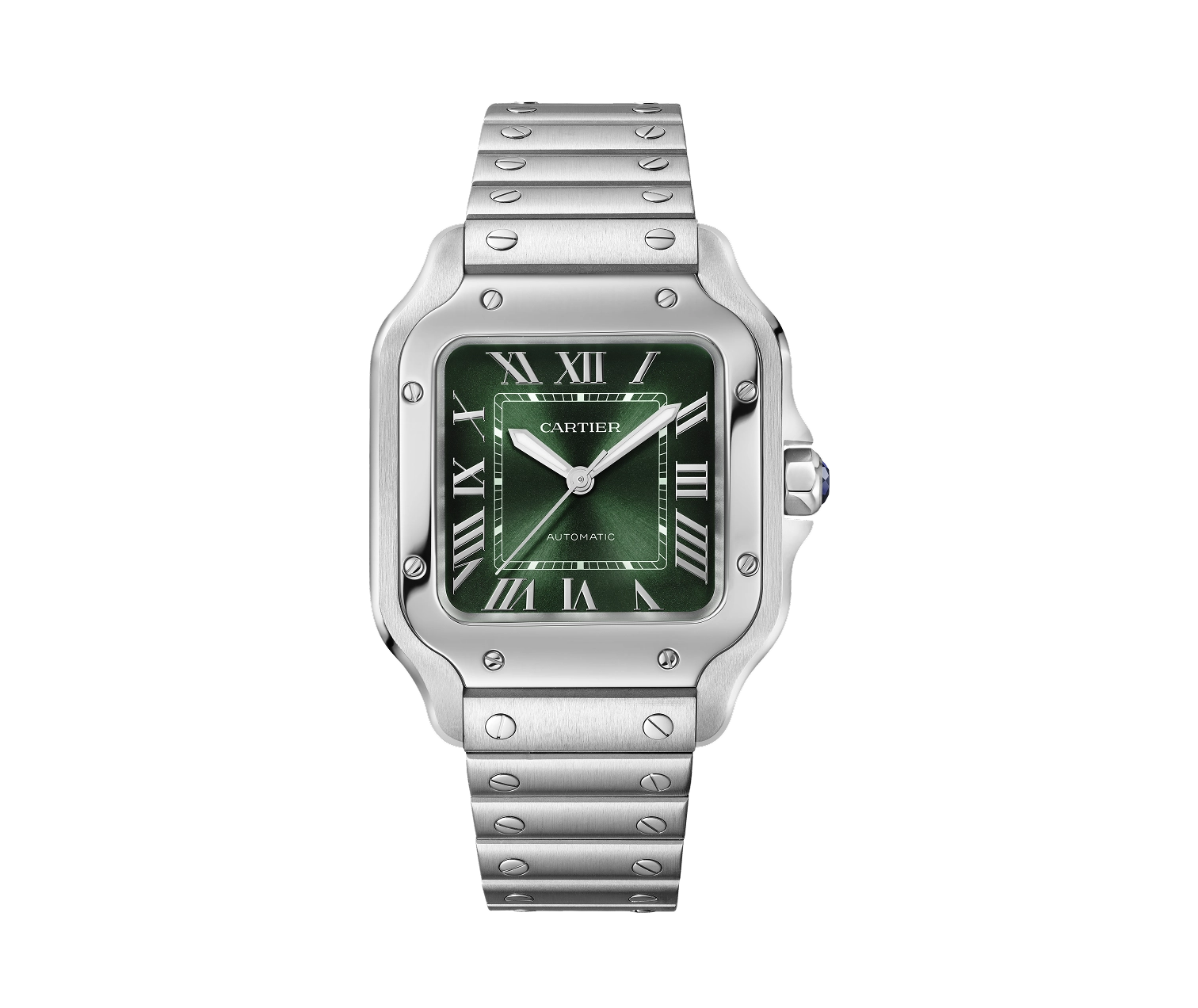
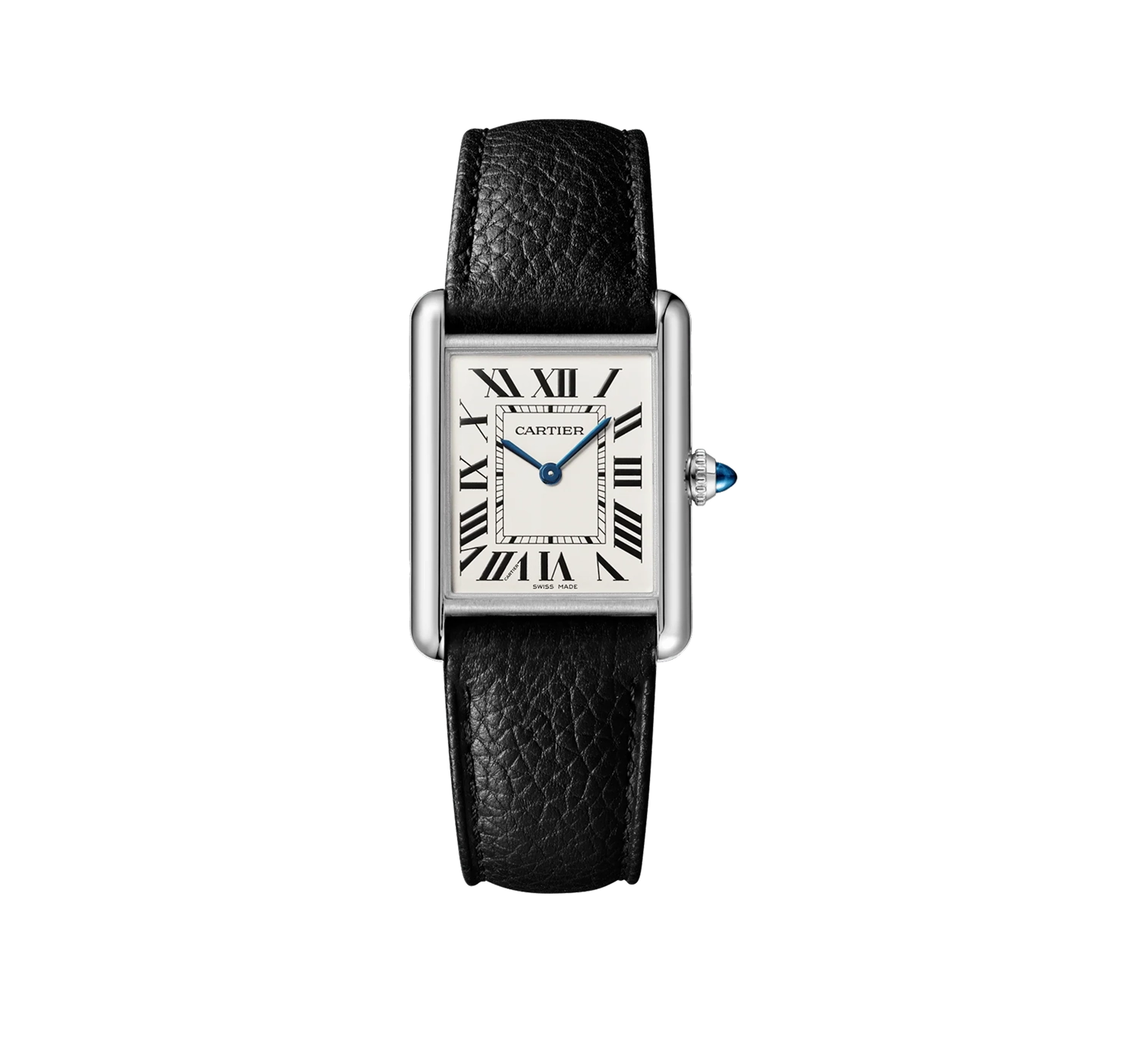
The Must line is where that shape gets built in steel and sold without a mechanical movement underneath. The large model measures 33.7 by 25.5 mm with a case only 6.60 mm thick, thin enough to vanish under a shirt cuff, and inside runs a high autonomy quartz calibre designed to go years between batteries. Water resistance is 3 bar. That covers rain and washing your hands, and nothing anyone would call swimming.
The details are the ones a Tank has always carried. A silvered dial, blued-steel hands ground to a sword point, Roman numerals, a railway minute track, and square glass sitting flush in the case. The crown is beaded and set with a synthetic spinel cabochon, the blue stone that has given a Cartier away from across a room since long before Must existed.
Must began in the 1970s as Cartier's answer to people who wanted the drawing without the gold. The steel Tank Must makes that argument again. It is a fair one, because the drawing was always the expensive part.
- Designed in
- France

- Made in
- Villars-sur-Glâne, Switzerland

- Materials
- Case
- Steel, 33.7 x 25.5 mm, 6.60 mm thick
- Movement
- High autonomy quartz
- Water resistance
- 3 bar, about 30 metres
- Crystal
- Square glass, flush to the case
- Body
- Beaded crown set with spinel cabochon
Figures as published by the manufacturer. Source