About
A watch dial can tell you it is six o'clock. It cannot tell you whether that is breakfast or supper, and for most of us the window settles the question. In a cave there is no window. Through a polar summer the sun never sets, so the question stays open.
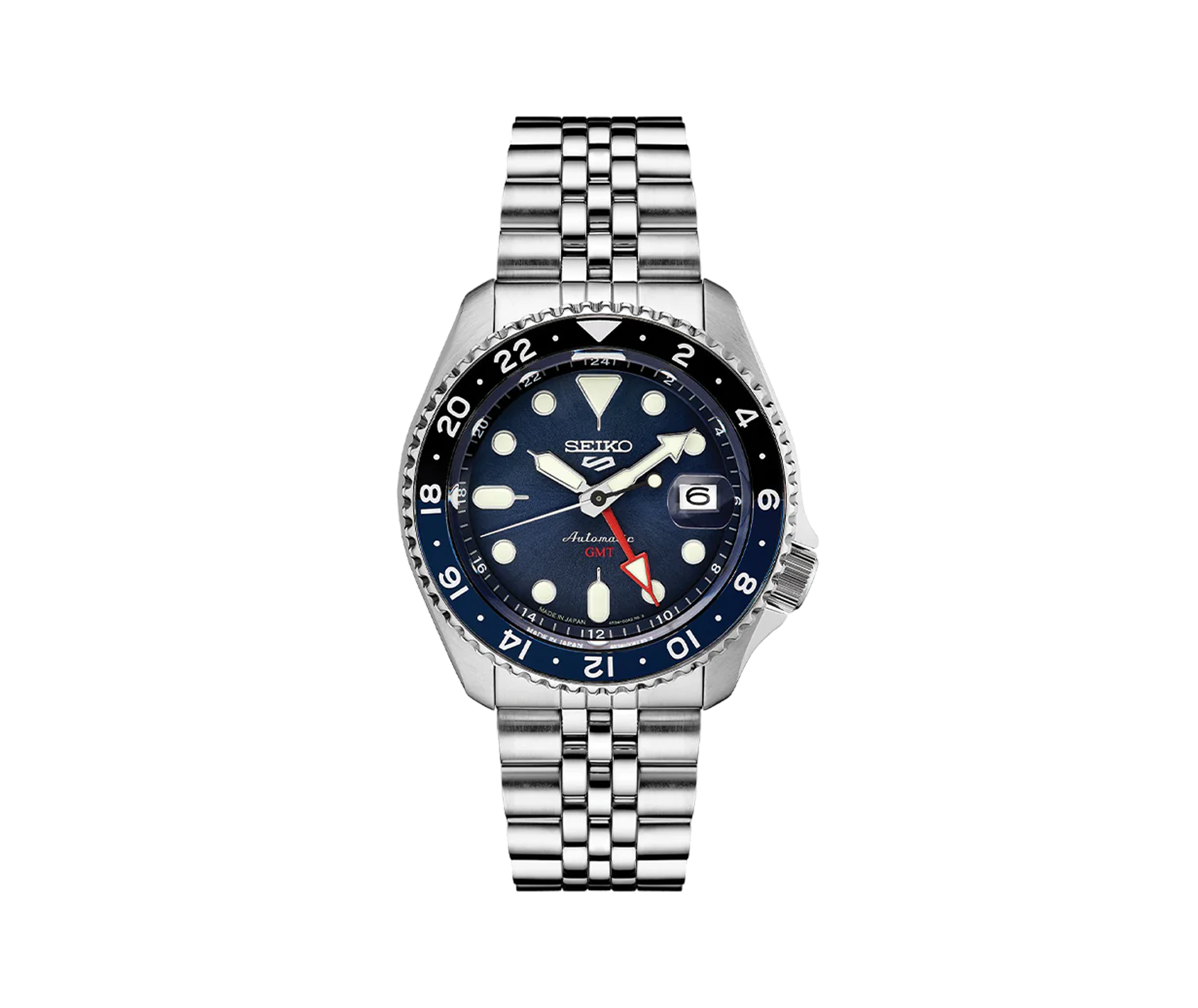
The Rolex Explorer II answers it with an orange hand that laps the dial once every 24 hours, read against graduations engraved into a fixed bezel that never moves out of reference. An ordinary hour hand goes round twice a day. That is why the dial alone cannot place you in the morning or the evening half. Rolex says speleologists, volcanologists and polar crews made this their watch, which is the sort of endorsement a brand does not invent.
The calibre 3285 runs a GMT function, so the local hour hand jumps in one-hour steps on its own while the 24-hour hand holds home time. It beats at 28,800 vibrations an hour on 34 jewels. Rolex guarantees the cased watch to within minus two or plus two seconds a day, and the white dial carries Chromalight markers and hands with a long blue glow, with a Cyclops lens set into the sapphire crystal to magnify the date. The Oyster bracelet closes with an Oysterlock clasp. Hidden inside it is a 5 mm Easylink extension, for the wrist that swells over a long day underground.
- Designed & made in
- Switzerland

- Materials
- Case
- 42 mm, Oystersteel
- Movement
- Calibre 3285, self-winding, GMT function
- Power reserve
- Approximately 70 hours
- Water resistance
- 100 metres
- Crystal
- Sapphire with Cyclops date lens
- Colour
- White dial, orange 24-hour hand
Figures as published by the manufacturer. Source