About
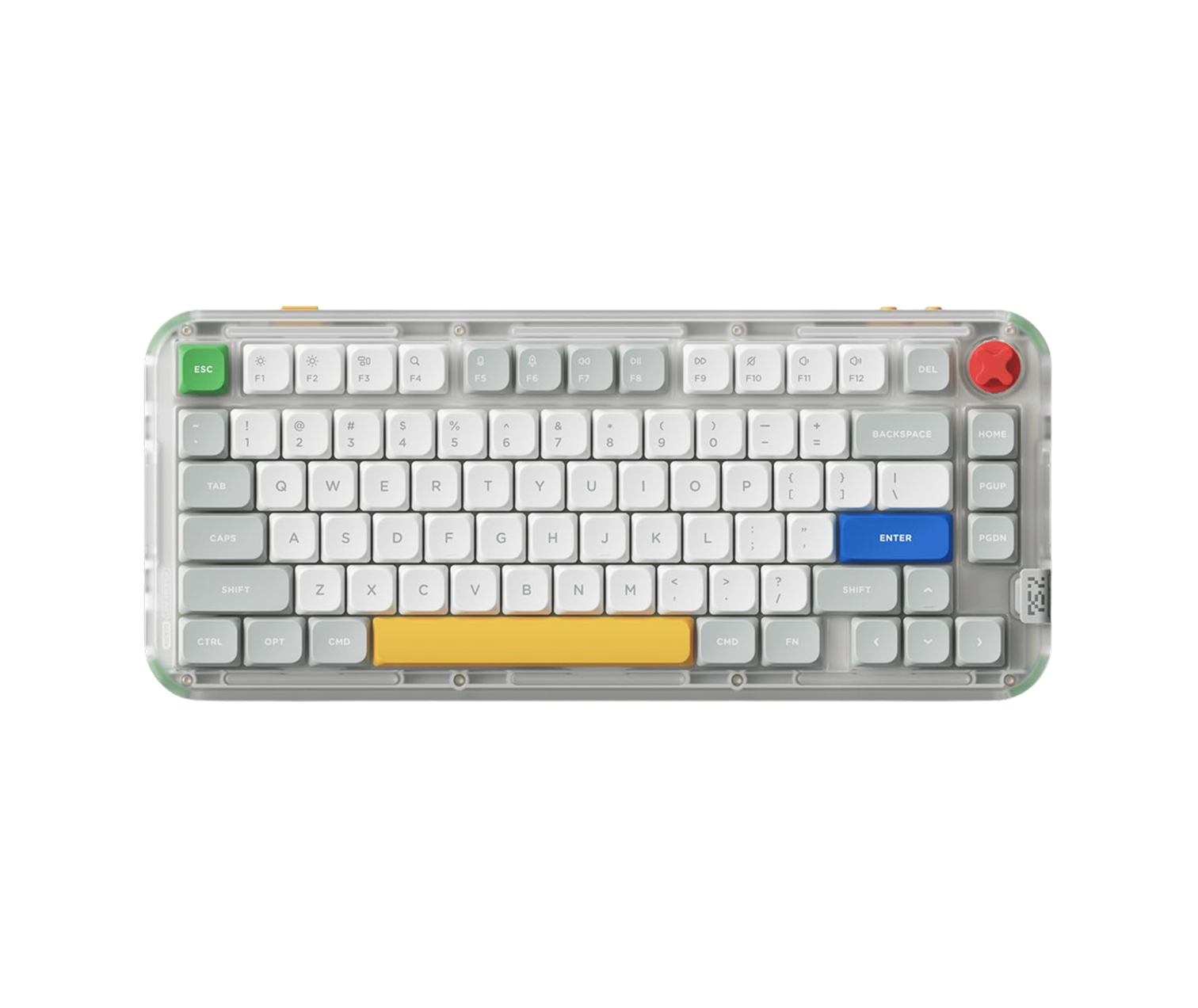
Staggered rows exist because typewriter levers needed somewhere to go. The Keychron Q15 Max drops the inheritance: every key is the same size and sits on a grid, the spacebar is split in two, and two programmable knobs sit at the top right.
The Q15 Max is an ortholinear keyboard built on a double gasket mount, with a flexible polycarbonate plate floating on gaskets and silicone pads set between the top and bottom halves of the aluminium case. That second layer is the part worth understanding. Metal cases ring against each other, and the pads damp the resonance before it reaches your ears, while foams in IXPE, PET and latex fill what is left of the cavity. The case itself is 6063 aluminium, CNC machined and then polished, sandblasted and put through what Keychron counts as 24 further manufacturing stages.
Programming runs on an ARM Cortex-M4 STM32F402 with 256KB of flash, enough headroom for QMK, so keys, macros and layers are remapped in a browser through Keychron Launcher. Polling is 1000 Hz on 2.4 GHz and wired, 90 Hz on Bluetooth 5.1, which pairs to three devices, and N-key rollover works wirelessly too. A hardware toggle stores a separate layout for Mac and for Windows.
Every switch is hot-swappable, 3 pin or 5 pin MX style, over screw-in PCB stabilisers on the long keys, so nothing about the feel is fixed at purchase and nothing needs soldering to change. The keycaps are XDA profile dye-sub PBT at one uniform height across the whole grid, which is the logic of the layout followed through: no row is shaped to sit under a particular finger, because on this board no finger has a particular row.
- Designed in
- Hong Kong

- Made in
- China

- Materials
- Body
- 6063 aluminium, polycarbonate plate
- Dimensions
- 283.05 mm long, 114 mm wide, 34.49 mm at the back without keycaps
- Weight
- 1232 g fully assembled
- Battery
- 4000 mAh, up to 180 hours with the backlight off
Figures as published by the manufacturer. Source