About
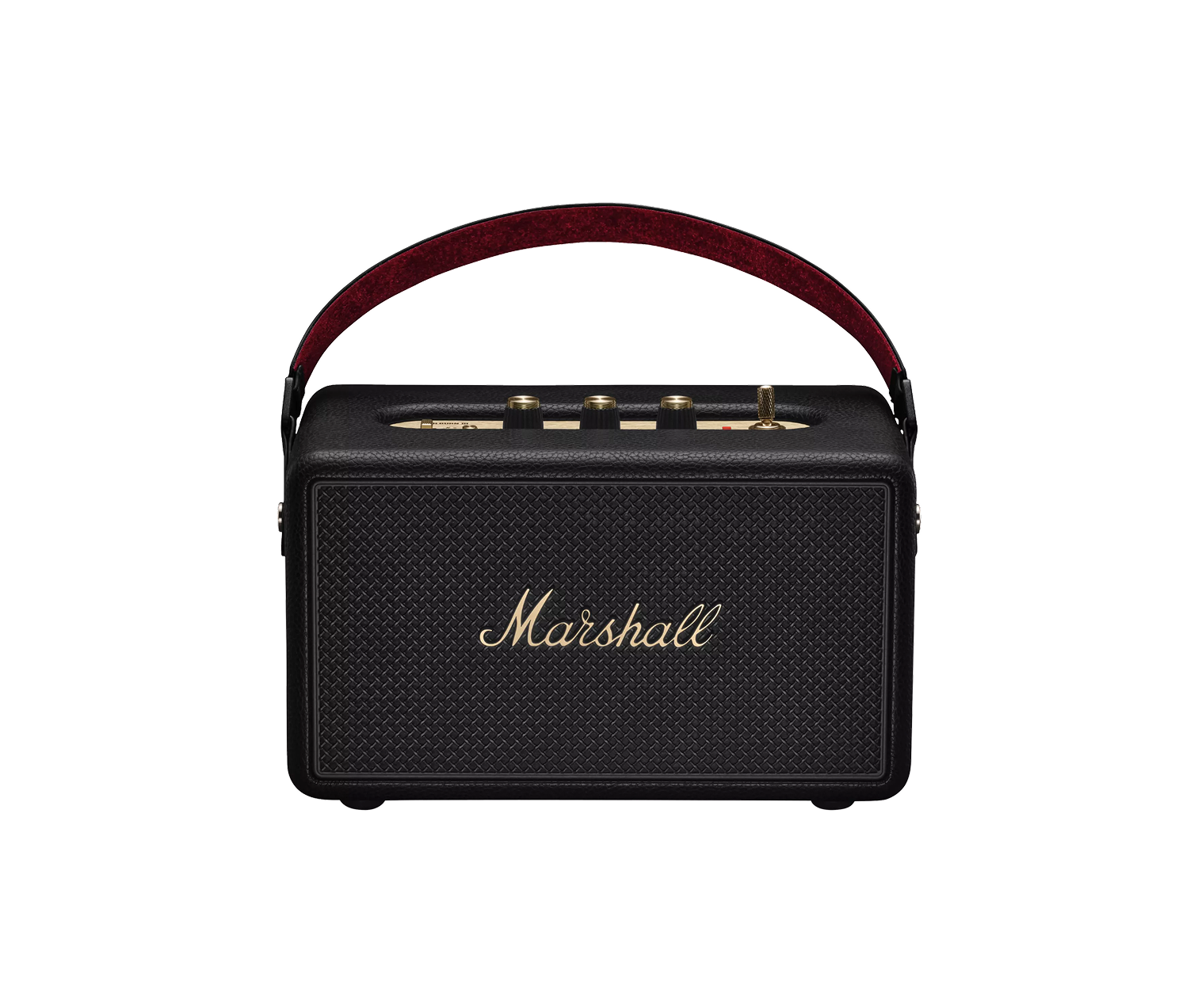
Most speakers this size run one amplifier and ask it to do everything: bass, treble, whatever the track throws at it. Marshall built the Stanmore III with three.
The Marshall Stanmore III splits 80 watts across its two-way system using three separate Class D amplifiers, a 50-watt amp for the woofer and a 15-watt amp for each tweeter. That is what bi-amping is for. A single amplifier has to serve treble and bass at the same moment, and whichever driver is quieter tends to lose out when the other is being pushed hard. Give each driver its own amp and both play at full strength, with neither drowning the other. This generation also angles the tweeters outward and reworks the waveguides around them, which widens the soundstage compared with the Stanmore II.
The rest of the tuning happens in software. The Marshall app adds Placement Correction, which retunes the speaker once it knows whether it is against a wall, tucked in a corner, or standing out in the open, and it handles over-the-air firmware updates without a cable. Marshall is clear that the speaker works fully with no app installed at all, which is not a promise every connected speaker makes.
Bluetooth 5.2 is ready for Bluetooth LE Audio, and 3.5 mm and RCA inputs cover wired sources. Brass control knobs and the Marshall script sit on a cabinet built from 70% recycled plastic and vegan materials, which is a fair amount of recycled content for something that still has to hold 4.25 kg of speaker rigid enough not to buzz.
- Designed in
- Sweden

- Award
- Red Dot 2023

- Made in
- China or Thailand
- Dimensions
- 350 x 203 x 188 mm (13.78 x 8.00 x 7.40 in)
- Weight
- 4.25 kg (9.37 lb)
- Controls
- Bluetooth 5.2, 3.5 mm input, RCA input
- Materials
Figures as published by the manufacturer. Source