T1 Evo
$449
About
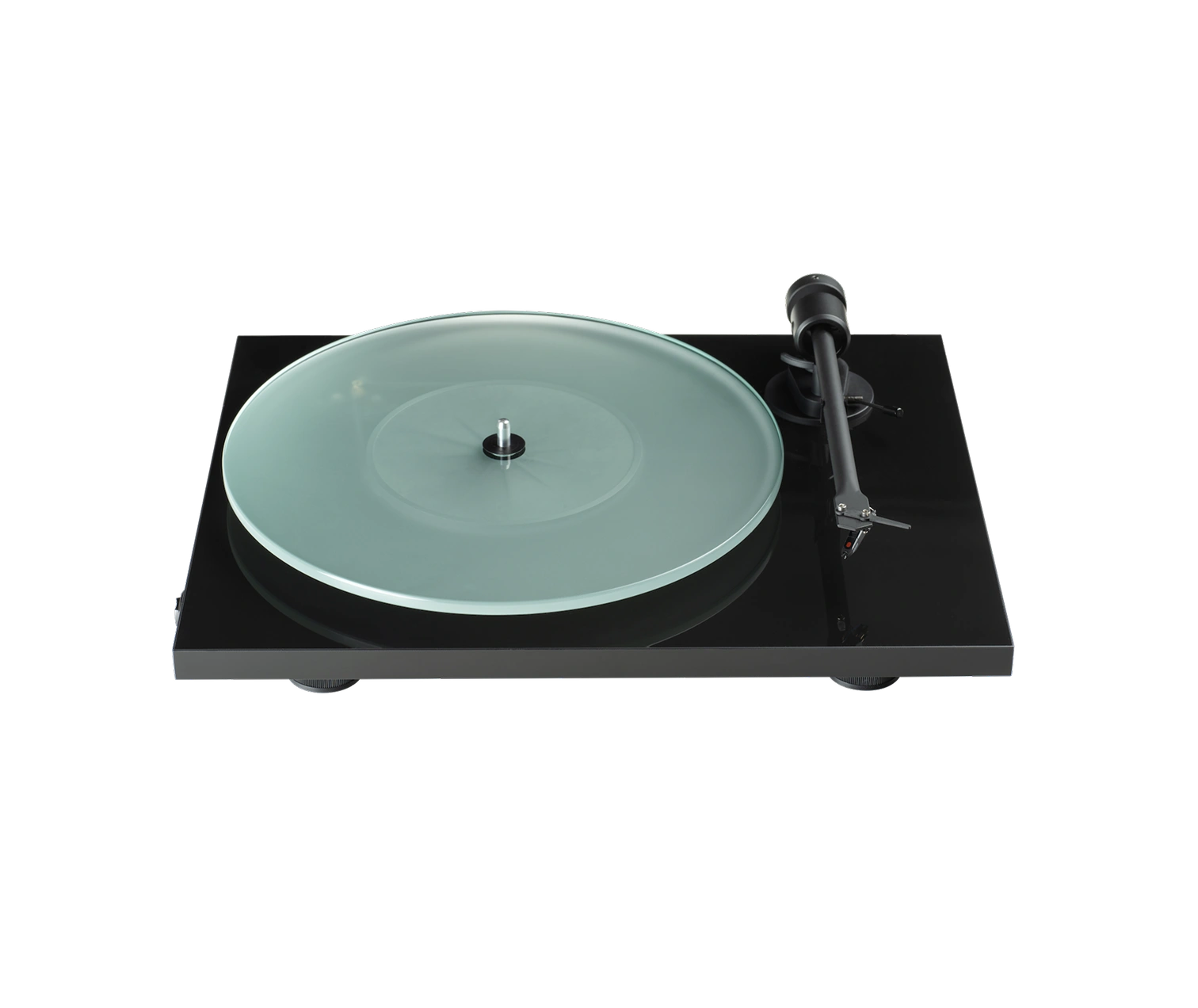
At this price a turntable is normally a plastic box with a motor in it, and the plastic is doing more harm than the spec sheet admits. Pro-Ject's answer was to leave it out entirely.
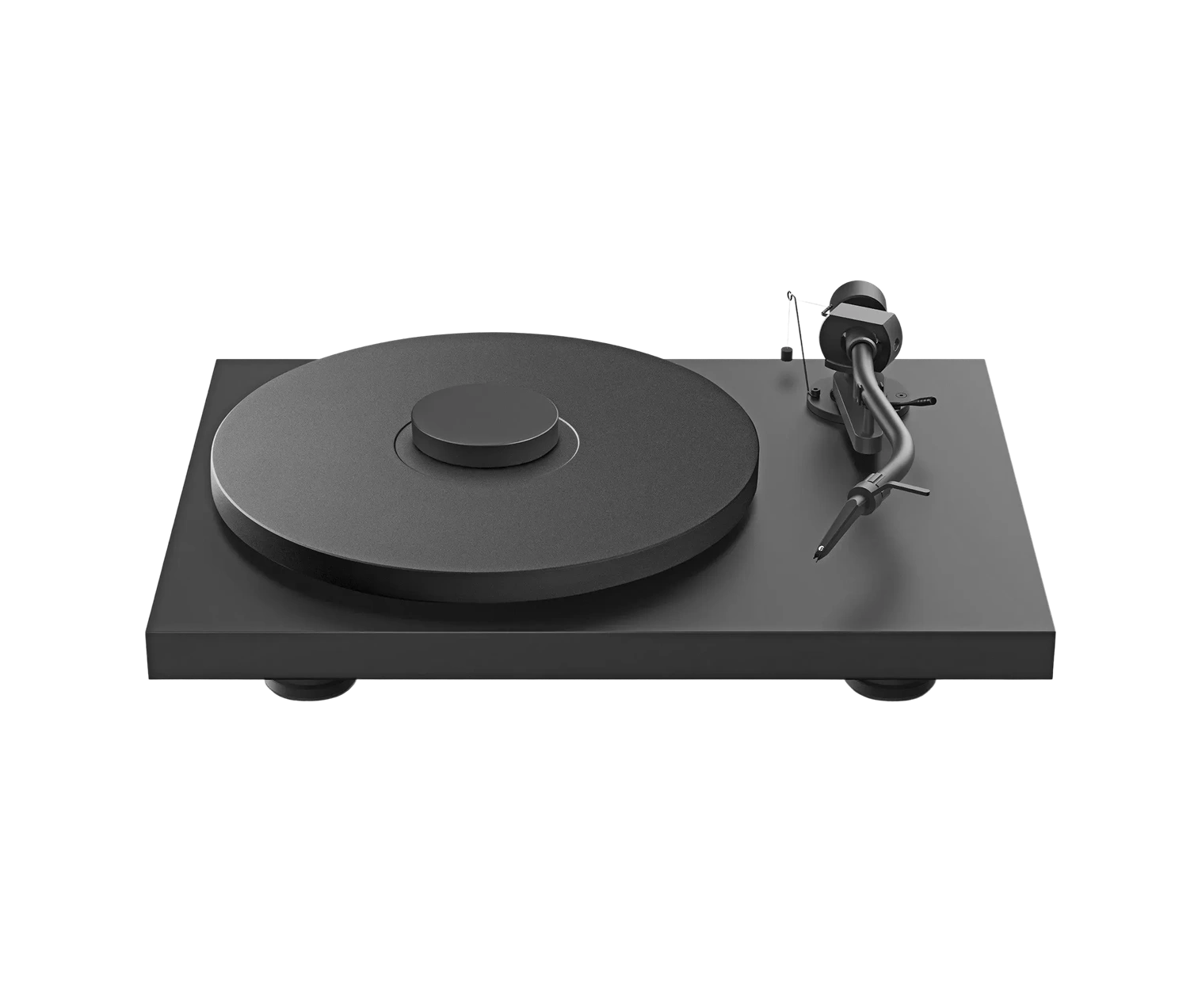
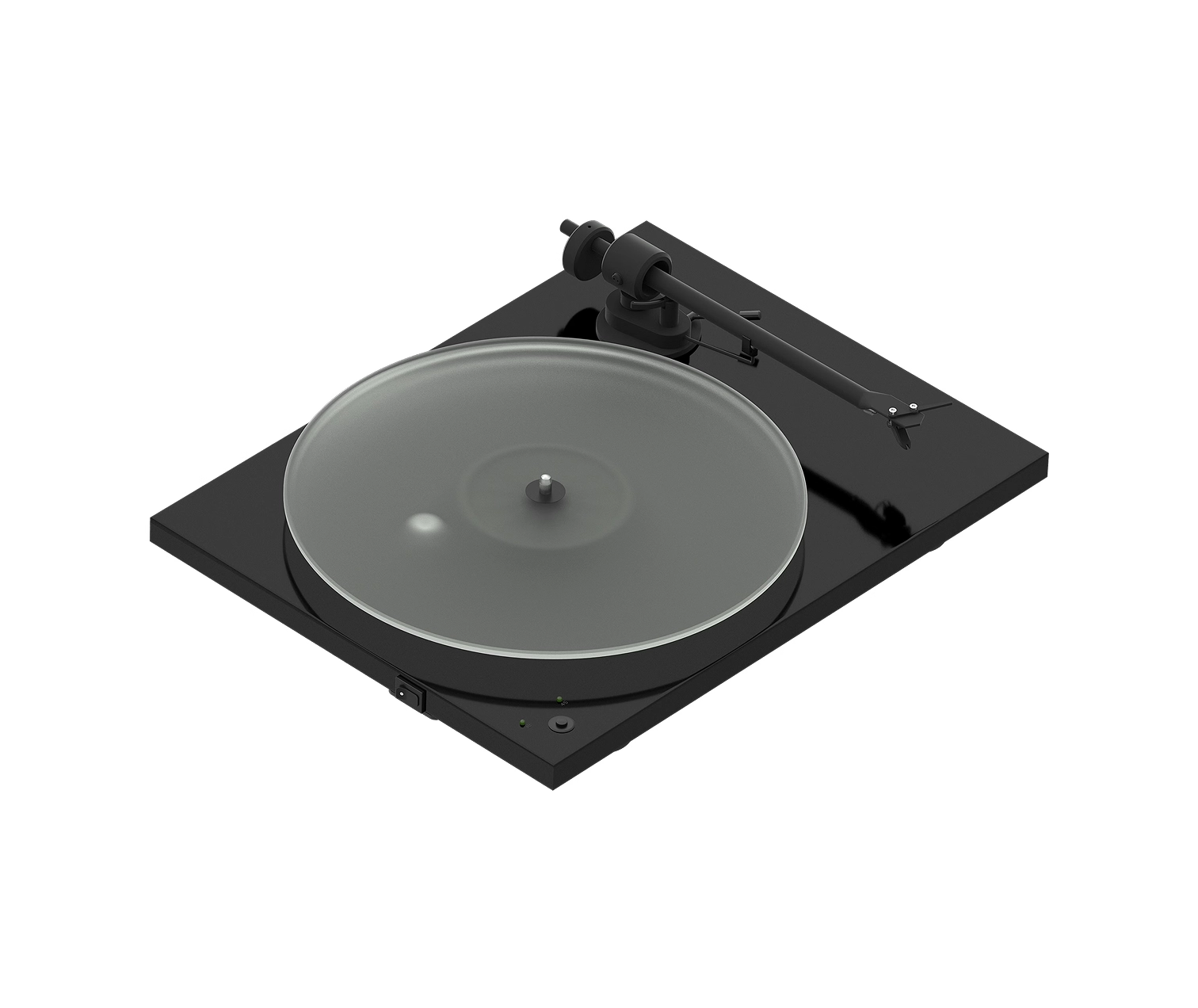
The T1 EVO has no plastic in its construction: the plinth is CNC-machined from wood, the platter is 8 millimetre blasted glass with a felt mat, and the tonearm is milled from a single piece of aluminium. Each of those replaces a specific failure. A light plinth with hollow spaces inside rings along with the speakers, so the plinth is machined with no cavities left to resonate. A light platter lets the record ring with it, so the mass goes back into glass. The tonearm is one piece including the headshell, which means no screwed or glued joints for vibration to settle into, and it rides on low-friction bearings.
Underneath, a belt-driven motor turns a sub-platter sitting in a main bearing machined to 0.001 millimetres, with a hardened stainless steel axle running in a brass bushing. Pro-Ject publishes what that adds up to: 0.7 percent speed variance at 33 rpm, 0.25 percent wow and flutter, and a signal-to-noise ratio of 65 dB.
It arrives playable. An Ortofon OM10 moving magnet cartridge with an elliptical diamond stylus is fitted at the factory, tracking force preset to 17.5 mN, and there are three versions to choose between: a direct phono output, a switchable built-in phono stage, or a Bluetooth transmitter alongside both.
- Designed in
- Austria

- Made in
- Czech Republic
- Materials
- Dimensions
- 415 x 100 x 335 mm
- Weight
- 3.8 kg
- Plays
- 33 and 45 rpm
- Noise
- 65 dB signal-to-noise ratio
Figures as published by the manufacturer. Source