About
Most task chairs treat the back as one flat plate on a hinge, tilting away from you in a single piece. A spine does not work like that, which is Steelcase's whole argument: lean back and your upper spine goes with you while your lower spine arches forward, and the company reckons two people of identical size, age and gender still move differently from one another.
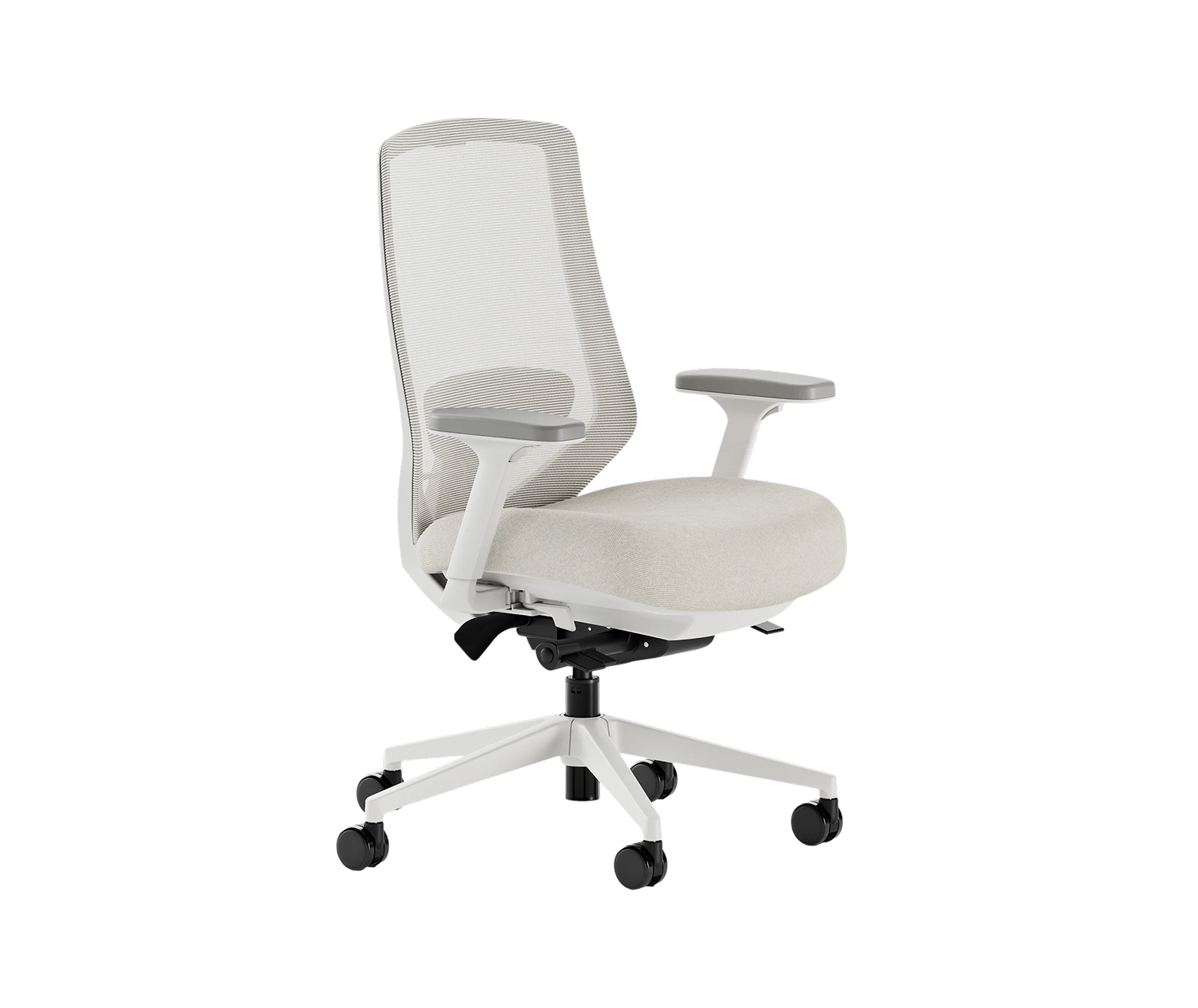
The Steelcase Leap V2 answers that with LiveBack, a back frame that flexes along its length rather than tilting as one panel, and it was the first chair Steelcase built with it. The seat sits on what the company calls a Natural Glide System. Recline in an ordinary chair and the distance to your screen grows, which pulls at your eyes, arms and neck; here the seat travels forward as the back goes down, so you stay put relative to the desk. The front edge of the seat bends too, as your legs shift.
Adjustment runs deeper than the tilt. Lumbar support slides up and down and a separate dial sets how firm the lower back feels, the arms move four ways for height, width, depth and pivot, and recline has four angle stops plus an upright lock. Every control is labelled in English and in Braille.
Steelcase cites an independent health and productivity study in which one group's productivity rose 17.8 per cent over a year. The arm caps have since lost their single-use foam, working instead with a flexible fin, and they are recyclable.
- Designed in
- United States

- Fits
- Sitters up to 400 lb (181 kg)
- Colours
- Black, Midnight, Platinum, or polished aluminium frame
- Materials
Figures as published by the manufacturer. Source