About
Most ergonomic chairs are designed for a posture almost nobody holds any more: body square to the monitor, both feet flat, spine politely upright. Steelcase went and watched 2,000 people sitting across six continents before drawing this one, and found nine postures no existing chair fitted.
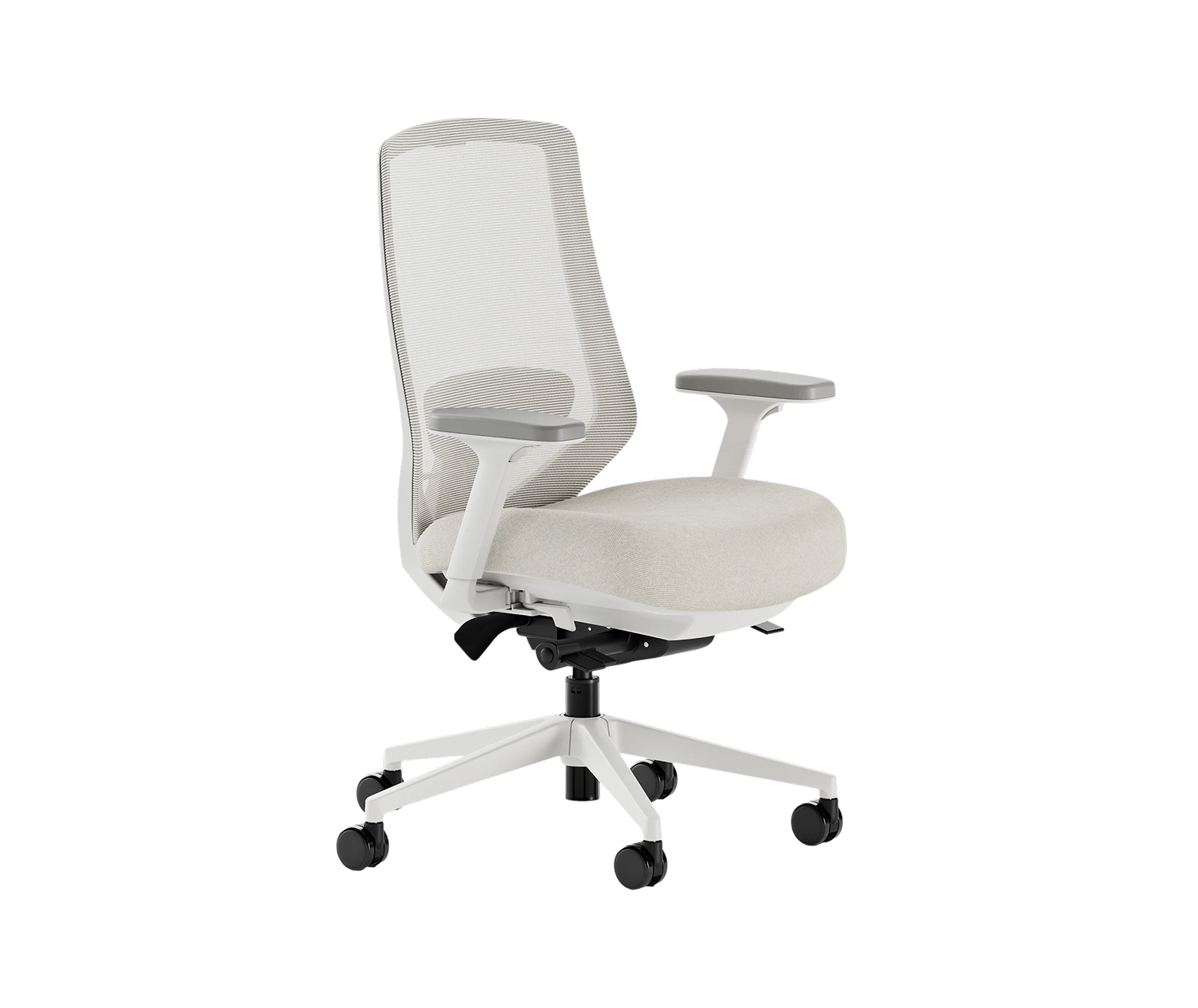
The Steelcase Gesture answers those postures mostly through its arms, which swing, slide, rise and pivot through a full 360 degrees each, with what Steelcase says is a wider range of width between them than any other chair on the market. That is what the money buys. The Global Posture Study behind the design recorded people sitting sideways with a phone, hunched over a tablet, one leg folded underneath, and the arms are what lets the chair follow. Bring them up and in and a tablet sits where you can read it without your neck travelling to meet it.
The back is a single flexing panel rather than a shell hinged at one point, which Steelcase calls 3D LiveBack: it changes shape as the spine does. A part named the Core Equalizer holds lumbar pressure constant through every recline angle, so the support does not vanish the moment you lean back. The front edge of the seat gives where the thighs cross it.
Controls come to two knobs, both on the right and both within reach of a seated arm. The front one sets seat height and depth; the back one sets recline tension and the angle at which the recline stops, with three stop angles plus an upright lock. The arm caps have had their foam removed entirely, replaced by a flexible fin structure that Steelcase says makes them fully recyclable, which is a rare case of a comfort part getting simpler rather than thicker.
- Designed in
- United States

- Award
- Red Dot 2014

- Materials
- Dimensions
- 39.25 to 44.25 in high, 22.375 to 34.625 in wide, 21 to 23.625 in deep
- Size
- Seat height 16 to 21 in
- Weight
- 58 lb, rated to hold 400 lb
Figures as published by the manufacturer. Source