Industrial design books on Braun, Herman Miller and 1,000 chairs
Industrial design books about who made what: Klaus Klemp's Braun: Designed to Keep, the 614-page Herman Miller history, Woman Made and Taschen's 1000 Chairs.
The industrial design books worth owning are the ones that tell you who drew an object and why it looks the way it does, and these five come at that question from three directions. Two are histories of a single company, Braun and Herman Miller, written with the run of each company's archive. Two are surveys of designers, one of women working across the last century and one of a hundred people working now. The fifth is a small Taschen hardback that puts two centuries of chairs in your hand.
They are bought for the subject and the pictures, so there are no spec tables here. What each section gives is what is inside: the names, the objects, how the book is arranged, and the trim size that decides whether it lives on a shelf or flat on a table. For books about method, grids and Japanese craft, see design books every creative needs. More are in the Design Library.
1.Braun: Designed to Keep

Klaus Klemp's history of Braun, published by Phaidon in November 2023, argues that what the company made was a set of rules, and the shavers and radios were the proof.
The book runs to 424 pages and more than 500 images, split into three sections: the defining moments, the core identities and the key characters. The third profiles the designers and the managers who backed them, so the values the company is known for, simplicity, usefulness and longevity, get attached to the people who argued for them in meetings.
The story starts in 1921, when Max Braun opened his workshop in Frankfurt, and the text keeps the company inside the cultural and political history of Germany the whole way through. A radio from the 1950s arrives with the decade that produced it, and with the teachers from the Ulm school of design, Otl Aicher and Hans Gugelot among them, who shaped Braun's look in the 1950s. Dieter Rams ran the design department from 1961 to 1995, and his period is the core of the book without being all of it.
Two kinds of picture run side by side. New photography of the best-known products sits next to archive material that had never been printed: drawings, adverts, internal documents and letters. The internal memos are where the arguments behind the products show.
Klemp is professor of design theory and history at the HfG Offenbach and curator of design at the Museum Angewandte Kunst in Frankfurt. He also wrote Phaidon's Dieter Rams: The Complete Works, which lists every product Rams designed, so the two books split the job: one man's output there, the company around him here. Its pages measure 290 by 250 mm. The Rams objects Braun still makes new, from the ET66 calculator to the BC22 clock, are in Dieter Rams designs you can still buy.
2.Herman Miller: A Way of Living

The longest book here at 614 pages, edited by Amy Auscherman, Sam Grawe and Leon Ransmeier, and reissued for the company's hundredth year with a cloth cover and an updated timeline.
The first edition came out in 2019 at 608 pages. The anniversary edition in print now adds the years since, and it is the one Phaidon and Herman Miller's own store both sell. Auscherman ran the company archive, which is where much of the material comes from.
It runs as ten timelines, each one hung on a single event in the company's history. An early one turns on Gilbert Rohde's Design for Living house of 1933, the moment a Michigan furniture maker committed to modern design. Later ones take in George Nelson's Storagewall of 1944, the Eames moulded plywood chairs of 1946 and Action Office 2 in 1968, the system that invented the open-plan cubicle. Nelson, Charles and Ray Eames and Alexander Girard each get their stories and their work, and the 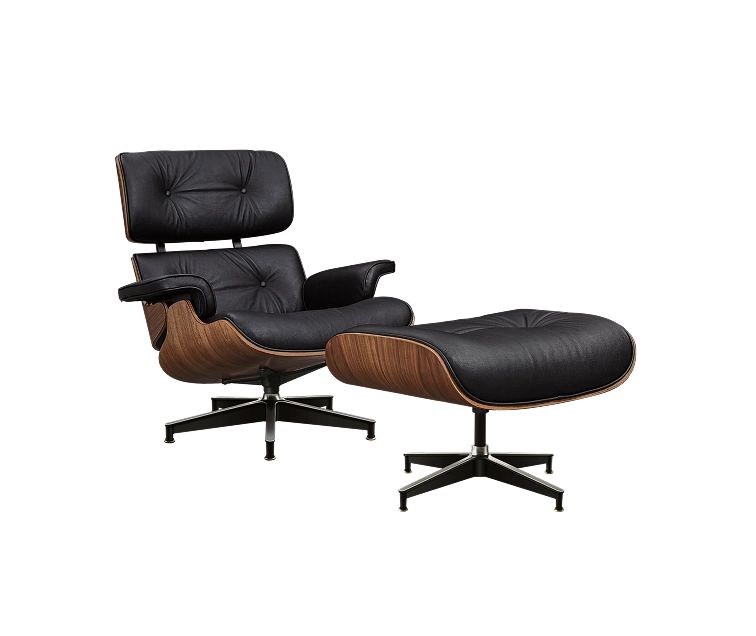 Eames Lounge Chair and Ottoman and the
 Aeron both have their place.
The pictures pair new photography with the company's archive, which often means the same piece twice: as it was shot when new, and again now. Between them sit the posters, letters, patents and adverts that a furniture catalogue leaves out. Phaidon gives the company's record on the environment and its community work the same space as the furniture, which is the argument of the title.
The page is 290 by 214 mm, the narrowest of the Phaidon books here. At 614 pages it is a book to read in sittings, starting from whichever timeline holds the chair you own.
3.Woman Made: Great Women Designers

Jane Hall's A to Z of more than 200 women product designers from over 50 countries, each represented by one key object and a short text.
The alphabet decides the running order, which is the point. Ray Eames, Eileen Gray and Florence Knoll sit among Nathalie du Pasquier, Ilse Crawford and Faye Toogood, and nobody gets a chapter while somebody else gets a footnote. Opening it at random turns up a name you know beside one you do not, and the object is usually something you have seen without knowing who drew it.
The scope is furniture, lighting, products and textiles, from the early twentieth century to now. Fashion and graphic design are left out. The objects run from Marianne Brandt's Bauhaus metalwork and Eileen Gray's Bibendum chair to Anna Castelli Ferrieri's 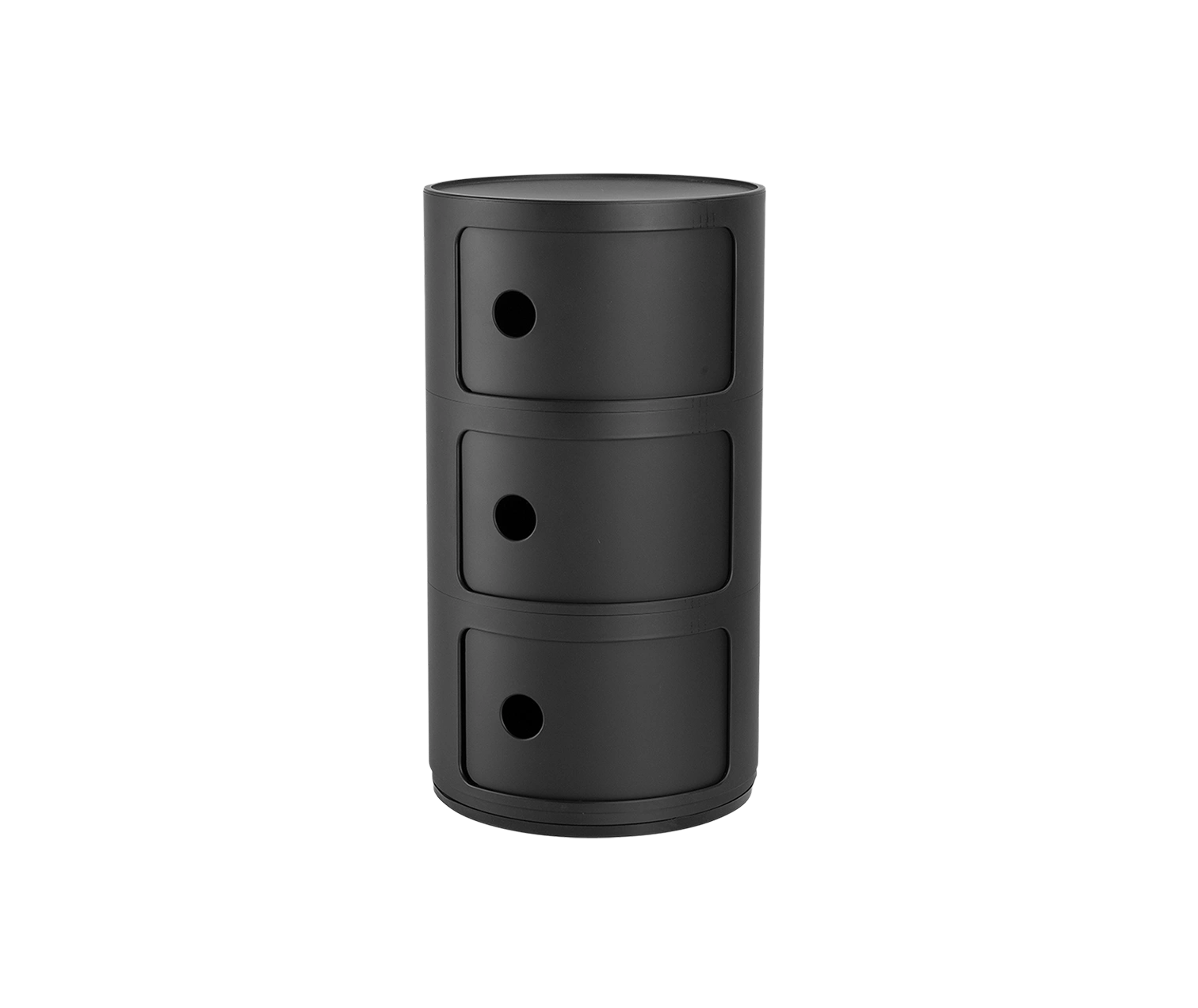 Componibili storage for Kartell, Patricia Urquiola's Tropicalia chair and Faye Toogood's Roly-Poly.
Hall is an architect and a founding member of Assemble, the London collective that won the Turner Prize in 2015. She used the same one-designer-at-a-time structure for her earlier Phaidon book, Breaking Ground, on women architects, published in 2019. Woman Made followed in 2021 and is still the only edition.
It runs to 264 pages on the same 290 by 250 mm page as the Braun book. Because every entry is short, it reads in five minutes or an hour, and it is the book here most likely to send you looking for a designer's other work.
4.Designed for Life: The World's Best Product Designers

A survey of 100 product designers working now, chosen by 27 outside nominators instead of by the publisher.
The nominators are critics, curators, gallerists, journalists and company heads, among them Glenn Adamson, Maria Cristina Didero, Justin McGuirk, Libby Sellers and Jane Withers. Each put forward designers they rated, and the method shows: the book does not read as one editor's taste. The brief included designers who had emerged only in the last few years, so Mac Collins, Nifemi Marcus-Bello, Minjae Kim and Mimi Shodeinde appear beside Jasper Morrison, India Mahdavi, Ronan and Erwan Bouroullec, Formafantasma and Sabine Marcelis.
The work runs from furniture and lighting to glassware, limited editions and office systems, and the text follows the new materials, processes and technologies changing it. Kelsey Keith, brand creative director at Herman Miller and a former editor of Curbed and Dwell, edited it, which ties it to the book above from the other end of a century.
Phaidon published it in March 2024, at 304 pages on a 290 by 250 mm page. It is the only book here about designers whose best work may still be ahead of them, and the one to read before a design fair, so the names on the stands already mean something.
5.1000 Chairs
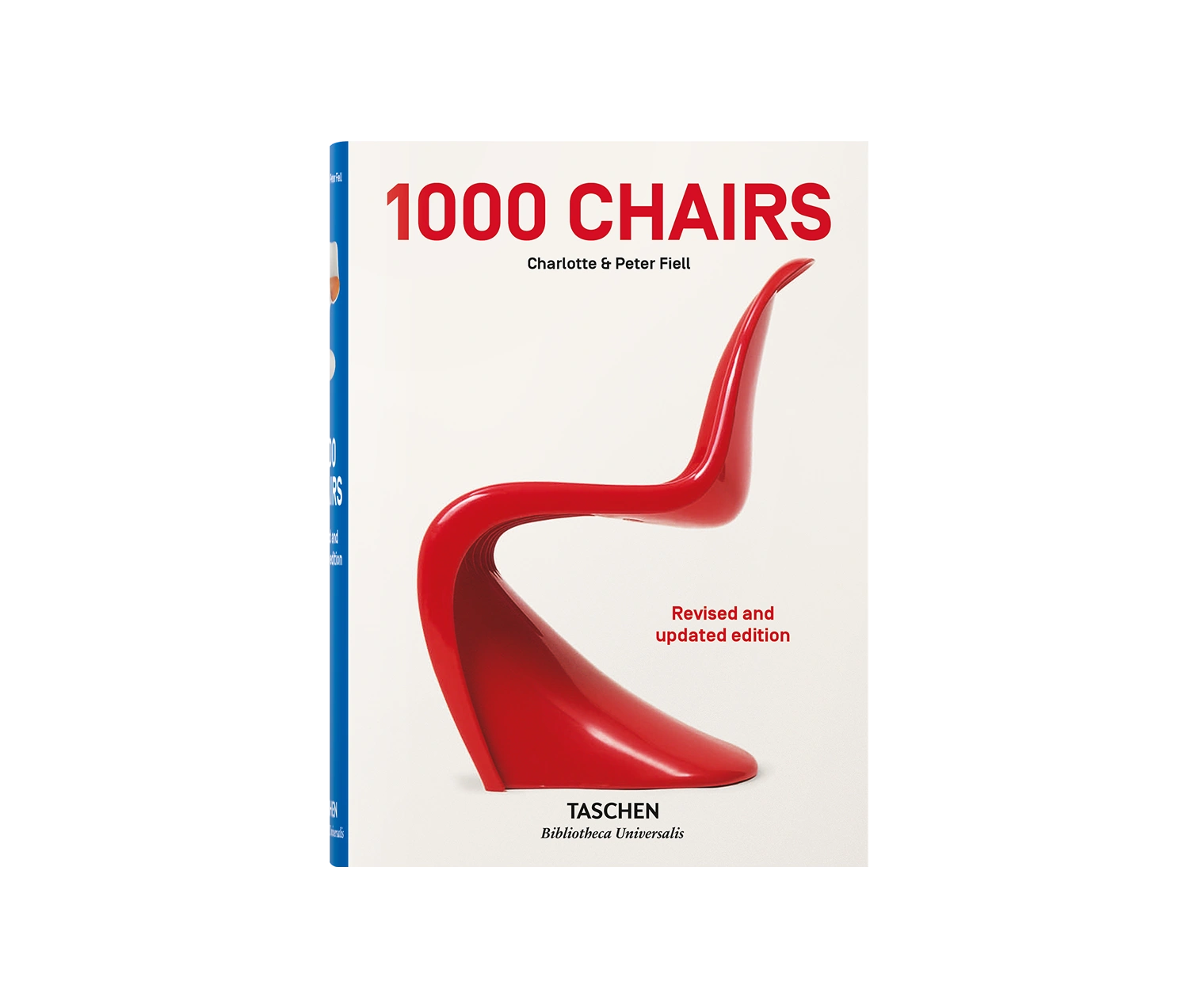
Two centuries of chairs in a hardback 14 by 19.5 cm, small enough to hold in one hand and to read on a train.
Charlotte and Peter Fiell, who have written dozens of books on design history, first published 1000 Chairs in 1997. The edition in print is the revised one Taschen issued in 2017 in its Bibliotheca Universalis series of small hardbacks, at 656 pages.
The order is chronological. Thonet's bentwood chairs and the archetypes of the 1800s open it, then Josef Hoffmann, Gerrit Rietveld and Alvar Aalto, Marcel Breuer's  Wassily Chair, Verner Panton and Eva Zeisel, through Art Nouveau, the International Style, Pop and Postmodernism to Ron Arad and the present. Each chair stands alone, cut out of its room, with a note on the piece and the person who drew it.
That format makes it a reference before it is a picture book. Read straight through, it is a history of how people decided to sit. Opened at one page, it answers the question a showroom label leaves hanging: who designed this, and when.
The text comes in two editions. One prints English, French and German together, the other Italian, Portuguese and Spanish, so check the language before you buy. The chairs themselves, and the licensed makers who still produce them, are in iconic designer chairs.
How we chose
We looked for books about who designed the objects people actually live with, and kept to titles still in print from their publishers in November 2026. Two strong candidates were left out for that reason: Thames & Hudson's Bang & Olufsen history, The Art of Impossible, and Phaidon's Naoto Fukasawa: Embodiment are both out of print and sell secondhand at collector prices. What remained split three ways, so the five cover a single company's archive twice, the designers of the last century and of this one, and one small reference. Page counts, trim sizes, editors and dates come from the publishers' own pages, checked against a second source each: a bookseller's record, a museum shop or a published review. Where sources disagreed, as on the page count of 1000 Chairs, the publisher's figure was used. Books are bought for their subject and their pictures, so there is no comparison table.
Common questions
Braun: Designed to Keep by Klaus Klemp, published by Phaidon in 2023, is the widest history of the company: 424 pages and more than 500 images, from Max Braun's Frankfurt workshop in 1921 to the present. For Dieter Rams's own products, Klemp's earlier Dieter Rams: The Complete Works lists every one he designed.
It depends on what you want from the book. Company histories like Braun: Designed to Keep and Herman Miller: A Way of Living show how a design culture was built and kept. Surveys like Woman Made and Designed for Life widen the list of names you know. Method books, like Josef Müller-Brockmann's Grid Systems or Dieter Rams's Less But Better, teach how to work, and are covered in our post on design books every creative needs.
The anniversary edition is the one in print. It has a cloth cover, an updated timeline and 614 pages against the 608 of the 2019 first edition, so it covers the years since, including the company's hundredth.
One edition is. Taschen prints 1000 Chairs in two versions: one with English, French and German text together, and one with Italian, Portuguese and Spanish. They have different ISBNs, 9783836563697 for the English edition, so check before ordering.
About the author

Justin Farrugia
Founder & Editor of Curated Supply
Justin Farrugia is the founder and editor of Curated Supply, a design-led directory to things worth owning. He has personally curated over 1,000 products across workspace, carry, coffee, audio, and the home, each judged against one standard: design intent, material quality, and the restraint that lets a thing last.