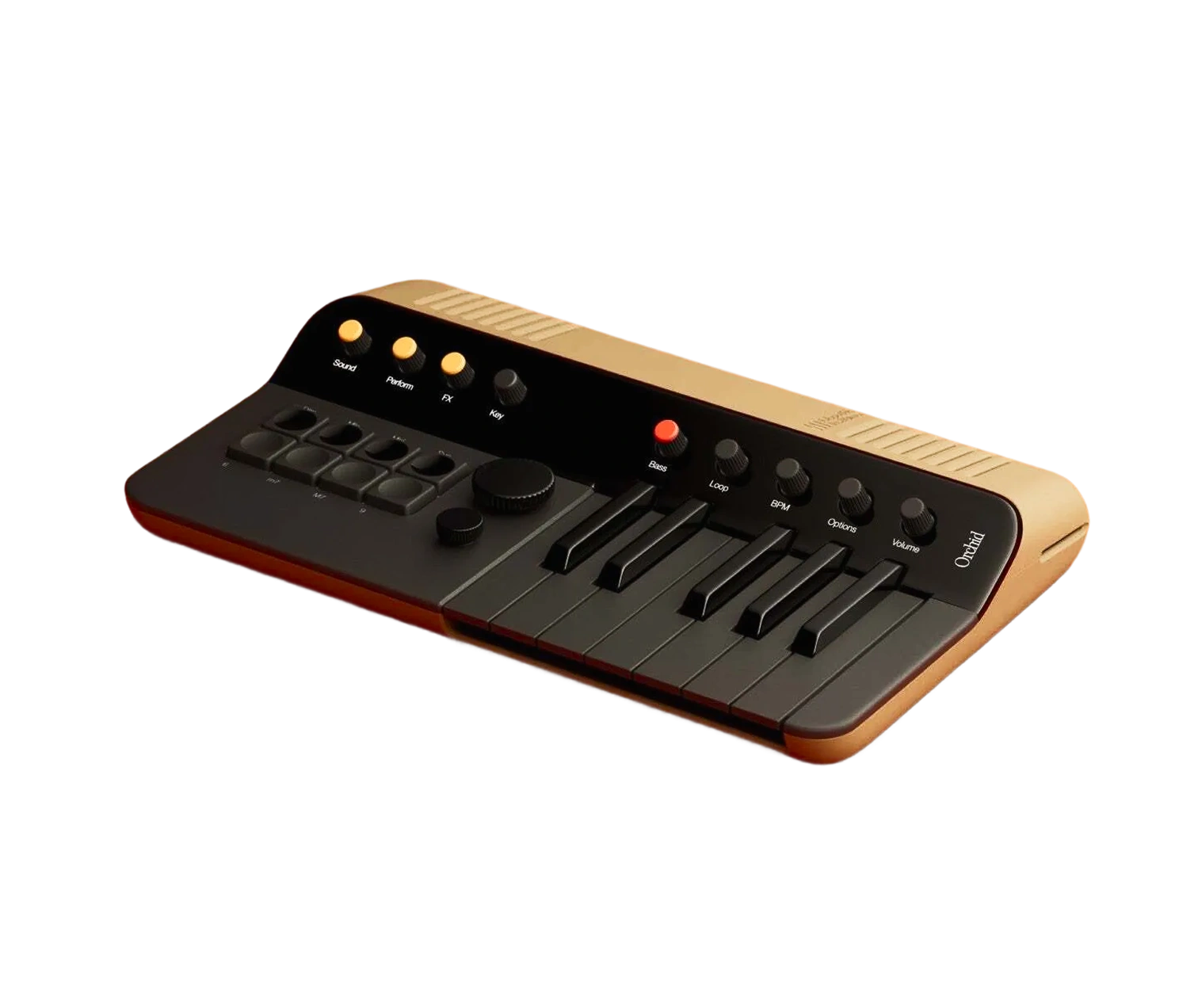
Music at home without a phone: CD, radio and vinyl
Music at home without a phone, from a $36 Sangean pocket radio to a CoolGeek CD player that hangs on the wall and a Sony turntable that plays over Bluetooth.
Music at home without a phone starts with a source you choose by hand: a dial, a disc, a record. The radio, the CD player and the turntable below are sources of that kind, the two speakers after them receive what they play, and one is a book about the whole history of the equipment.
They are chosen to work together. The CD player and the turntable both send sound over Bluetooth, so either one can play through either speaker without a cable crossing the room. The radio needs nothing at all except two AA batteries.
1.AM/FM Pocket Analog Radio
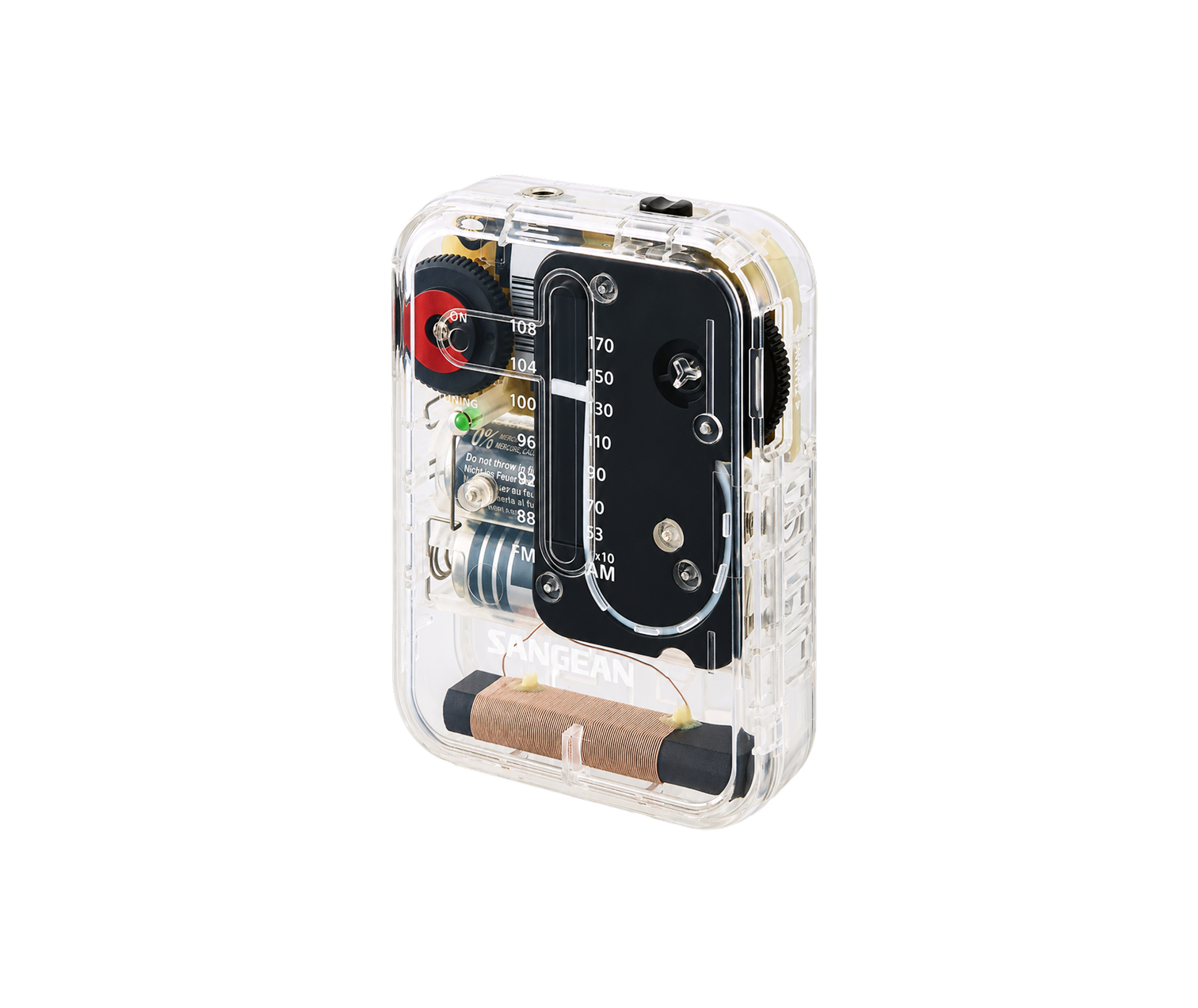
Two knobs and a switch, in a clear shell that shows every component inside it.
Sangean builds the SR-32 around the smallest set of controls a radio can have. One wheel tunes, one sets the volume, and a slide switch picks AM or FM. Sangean prints the tuning scale on the dial itself, so finding a station means turning until the voice comes through, the way radios worked for most of the last century.
It weighs 68 grams, less than a deck of cards. Two AA cells power it, which means no charging cable and nothing to top up before a trip.
There is no loudspeaker. Sound comes through the wired earbuds in the box, and that cord does a second job: on FM it is the antenna. A pocket radio has no room for a telescopic aerial, so the wire running from your ears to your pocket is what catches the signal. Moving the cord moves the reception, which is why a station that fades at the kitchen table often comes back by the window.
The clear housing is the version this post links to. Sangean also sells it in black, and the only difference is what you can see: the circuit board and the two batteries are on show in the clear one, so the radio looks like a cutaway model of itself.
Of the six, the radio alone leaves the house. A morning walk with the news, a football match on AM in a garden, a hotel room with no Wi-Fi password. None of it asks for a screen, and none of it asks for an account.
2.Music Frame CD Player
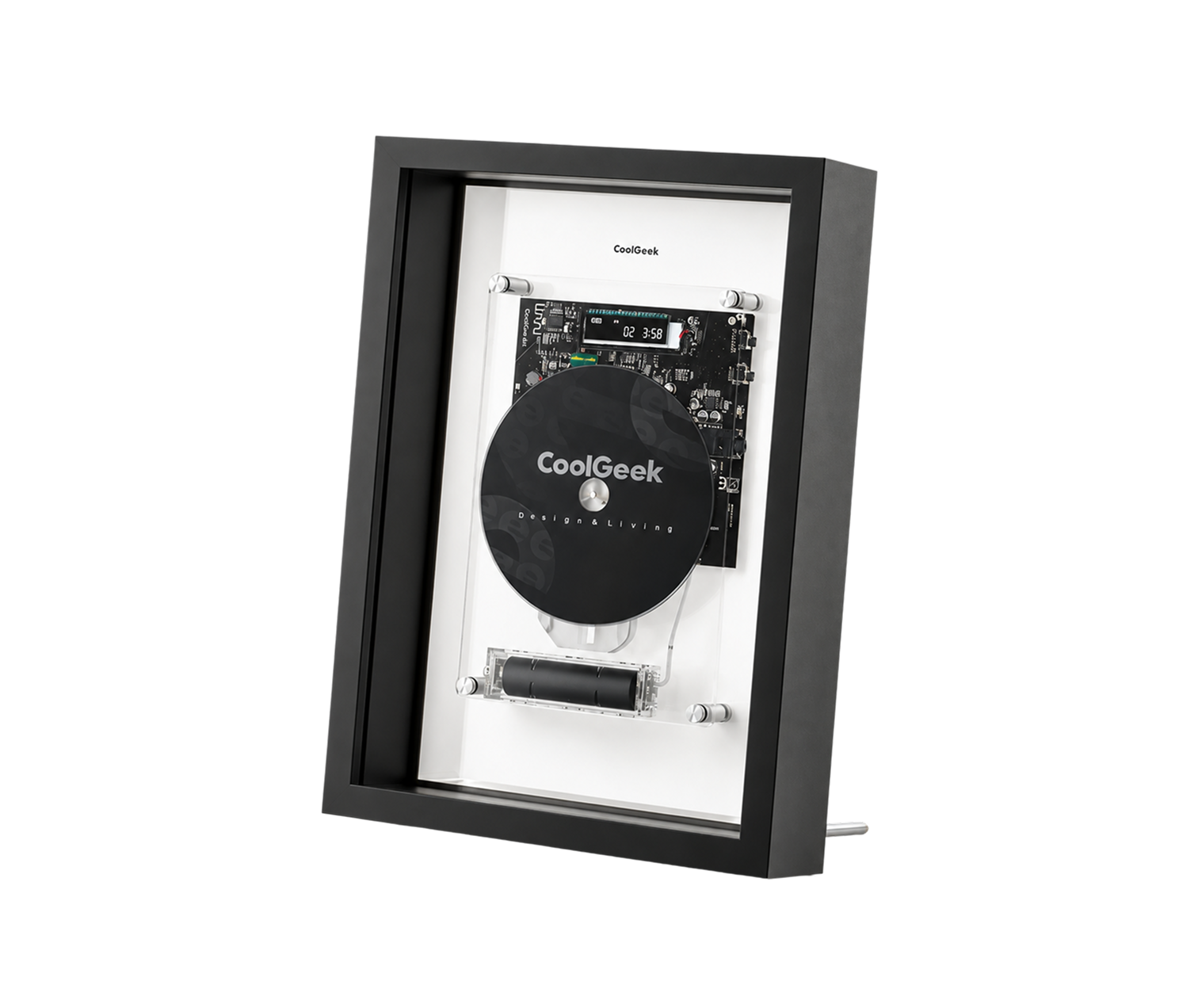
A CD player that stands the disc upright behind acrylic and hangs on the wall like a picture.
The CoolGeek M1 is 31.8 by 22.9 centimetres, close to the size of an A4 frame, and 6.4 centimetres deep. The box includes a wall-mount kit and a vertical pole for standing it on a shelf, so it can go either way. With the disc spinning in full view, the player becomes the thing on the wall.
It plays CD-DA, which is ordinary pressed audio CDs, as well as burned CD-R and CD-RW discs and MP3 and WMA files written to a disc. That last part matters if you still have a shelf of mix CDs from years ago. They will play.
The M1 has no speaker of its own. Sound leaves by Bluetooth, over roughly ten metres, or through a 3.5 mm output on the side. That split is the reason it sits in this post next to two speakers: pair it once with the Kilburn or the Music Studio 5 further down and the CD plays through them with no cable across the wall.
Power comes from a single 18650 lithium cell, the cylindrical battery used in torches and many laptops, and it is removable. CoolGeek rates it at up to eight hours of playback and puts a separate charger in the box, so a spare cell can charge while the first one plays. When the battery wears out after a few years, you replace a standard part instead of the player.
A remote handles playback and track selection, which helps once the player is hung at eye height. An acrylic dust cover ships with it too, the only thing between a spinning disc and the room.
3.Premium Wireless Bluetooth Turntable
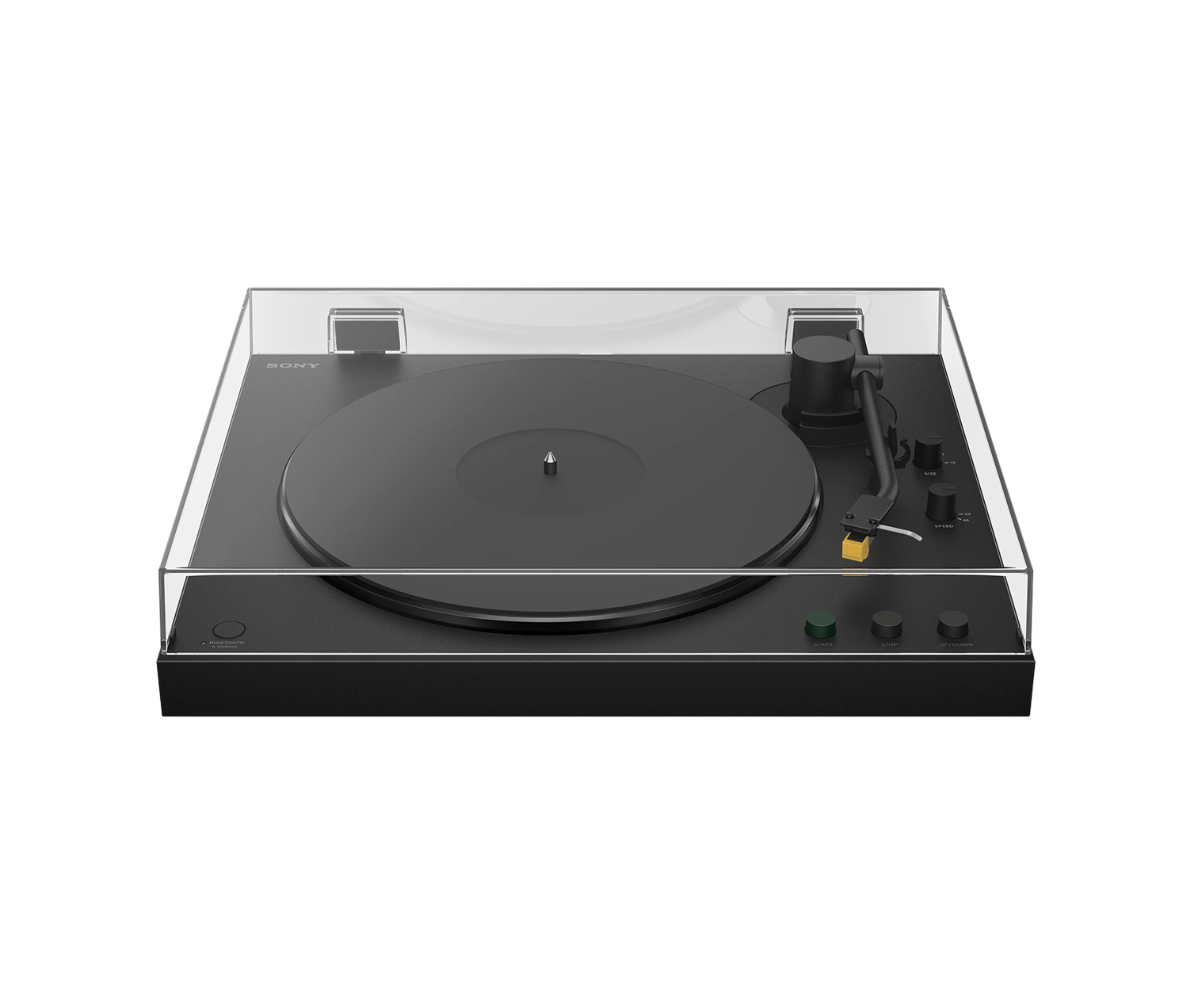
Fully automatic, with a phono stage inside and Bluetooth out, so the record is the only thing you handle.
The Sony PS-LX5BT is belt-driven at 33 and 45 rpm. A belt drive puts the motor off to one side and turns the platter through a rubber loop, which keeps most of the motor's vibration out of the groove. The platter is die-cast aluminium and the tonearm is aluminium too.
One button runs the whole sequence. Press it and the arm lifts, moves across, drops onto the lead-in groove, and returns at the end of the side. For a household where not everyone has lowered a stylus onto a record before, that single button settles it.
A moving-magnet cartridge arrives fitted and set up. The built-in phono stage has three gain settings, low, medium and high, and a PHONO/LINE switch at the back, so the same deck can feed a powered speaker directly or bypass its own stage for a better one later. The turntables post goes further into why that small amplifier matters.
Wirelessly, it transmits with aptX Adaptive as well as plain aptX and SBC. aptX Adaptive is Qualcomm's codec that adjusts its bitrate to the connection, and it only applies when the speaker or headphones on the other end support it. Otherwise the deck falls back to SBC, the basic codec every Bluetooth device can read.
It measures 430 by 366 millimetres and weighs 3.6 kilograms, a standard footprint for a full-size deck, with a clear dust cover on top. Records need somewhere to live nearby, which is the real space commitment.
4.Kilburn III
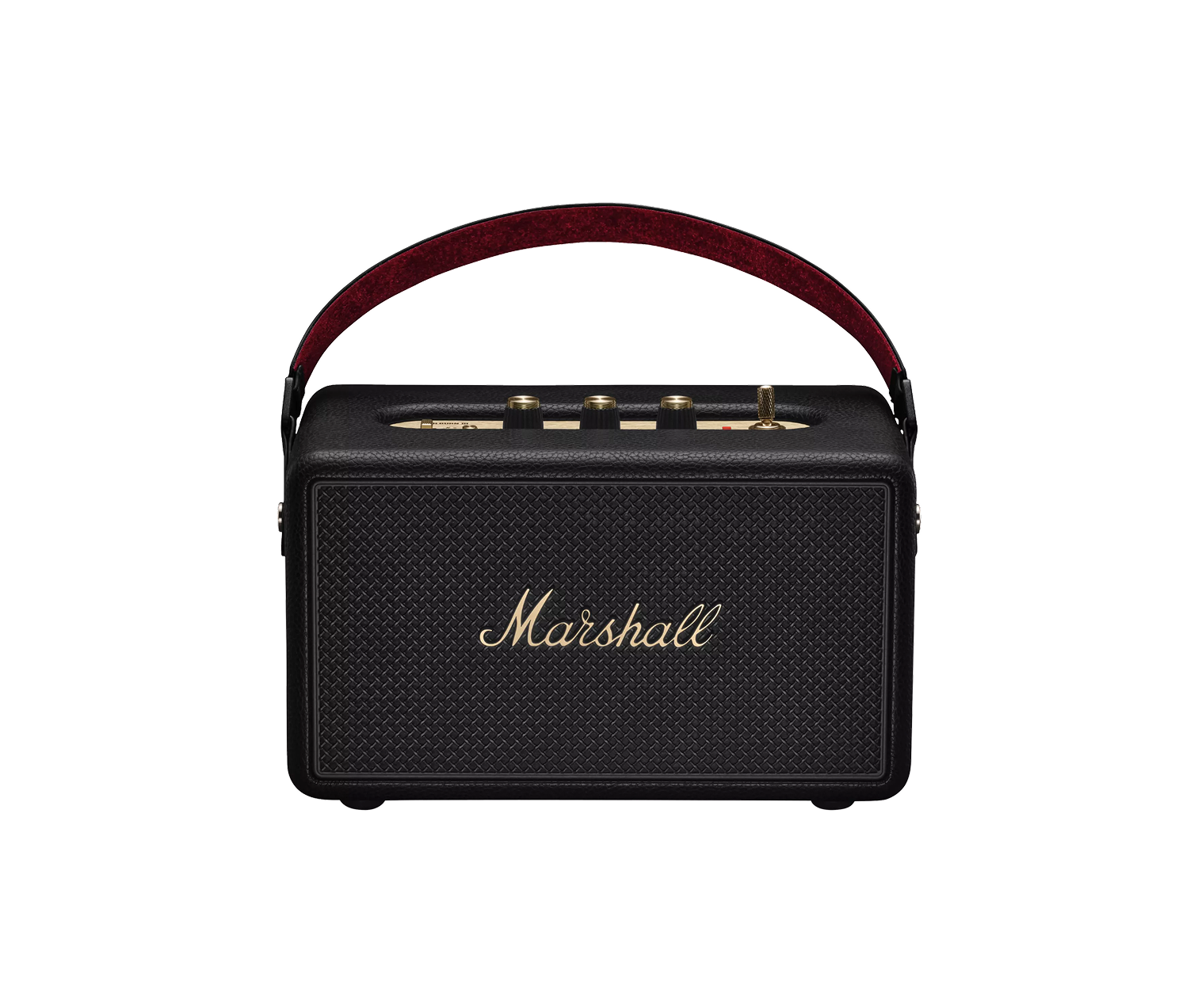
A carrying speaker with physical tone knobs and more than fifty hours on a charge.
The Marshall Kilburn III weighs 2.8 kilograms and measures 273 by 169 by 150 millimetres, with a strap across the top for carrying. Inside are one four-inch woofer and two two-inch full-range drivers, set out so the stereo image holds around the whole speaker. Stand on either side of the room and both channels still reach you.
Controls are physical. Bass, treble and volume each get a knob, which means tone gets set by touch and stays where you left it, with no app to open halfway through a record.
Marshall quotes more than 50 hours of playback per charge, and 20 minutes on a 30 W USB-C charger adds about eight. Its IP54 rating covers splashes and most dust, enough for a garden table on a dry evening. The same USB-C port charges a phone from the speaker's battery.
The part that matters for this set is the inputs. Bluetooth 5.3 with multipoint lets the speaker hold the CD player and the turntable at once and switch between them without pairing again. A 3.5 mm input takes the CoolGeek's wired output when a cable is simpler. It also supports Auracast, the newer Bluetooth broadcast standard that lets one source play to several speakers at once.
Marshall says 38 per cent of the speaker comes from recycled material. The script logo and the textured black covering come from the guitar amplifiers the company has built since 1962, and the Kilburn is the size of a small practice amp.
5.Music Studio 5 Wireless Smart Speaker
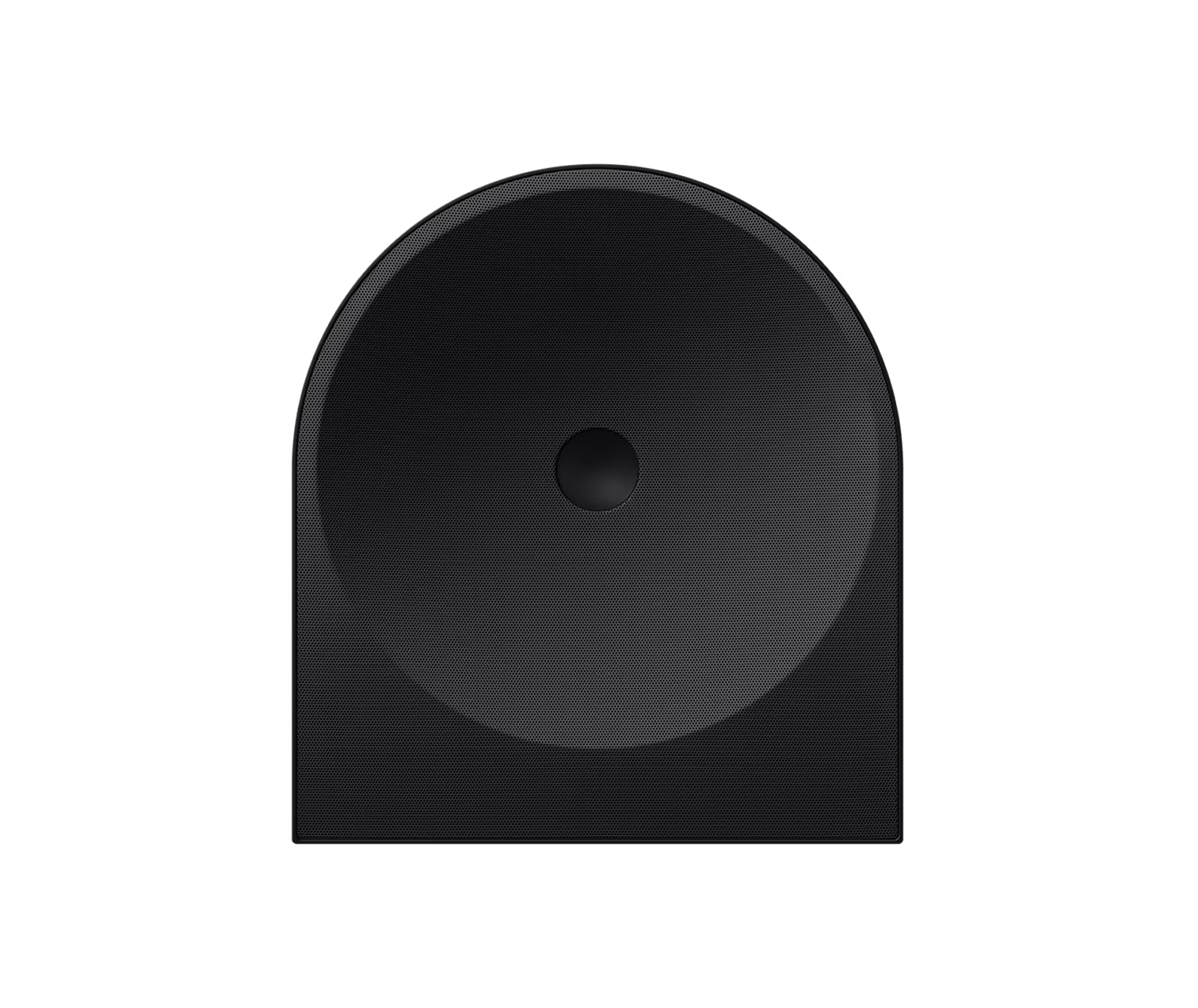
Designed by Erwan Bouroullec, a round speaker with a single dot on the front.
Samsung showed the Music Studio 5 at CES in January 2026, alongside the larger Music Studio 7. The circle and the dot are a reference to musical notation, a note drawn in its simplest form, and they sit where the drivers are: a four-inch woofer and two tweeters behind a fine metal mesh, with a waveguide shaping the high frequencies.
Bouroullec, who worked for decades with his brother Ronan on furniture for Vitra and Magis, treats it as an object that has to look right when it is silent. It is 251 millimetres wide and 283.5 tall, weighs 2.4 kilograms, and comes in black or white.
Of the two speakers here, the Music Studio 5 never leaves the socket. It streams over Wi-Fi with AirPlay, Chromecast, Spotify Connect and Tidal Connect, and it has an optical input for a television. For this post, the relevant input is Bluetooth 6.0, which receives the CD player and the turntable the same way the Kilburn does.
SpaceFit Sound Pro measures the room and adjusts the output to the space the speaker sits in, so one placed close to a wall does not end up with swollen bass.
The trade is clear from the name. It is a smart speaker, set up once through Samsung's app, and after that it takes a record or a disc as happily as a stream. It has no battery and no handle, and it is meant to be left on one shelf for years.
6.Hi Fi: The History Of High End Audio Design
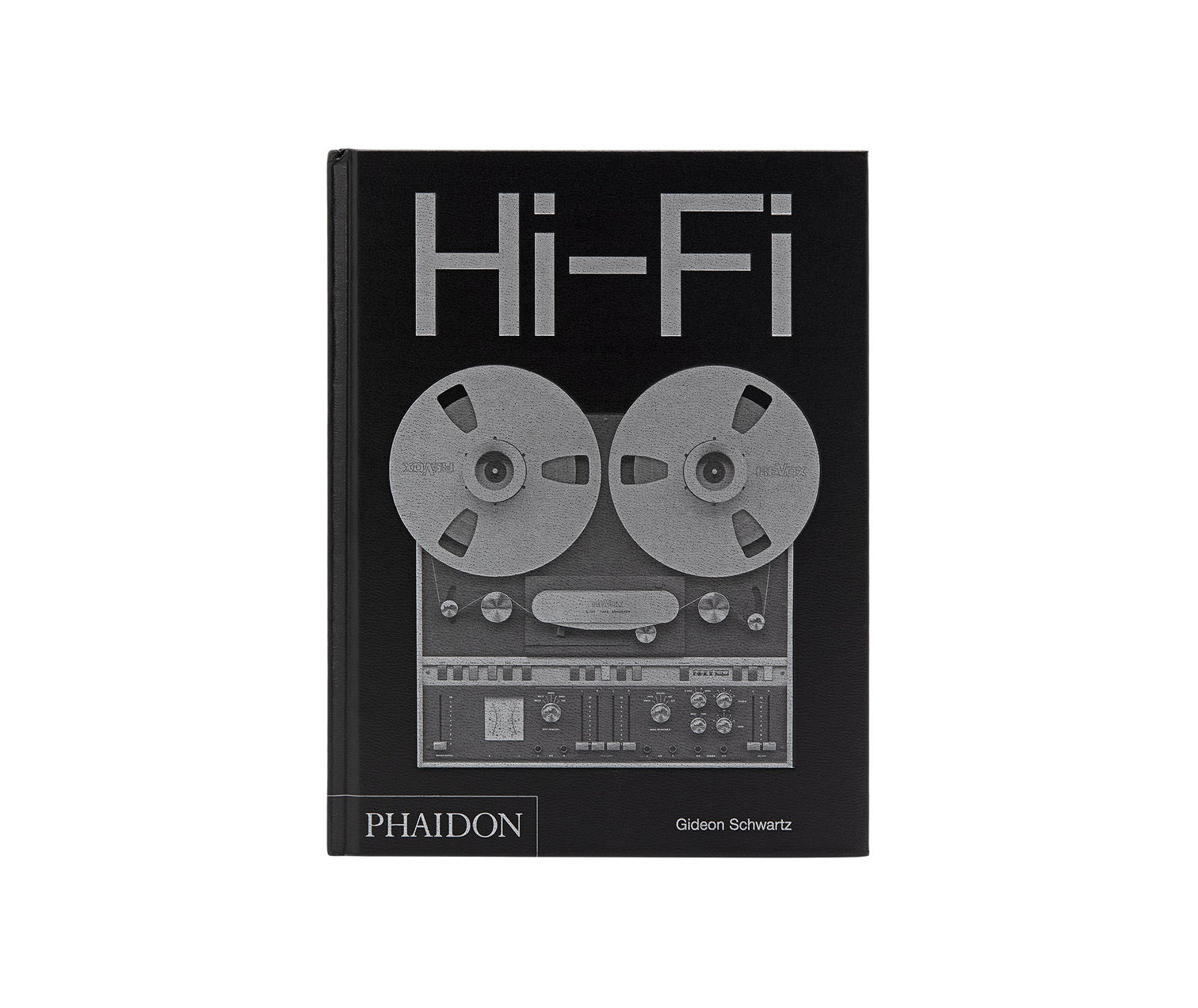
A history of the equipment, from 1950s amplifiers to current turntables, written by someone who builds it.
Phaidon published the book at 272 pages and 270 by 205 millimetres, with more than 300 photographs. The author, Gideon Schwartz, left a career as a lawyer to found Audioarts, a high-end audio company in New York, and has built systems for Rick Rubin among others. He also wrote Revolution, Phaidon's history of turntable design.
The book treats hi-fi as industrial design. It runs from the 1950s to the present, following turntables, amplifiers and loudspeakers as objects that designers drew as carefully as engineers built them. Dieter Rams's white turntable for Braun is in it, and so are the early Bose loudspeakers, alongside the valve amplifiers of the 1950s.
What it adds to this set is context. The Sony's belt drive, the Kilburn's knobs and the Music Studio's round face all have ancestors in these pages, and reading about the originals changes how the current ones look.
It also fills the hour when nothing is playing. At this size it sits flat on a low table next to the turntable, and a record side runs about twenty minutes, long enough for a chapter.
How we chose
We built this as one working set, which is why the picks are sources, speakers and a book instead of six of the same thing. Every source had to play without a phone in the loop once it was set up, and every speaker had to take both the CD player and the turntable over Bluetooth, so the set works in any combination. We checked each connection against the makers' own published inputs and outputs. None of these is a spec post, so there is no comparison table.
About the author

Justin Farrugia
Founder & Editor of Curated Supply
Justin Farrugia is the founder and editor of Curated Supply, a design-led directory to things worth owning. He has personally curated over 1,000 products across workspace, carry, coffee, audio, and the home, each judged against one standard: design intent, material quality, and the restraint that lets a thing last.